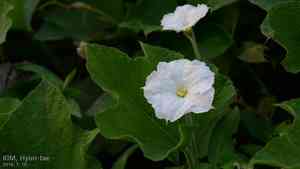
Bottle gourd (Lagenaria siceraria)
Also known as: Calabash, Long melon, Calabash Gourd
The bottle gourd (Lagenaria siceraria), also known as calabash, is an annual vine that can be easily grown from seeds. This versatile plant is not only edible but is also commonly crafted into bowls and musical instruments.
In This Article
Attributes of Bottle gourd
Lifespan
Annual, Biennial
Plant Type
Vine, Herb
Plant Height
6 m to 9 m
Spread
3 m to 5 m
Leaf Color
Green
Flower Size
3-5 inches
Flower Color
White Yellow Gold
Images of Bottle gourd
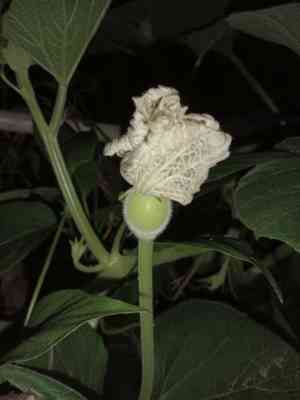
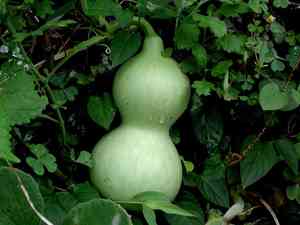
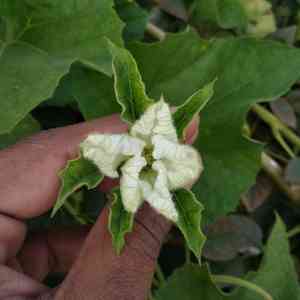
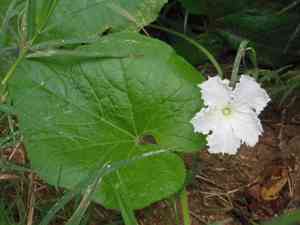
Quickly Identify Bottle gourd
1
Robust, hairy vines with heart-shaped leaves form a dense canopy.
2
Large, fragrant white flowers attract nocturnal pollinators.
3
Fruits are variably shaped gourds with smooth, light-green surface transitioning to brown texture.
4
Fruits can grow up to 3 feet (91 cm) in length, from spherical to elongated.
5
Leaves are lobed, pubescent, emit a musky scent, with serrated edges and prominent vein patterns.
Scientific Classification of Bottle gourd
Phylum
Vascular plants
Class
Dicotyledons
Order
Cucurbitales
Family
Gourd
Genus
Lagenaria
Species
Bottle gourd
Planting and Growing of Bottle gourd
Care Difficulty
Easy
Watering Schedule
Every 4 days
Sunlight Requirements
Full sun
Sunshine Duration
4-8 hours
Ideal Temperature
68-77℉
Soil Type
Potting Mix, Peat Mix
Soil pH
6.5-7.5
Fertilizer Type
Balanced
Pruning Season
Spring, Summer
Pruning Area
Branches, Leaves
Pruning Frequency
2 times a year
Repotting Season
Spring
Pot Type
Plastic, Ceramic
 How to Water Bottle gourd?
Ensure the soil is thoroughly moistened until water drips out of the drainage holes. The optimal watering involves ensuring an even distribution without pooling water. Pour approximately 500 milliliters each time.
More About Watering Techniques→
What are the symptoms of an underwatered Bottle gourd?
›
What should I do if my Bottle gourd is not getting enough water?
›
What are the symptoms of an overwatered Bottle gourd?
›
How to save an overwatered Bottle gourd?
›
 What Are the Sunlight Requirements for Bottle gourd?
Full sun conditions of 6 to 8 hours daily ensure Lagenaria siceraria benefits from enhanced growth and high fruit yield, pivotal for both garden aesthetics and functional culinary purposes.
More About Sunlight Requirements Techniques→
What lighting does Lagenaria siceraria prefer?
›
What happens if Lagenaria siceraria gets too much sun?
›
How can you achieve ideal lighting for Lagenaria siceraria?
›
 What Is the Ideal Temperature Range for Bottle gourd?
For Lagenaria siceraria, the ideal growth temperature range is between 68°F and 77°F. At these temperatures, the plant can most effectively carry out photosynthesis and other physiological processes. It ensures optimum growth and development, leading to healthier foliage and increased fruiting.
 What Soil is Best for Bottle gourd?
Lagenaria siceraria benefits from nutrient-rich soil as it supports robust vine growth and fruit development. Incorporating organic matter like compost can enhance nutrient availability, leading to healthier plants and a bountiful harvest. This plant thrives in well-drained soil as it prevents root rot, a common issue in waterlogged conditions. Loamy soil is ideal since it balances water retention and drainage, ensuring the roots receive adequate moisture without the risk of water stagnation. Maintaining soil pH between 6.5 and 7.5 is crucial as it optimizes nutrient uptake. Slightly acidic to neutral soils help the plant efficiently absorb essential nutrients, promoting vigorous growth and prolific flowering.
More About Soil→
 How to Fertilize Bottle gourd?
For Lagenaria siceraria, it's crucial to avoid over-fertilization. Use about 5-10 ml of liquid fertilizer diluted in a liter of water. For solid fertilizers, apply 200 grams per plant. These amounts provide the necessary nutrients without overwhelming the plant's system.
More About Fertilizing Techniques→
 How to Prune Bottle gourd?
Begin pruning Lagenaria siceraria when the plant starts to vine out. Trim the lateral vines to encourage stronger main vine growth by focusing the plant's energy. Cut back overgrown and overlapping vines monthly to enhance air circulation. This practice prevents fungal infections and promotes a healthier environment. As fruits develop, remove competing vines to allocate more resources to fruit-bearing sections, improving fruit size and quality.
More About Pruning Techniques→
 How to Propagate Bottle gourd plant?
1
Before sowing, soak Lagenaria siceraria seeds in warm water overnight. This softens their hard outer coat, promoting faster germination by allowing moisture to reach the embryo.
2
Place the seeds in a seed tray filled with potting mix. Lightly cover them with soil and maintain a warm environment of around 75°F to encourage successful germination.
3
Once seedlings have grown a few true leaves, carefully transplant them into larger pots or outdoors. Acclimatize them gradually to avoid transplant shock and ensure continued healthy growth.
 How to Repot Bottle gourd plant?
1
Lagenaria siceraria should be repotted when you notice restricted growth, roots poking through drainage holes, or if the current potting soil is depleted and compacted. Ideally, this is best observed during the warmer months when the plant exhibits active growth, allowing easier adaptation to its new environment.
2
When selecting a pot for Lagenaria siceraria, opt for one that is slightly larger than the current vessel, with ample drainage holes. This helps prevent root rot by maintaining proper soil aeration and drainage. Ensure that the pot material can withstand outdoor conditions, as earthenware or plastic usually does well.
3
Choose a well-draining, loamy soil mix to accommodate the plant’s need for both moisture retention and excess water runoff. A proper soil mix prevents root diseases and supports the nutrient needs of Lagenaria siceraria during its growth and fruiting seasons, facilitating healthier, more robust plants.



