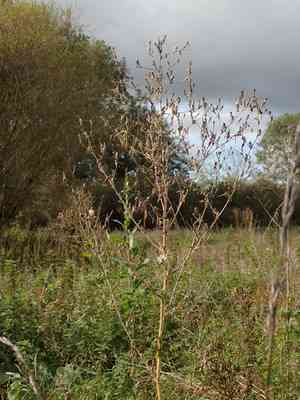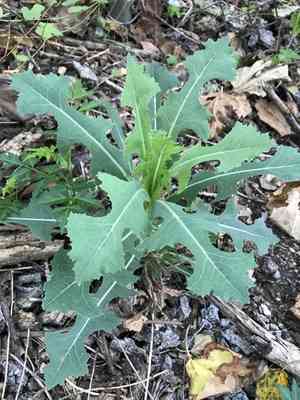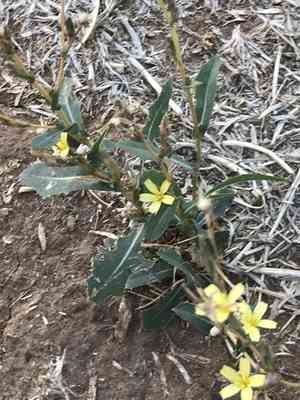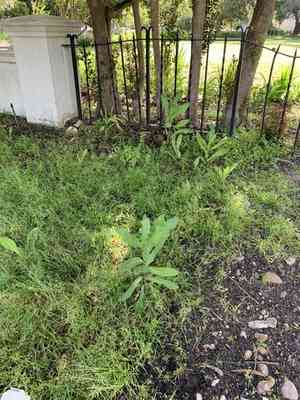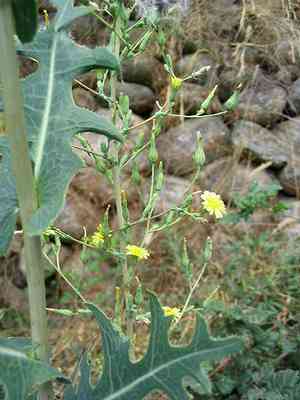
Prickly lettuce(Lactuca serriola)

Prickly lettuce (Lactuca serriola)

Also known as: Prickly Lettuce, Wild Lettuce

Prickly lettuce (Lactuca serriola) is the closest wild relative to cultivated lettuce. Though often seen as a weed, it has culinary uses. Its young leaves are edible, both raw and cooked, and its bitter milky latex can be used as a condiment or to enhance the flavor of salads. However, consuming it in large amounts may cause digestive issues.

Attributes of Prickly lettuce

Lifespan
Biennial, Annual
Plant Type
Herb
Plant Height
40 cm to 1.2 m
Spread
20 cm to 50 cm
Leaf Color
Green
Flower Size
1.1 cm to 1.3 cm
Flower Color
Yellow

ForwardPlant - Identify plants with a snap

Identify and diagnose plants, get toxicity alerts, and explore safety guides for all types of fungi.

Try for Free

Images of Prickly lettuce

Prickly lettuce(Lactuca serriola)

Quickly Identify Prickly lettuce

1
The plant can be recognized by its tall, erect stem which is covered with spiny bristles, deeply lobed leaves that clasp the stem, and the presence of a milky sap when the plant is cut. The flowers are small, yellow, and resemble those of a dandelion but are arranged in clusters.

Scientific Classification of Prickly lettuce

Phylum
Vascular plants
Class
Dicotyledons
Order
Asterales
Family
Daisy
Genus
Lactuca
Species
Prickly lettuce

Planting and Growing of Prickly lettuce

Care Difficulty
Easy
Watering Schedule
Every 3 days
Sunlight Requirements
Full sun
Sunshine Duration
6-12 hours
Ideal Temperature
50-77℉
Soil Type
Potting Mix, Peat Mix
Soil pH
6-7.5
Fertilizer Type
Balanced
Pruning Season
Spring, Summer
Pruning Area
Branches, Leaves
Pruning Frequency
2 times a year
Repotting Season
Spring
Pot Type
Plastic, Ceramic

water icon How to Water Prickly lettuce?

When it comes to watering Lactuca serriola, it's vital to ensure that the soil is evenly moist but never waterlogged. Aim for about 250 ml of water each time, ensuring it penetrates to the root level. This plant appreciates a balance—neither too dry nor drenched, mirroring the mild conditions it prefers in nature.
What are the symptoms of an underwatered Prickly lettuce?
What should I do if my Prickly lettuce is not getting enough water?
What are the symptoms of an overwatered Prickly lettuce?
How to save an overwatered Prickly lettuce?

sunlight icon What Are the Sunlight Requirements for Prickly lettuce?

Sunlight Requirements: Full sun, Partial sun
Duration of light: 5 to 8 hours
Partial to full sun is optimal, allowing 5 to 8 hours of light daily. This ensures robust growth and vigorous leaf production, enhancing its natural beauty and resilience.
How much sunlight is ideal?
How can I ensure my plant receives the right light?
What are the benefits of ideal lighting?

temperature icon What Is the Ideal Temperature Range for Prickly lettuce?

Ideal Temperature: 50 ~ 77℉
The ideal temperature range for cultivating Lactuca serriola is between 50 to 77 degrees Fahrenheit. This range supports optimal growth, as it is similar to the cool to moderate climates the plant naturally thrives in, promoting healthy leaf development and reducing stress.

soil icon What Soil is Best for Prickly lettuce?

Soil type: Sandy soil, Loam, Clay soil, Calcareous soil
Soil PH: 6 ~ 7.5
Lactuca serriola thrives in well-drained soil, as this helps prevent root rot and allows for optimal nutrient uptake. It's especially beneficial in avoiding waterlogging, which can hamper the plant's growth and health. A nutrient-rich soil is essential for Lactuca serriola, as it supplies the necessary elements like nitrogen, phosphorus, and potassium. These nutrients are vital for vigorous leaf production and overall plant vitality. Incorporating moderate organic matter improves soil structure and moisture retention, which supports Lactuca serriola's growth by providing a consistent supply of water and nutrients, enhancing its resilience during dry periods.

fertilize icon How to Fertilize Prickly lettuce?

Fertilizer type: Balanced
For Lactuca serriola, a balanced liquid fertilizer diluted to half strength should be sufficient. Apply approximately 10 milliliters per plant. Use granular or slow-release fertilizer sparingly, about 5 grams per plant every four months, to avoid nutrient burn.

prune icon How to Prune Prickly lettuce?

Pruning Time: Spring, Summer
Start by identifying mature leaves that appear old or are shading lower growth. These may have started to yellow or become lifeless. Carefully trim these back to allow sunlight to reach younger leaves and boost overall growth. Prune the plant to maintain a balanced shape by cutting uneven or overgrown stalks. Aim for an even distribution of foliage to keep the plant aesthetically pleasing and prevent it from toppling over. Carefully select branches growing inwards or crossing over others. Prune these to ensure sunlight penetration and prevent overcrowding, which can hamper growth and increase the risk of fungal diseases.

propagate icon How to Propagate Prickly lettuce plant?

Propagate Time: Spring, Early Spring, Late Spring
1
Begin by selecting a well-draining potting mix suitable for lettuce. Fill the seed tray with the soil, ensuring it is evenly distributed and slightly firmed down. Moisten the soil lightly before sowing the seeds.
2
Scatter the Lactuca serriola seeds evenly on the surface of the prepared soil. Cover them with a thin layer of soil or vermiculite, no deeper than 1/4 inch, to allow light penetration essential for germination.
3
Place the seed tray in a location with indirect sunlight and a temperature of around 60 to 70°F (15 to 21°C). Consistently keep the soil moist using a spray bottle, ensuring it doesn't dry out or become waterlogged.

repot icon How to Repot Prickly lettuce plant?

Repotting frequency: Every 1-2 years
1
Watch for roots protruding through the drainage holes, soil drying out excessively quickly, or stunted growth. These are clear signals it's time for repotting your Lactuca serriola to ensure it continues to thrive in its new environment.
2
Opt for a pot just a few inches larger in diameter than the current one. This helps avoid overpotting, where too much soil retains excessive moisture, potentially leading to root rot. Ensure it has ample drainage holes to promote good water flow.
3
Ensure the soil is lightweight, well-draining, and rich in organic matter. This kind of soil offers excellent aeration for the roots and retains enough moisture without becoming waterlogged, promoting vigorous growth.

ForwardPlant - Identify plants with a snap

Find the best spots for them to optimize their health, simply using your phone.

Try for Free

Toxicity of Prickly lettuce

Is Prickly lettuce toxic to humans?

Ingesting substantial quantities of prickly lettuce, particularly the mature leaves, can result in symptoms such as nervousness, restlessness, cardiac arrest, and in severe cases, even death. Such outcomes might happen unintentionally, as there are customary practices involving the younger parts of the plant for culinary uses or herbal teas. Therefore, it is advisable to exercise caution when consuming this plant or when making products derived from it.

Is Prickly lettuce toxic to cat?

Prickly lettuce poses a mild toxicity threat to cats and may induce adverse reactions when consumed in significant amounts. The toxic components of this plant include its sap and juice, which can result in observable physical discomfort or illness in felines. Although the exact toxic substances are not specified, cat owners must remain alert, as symptoms of poisoning may manifest, requiring urgent veterinary intervention. Should you suspect that your cat has ingested prickly lettuce, it is vital to obtain treatment from a veterinary hospital without delay.

Is Prickly lettuce toxic to dog?

Prickly lettuce carries a mild toxicity risk for dogs. Although the plant is not considered highly toxic, consuming it in substantial amounts can result in negative health effects. The main concern stems from the sap or juice of prickly lettuce, which contains the toxic compounds responsible for poisoning. Dogs may encounter these toxins when they chew or ingest portions of the plant, especially where the sap is found. Signs of poisoning in dogs can include gastrointestinal distress, such as vomiting and diarrhea, and potential skin irritation if contact with the sap occurs. It is essential for dog owners to keep a watchful eye on their pets and restrict their access to large amounts of prickly lettuce. In instances where a dog has consumed a considerable quantity of prickly lettuce, seeking immediate veterinary assistance is vital to address any symptoms properly and to safeguard the animal’s health.

Identify toxic plants for your safety

Learn which plants are harmful to you and your pets, and make informed choices for a safer home!

Try for Free
WARNING
The judgment on toxicity and danger is for reference only. We DO NOT GUARANTEE any accuracy of such judgment. Therefore, you SHALL NOT rely on such judgment. It is IMPORTANT TO SEEK PROFESSIONAL ADVICE in advance when necessary.
More About Toxic Techniques