Scarlet kunzea(Kunzea baxteri)

Scarlet kunzea (Kunzea baxteri)

Also known as: Scarlet Kunzea

Scarlet kunzea (Kunzea ambigua) serves as a vital component in ecosystem restoration by providing nourishment and habitat for native species, such as bees and birds, especially during its summer bloom of vivid red flowers. Its resilience, particularly its capacity to regenerate post-fire, makes it essential for ecological recovery and soil stabilization.

In terms of home decor, Scarlet kunzea stands out for its striking red blossoms and aromatic leaves. These features make it a favorite for inclusion in floral arrangements, adding a unique and exotic flair to indoor settings. It is also popular in garden landscaping, where it is used to create eye-catching natural barriers and hedges.

Attributes of Scarlet kunzea

Lifespan
Perennial
Plant Type
Shrub
Plant Height
2 m
Spread
2 m
Leaf Color
Green
Flower Size
Up to 3 cm
Flower Color
Red

ForwardPlant - Identify plants with a snap

Identify and diagnose plants, get toxicity alerts, and explore safety guides for all types of fungi.

Try for Free

Images of Scarlet kunzea

Scarlet kunzea(Kunzea baxteri)

Quickly Identify Scarlet kunzea

1
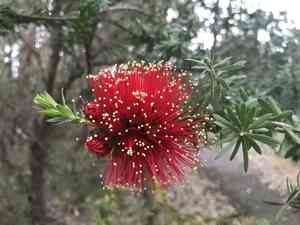
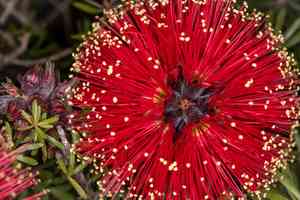
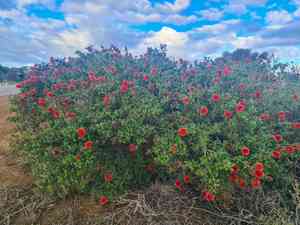
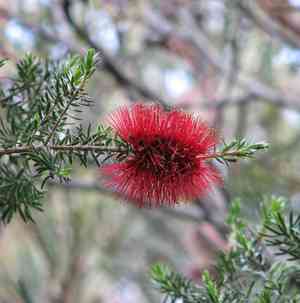
This plant can be identified by its long, cylindrical flower spikes that are bright red, its small, narrow leaves, and often aromatic scent. It typically has a sprawling, bushy habit.

Scientific Classification of Scarlet kunzea

Phylum
Vascular plants
Class
Dicotyledons
Order
Myrtales
Family
Myrtle
Genus
Kunzea
Species
Scarlet kunzea

Planting and Growing of Scarlet kunzea

Care Difficulty
Moderate
Watering Schedule
Every 3 days
Sunlight Requirements
Full sun
Sunshine Duration
4-6 hours
Ideal Temperature
60-75℉
Soil Type
Potting Mix, Peat Mix
Soil pH
6-7.5
Fertilizer Type
Balanced
Pruning Season
Spring, Summer
Pruning Area
Branches, Leaves
Pruning Frequency
2 times a year
Repotting Season
Spring
Pot Type
Plastic, Ceramic

water icon How to Water Scarlet kunzea?

Kunzea baxteri prefers a generous but not overwhelming watering approach. Ensure the soil is moist but not soggy to mimic its natural habitat. It's important to allow the first few inches of soil to dry out before watering again, reflecting its preference for a well-draining regime.
What are the symptoms of an underwatered Scarlet kunzea?
What should I do if my Scarlet kunzea is not getting enough water?
What are the symptoms of an overwatered Scarlet kunzea?
How to save an overwatered Scarlet kunzea?

sunlight icon What Are the Sunlight Requirements for Scarlet kunzea?

Sunlight Requirements: Full sun, Partial sun
Duration of light: 6 to 8 hours
Kunzea baxteri performs best with full to partial sun exposure. Ideal light promotes vigorous growth, vibrant red flowers, and prevents legginess and weak stems.
How much light does Kunzea baxteri require?
What are the solutions to achieve ideal light conditions for Kunzea baxteri?
What are the benefits of Kunzea baxteri receiving ideal light?

temperature icon What Is the Ideal Temperature Range for Scarlet kunzea?

Ideal Temperature: 60 ~ 75℉
Kunzea baxteri thrives best in environments where the temperature is consistently between 60°F and 75°F. These temperatures allow for optimal physiological processes, including photosynthesis and respiration, to occur efficiently, leading to healthy growth and vibrant flowers.

soil icon What Soil is Best for Scarlet kunzea?

Soil type: Sandy soil, Loam, Sandy loam
Soil PH: 6 ~ 7.5
Kunzea baxteri thrives in soil that drains well. This is essential for preventing waterlogged roots, which can lead to root rot and other issues. A well-draining soil allows the roots to breathe and access nutrients efficiently, promoting robust growth and vibrant foliage. This plant prefers moderately fertile soil. Adequate nutrients support its growth and flowering, but overly rich soils can lead to excessive foliage at the expense of blooms. Maintaining soil fertility at moderate levels ensures balanced growth and an attractive garden display. Incorporating organic matter into the soil will enhance its structure and water-retention capabilities. This is particularly helpful in sandy soils, where nutrients and moisture drain quickly. The added organic matter fosters a healthy root environment and sustained plant vitality.

fertilize icon How to Fertilize Scarlet kunzea?

Fertilizer type: Balanced
Kunzea baxteri generally requires a balanced fertilization approach. For liquid fertilizers, use a diluted solution at half the recommended concentration. Solid fertilizers should be applied in minimal quantities, with approximately one tablespoon per plant. It's vital to avoid over-fertilization, as this plant is relatively low-maintenance in its nutrient requirements.

prune icon How to Prune Scarlet kunzea?

Pruning Time: Spring, Summer
Start your pruning by clearly identifying any dead, damaged, or diseased branches of the Kunzea baxteri. These should be removed first to help prevent the spread of disease and pests, as well as to encourage healthy new growth. Prune branches that are growing towards the center of the plant to improve air circulation and light penetration. This step helps prevent fungal issues and promotes vigorous blooming by allowing sunlight to reach more areas of the plant. Lightly trim the tips of healthy branches to encourage new growth and bushiness. This can be done by cutting back around 20% of the length of the branches. It's best done in early spring when the plant is gearing up for a growth period. More About Pruning Techniques

propagate icon How to Propagate Scarlet kunzea plant?

Propagate Time: Late spring,Early summer
1
Before sowing, it is crucial to soak Kunzea baxteri seeds in warm water for 12-24 hours. This process helps in breaking the seed dormancy and enhancing germination rates.
2
Select healthy, non-flowering stems for cuttings. It is recommended to take cuttings in the late afternoon when the plant stems are fully turgid and the risk of wilting is minimized.
3
Use a well-draining potting mix and slightly firm the soil around the seeds or cuttings to eliminate air pockets. Ensure the soil is evenly moist but not waterlogged to prevent root rot.
More About Propagating Techniques

repot icon How to Repot Scarlet kunzea plant?

Repotting frequency: Every 2-3 years
1
Look for signals like roots poking out of drainage holes or soil becoming compact. If growth seems stunted or the plant appears root-bound, it's time to consider repotting to encourage healthier growth.
2
Select a pot slightly larger than the current one to give roots room to spread. Opt for good drainage, ideally with multiple holes. Terracotta pots are beneficial as they allow breathability but ensure they are glazed inside.
3
Opt for well-draining loamy soil mixed with a bit of sand or perlite. This ensures roots have enough space to grow without waterlogging, reducing the risk of root rot and promoting vibrant health.

ForwardPlant - Identify plants with a snap

Find the best spots for them to optimize their health, simply using your phone.

Try for Free