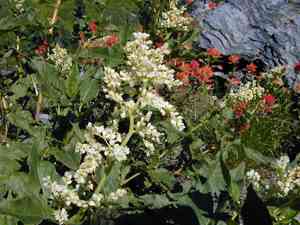
Koenigia (Koenigia) (Koenigia)
Also known as: Mountain Knotweed
Koenigia species, which can be annual or perennial herbs, typically thrive in the Northern Hemisphere. These plants often grow from taproots and are found in various habitats such as meadows, stream banks, and rocky slopes. They have terminal or axillary inflorescences with flowers that feature pale tepals—ranging from white and greenish to yellowish or pink. Their seeds are contained in achenes, which are usually brown or black and lack wings. These species are particularly common in arctic, temperate, and alpine regions.
In This Article
Attributes of Koenigia (Koenigia)
Lifespan
Perennial
Plant Height
10 to 30 cm
Spread
Typically forms clumps up to 30 cm across
Leaf Color
Green
Flower Size
0.2 to 0.4 cm
Flower Color
White to pink
Images of Koenigia (Koenigia)
Quickly Identify Koenigia (Koenigia)
1
Koenigia can be identified by their thin, wiry stems, small opposite leaves, and clusters of tiny white to pinkish flowers. They often grow in mats or clumps.
Scientific Classification of Koenigia (Koenigia)
Phylum
Tracheophyta
Class
Magnoliopsida
Order
Caryophyllales
Family
Polygonaceae
Genus
Koenigia
Planting and Growing of Koenigia (Koenigia)
Care Difficulty
Moderate
Watering Schedule
Every 4 days
Sunlight Requirements
Partial sun
Sunshine Duration
6-12 hours
Ideal Temperature
60-75℉
Soil Type
Potting Mix, Peat Mix
Soil pH
6.5-7.5
Fertilizer Type
Balanced
Pruning Season
Spring, Summer
Pruning Area
Branches, Leaves
Pruning Frequency
2 times a year
Repotting Season
Spring
Pot Type
Terracotta, Plastic
 How to Water Koenigia (Koenigia)?
Koenigia requires watering to a depth where the soil remains consistently moist but not waterlogged. When watering, ensure the soil is moistened but water should not pool on the surface. Aim for about 150ml per session if the plant is in a typical pot size.
What are the symptoms of an underwatered Koenigia (Koenigia)?
›
What should I do if my Koenigia (Koenigia) is not getting enough water?
›
What are the symptoms of an overwatered Koenigia (Koenigia)?
›
How to save an overwatered Koenigia (Koenigia)?
›
 What Are the Sunlight Requirements for Koenigia (Koenigia)?
Partial to full sun exposure benefits Koenigia, providing the energy it needs for lush growth and flowering. Adequate sunlight helps maintain the plant's overall vigor and resistance to pests and diseases.
What is the best sunlight condition for Koenigia?
›
How can I ensure Koenigia gets its ideal sunlight?
›
What benefits does optimal sunlight have on Koenigia?
›
 What Is the Ideal Temperature Range for Koenigia (Koenigia)?
Koenigia thrives best within a temperature range of 60°F to 75°F. This range allows the plant to maximize growth while maintaining optimal metabolic functions. Temperatures within this range support the photosynthesis process efficiently, ensuring that the plant can perform vital biological functions without stress.
 What Soil is Best for Koenigia (Koenigia)?
Koenigia thrives in soil that retains moisture yet drains excess water effortlessly. The balance helps prevent root rot while ensuring the plant stays hydrated. A soil rich in organic matter provides essential nutrients, supporting the robust growth of Koenigia. Such a nutrient profile promotes lush foliage and healthy development. A pH close to neutral (6.5 to 7.5) ensures optimal nutrient absorption, fostering vibrant plant health. It prevents nutrient lockout and maintains a balanced soil environment.
 How to Fertilize Koenigia (Koenigia)?
Koenigia is relatively low maintenance when it comes to fertilizers. Use a balanced fertilizer at half strength to avoid overwhelming the plant. Start with a small amount of liquid fertilizer, around 5-10 ml per liter of water. For slow-release fertilizers, apply sparingly to prevent nutrient burn.
 How to Prune Koenigia (Koenigia)?
Focus on the outermost stems and work your way inwards. This helps maintain the natural shape of the plant and ensures that light reaches the inner branches. Trim just above a leaf node, as this encourages new shoots to form at these points. While pruning, try to maintain a balanced shape. Regular trims can prevent one side from becoming lopsided or too dense, which may affect the plant’s overall health and appearance. Aim for an open structure that promotes even light distribution.
 How to Propagate Koenigia (Koenigia) plant?
1
Collect seeds from healthy, mature plants once they have fully ripened. It's crucial to dry the seeds before sowing to prevent mold and increase germination success. Store them in a cool, dry place if not planting immediately.
2
Cut 5-10 cm long stem cuttings from the parent plant just below a node. Remove the lower leaves to reduce transpiration and place the cuttings in water or soil right away to prevent dehydration.
3
When dividing plants, carefully dig up the root mass without damaging the roots. Use a sharp knife or garden fork to separate the root ball into sections, ensuring each section has roots and shoots for successful replanting.
 How to Repot Koenigia (Koenigia) plant?
1
For Koenigia, the prime signals that it's time to repot include roots growing out of the drainage holes or a noticeable slowdown in growth. These signs indicate that the plant has become root-bound and needs more space to thrive. Ideally, repotting in spring or early summer allows the plant to recover quickly and continue growing vigorously.
2
Opt for a pot that's 2-4 inches larger in diameter than the current one. A pot with sufficient drainage holes is crucial to avoid waterlogging, which can lead to root rot. The extra space provided by a larger pot allows the Koenigia to spread its roots, promoting healthier growth and better stability.
3
Use a well-draining potting mix tailored for the specific needs of Koenigia. A balanced mix of peat, perlite, and organic matter helps in retaining moisture while ensuring excess water drains away. This balance prevents root rot and supports robust growth by allowing roots to access necessary nutrients and oxygen.

