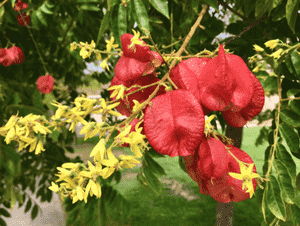
Golden-rain tree(Koelreuteria bipinnata)

Golden-rain tree (Koelreuteria bipinnata)

Also known as: Bougainvillea golden-rain tree

The golden-rain tree (Koelreuteria paniculata) is a deciduous species appreciated for its ornamental charm. Key characteristics include:

- **Canopy**: Open and airy, providing light shade.
- **Leaves**: Pinnate or bipinnate, turning a striking yellow in the fall.
- **Flowers**: Produces clusters of small, bright yellow blossoms in the summer.
- **Seed Pods**: Notable for their lantern-like appearance, transitioning from green to a pinkish-brown hue.

Optimal growing conditions:

- **Sunlight**: Thrives best in full sunlight but can manage partial shade.
- **Soil**: Prefers well-drained soil and is versatile, accommodating sandy, loamy, or even clay conditions.
- **Water**: Requires moderate watering; once established, it shows good drought tolerance.
- **Environment**: Adaptable to urban settings, tolerating pollution and some soil salinity.

This resilient tree is favored in landscaping for its decorative features and adaptability.

Attributes of Golden-rain tree

Lifespan
Perennial
Plant Type
Tree
Plant Height
6 m to 11 m
Spread
8 m to 11 m
Leaf Color
Green, turning yellow in autumn
Flower Size
15 cm
Flower Color
Bright yellow

ForwardPlant - Identify plants with a snap

Identify and diagnose plants, get toxicity alerts, and explore safety guides for all types of fungi.

Try for Free

Images of Golden-rain tree

Golden-rain tree(Koelreuteria bipinnata)

Quickly Identify Golden-rain tree

1
Early flowering age
2
Vibrant yellow flowers in large panicles (12-24 inches/30-60 cm)
3
Distinctive rose pink seed pods
4
Bipinnately compound leaves up to 20 inches (50 cm) with serrated edges
5
Moderately smooth leaves with a feather-like arrangement

Scientific Classification of Golden-rain tree

Phylum
Vascular plants
Class
Dicotyledons
Order
Maples, mangos, mahogany, citrus, and allies
Family
Soapberry
Genus
Golden rain trees
Species
Golden-rain tree

Planting and Growing of Golden-rain tree

Care Difficulty
Easy
Watering Schedule
Every 2 days
Sunlight Requirements
Full sun
Sunshine Duration
6-10 hours
Ideal Temperature
60-85℉
Soil Type
Potting Mix, Peat Mix
Soil pH
6.5-7.5
Fertilizer Type
Balanced
Pruning Season
Spring, Summer
Pruning Area
Branches, Leaves
Pruning Frequency
2 times a year
Repotting Season
Spring
Pot Type
Plastic, Ceramic

water icon How to Water Golden-rain tree?

Koelreuteria bipinnata prefers a moderate amount of water. It’s crucial to let the topsoil dry out completely between waterings. This helps prevent root rot, which can occur if the plant sits in overly moist conditions. When watering, aim to provide about 500ml of water until you notice the top few inches of the soil are moist but not overly saturated.
What are the symptoms of an underwatered Golden-rain tree?
What should I do if my Golden-rain tree is not getting enough water?
What are the symptoms of an overwatered Golden-rain tree?
How to save an overwatered Golden-rain tree?

sunlight icon What Are the Sunlight Requirements for Golden-rain tree?

Sunlight Requirements: Full sun, Partial sun
Duration of light: 6 to 8 hours
Koelreuteria bipinnata thrives in full to partial sun, ideally receiving 6 to 8 hours of sunlight daily. This exposure supports its vibrant flower production and lush foliage growth, promoting a healthy, aesthetically pleasing tree.
Optimal Sunlight Exposure
Maximizing Growth Potential
Balancing Light Needs

temperature icon What Is the Ideal Temperature Range for Golden-rain tree?

Ideal Temperature: 60 ~ 85℉
The ideal temperature range for Koelreuteria bipinnata falls between 60°F and 85°F. This range supports optimal growth, ensuring that the plant receives the warmth needed for metabolic processes and flowering, but without the stress of excessive heat or cold.

soil icon What Soil is Best for Golden-rain tree?

Soil type: Loam, Sandy loam, Calcareous soil
Soil PH: 6.5 ~ 7.5
Koelreuteria bipinnata thrives best in well-drained soils. This helps prevent root rot by allowing excess water to escape, ensuring the roots stay healthy and oxygenated, which is crucial for optimal growth. The plant prefers soil with moderate fertility. Soils that are neither too rich nor too poor in nutrients encourage balanced growth, promoting lush foliage without overly rapid or weak growth. A neutral to slightly alkaline pH range ensures that essential nutrients are available to the plant, supporting its overall health and vibrant flowering.

fertilize icon How to Fertilize Golden-rain tree?

Fertilizer type: Balanced
Koelreuteria bipinnata requires a moderate amount of fertilizer to thrive. During the growing season, apply a balanced liquid fertilizer at a dilution rate recommended on the package, ensuring not to over-saturate the soil. A modest application of granular slow-release fertilizer can also be beneficial, providing key nutrients over time without the risk of chemical burn.

prune icon How to Prune Golden-rain tree?

Pruning Time: Spring, Summer
Start by removing any dead, diseased, or damaged branches. Cut back to a healthy part of the branch or to the main trunk, using clean tools. Focus on creating a main leader and remove any competing branches that cross or rub against each other to promote a strong framework. Thin out overly dense areas to allow light and air to penetrate, which helps reduce disease problems and encourages healthy new growth. Shape the tree lightly to maintain its natural form, taking care not to remove too much at once as this can stress the plant. More About Pruning Techniques

propagate icon How to Propagate Golden-rain tree plant?

Propagate Time: Late spring, Early summer
1
Fill seed trays with potting soil, ensuring it is lightly packed to allow for seedlings' root growth. Water the soil lightly to create a moist environment suitable for seed germination.
2
Sow the Koelreuteria bipinnata seeds thinly across the surface of the soil and cover them with a thin layer of soil. Ensure the seeds are not buried too deep, as they require light for germination.
3
Place the trays in a warm, well-lit area. Keep the soil consistently moist but not waterlogged. Germination can take several weeks, so patience and regular checking are needed.
More About Propagating Techniques

repot icon How to Repot Golden-rain tree plant?

Repotting frequency: Every 2-3 years
1
Koelreuteria bipinnata shows signs it's time for repotting when roots start to emerge from the drainage holes, or the plant's growth is stunted. Typically, repotting should be done in early spring or autumn when the plant is not in active growth, ensuring that it experiences minimal stress.
2
Select a pot that is one size larger than the current one, with adequate drainage holes. This ensures that excess water can escape, reducing the risk of root rot. A pot with a width about 2 inches wider than the plant’s root ball is ideal, providing room for new growth.
3
Opt for a well-draining loamy soil mix, which mimics the plant's natural environment. This type of soil holds enough moisture for the plant’s needs while allowing excess water to drain away easily, thus preventing waterlogging and ensuring healthy root development.

ForwardPlant - Identify plants with a snap

Find the best spots for them to optimize their health, simply using your phone.

Try for Free

