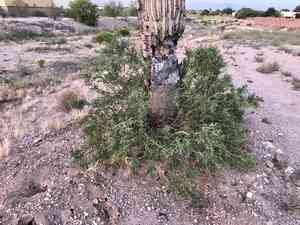
Crown of thorns (Koeberlinia spinosa)
Also known as: Spiny allthorn, Junco, Allthorn
Koeberlinia spinosa is commonly called the "Crown of Thorns" due to its densely thorny branches. This plant is native to northern Mexico and the southwestern United States. Its black berries are a food source for birds.
In This Article
Attributes of Crown of thorns
Lifespan
Perennial
Plant Type
Shrub
Plant Height
4 m
Spread
1.8 m
Leaf Color
Green
Flower Size
6 mm
Flower Color
Yellow Green
Images of Crown of thorns
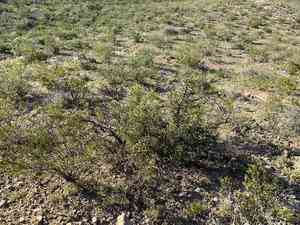

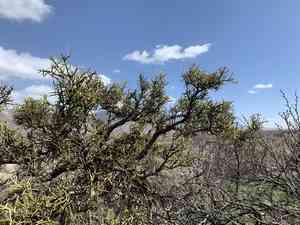
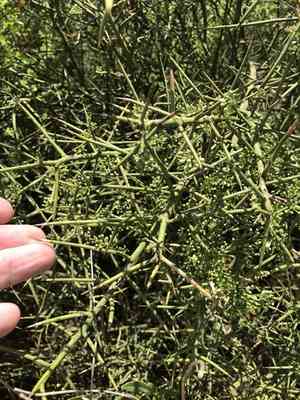
Quickly Identify Crown of thorns
1
To identify Koeberlinia spinosa, look for its dense thorny branches, small green leaves, and greenish-yellow flowers. The plant often takes a tangled, bushy form and has a bark that is dark and rough.
Scientific Classification of Crown of thorns
Phylum
Vascular plants
Class
Dicotyledons
Order
Brassicales
Family
Koeberlinia
Genus
Koeberlinia
Species
Crown of thorns
Planting and Growing of Crown of thorns
Care Difficulty
Easy
Watering Schedule
Every day
Sunlight Requirements
Full sun
Sunshine Duration
4-6 hours
Ideal Temperature
70-85℉
Soil Type
Potting Mix, Peat Mix
Soil pH
6.5-7.5
Fertilizer Type
Balanced
Pruning Season
Spring, Summer
Pruning Area
Branches, Leaves
Pruning Frequency
2 times a year
Repotting Season
Spring
Pot Type
Plastic, Ceramic
 How to Water Crown of thorns?
Koeberlinia spinosa is highly adapted to arid environments and requires minimal watering. When watering, aim for about 250 milliliters, enough to moisten the root zone. Ensure the soil dries out between waterings to prevent root rot.
What are the symptoms of an underwatered Crown of thorns?
›
What should I do if my Crown of thorns is not getting enough water?
›
What are the symptoms of an overwatered Crown of thorns?
›
How to save an overwatered Crown of thorns?
›
 What Are the Sunlight Requirements for Crown of thorns?
Koeberlinia spinosa thrives under full sun, benefiting from consistent exposure to direct sunlight. This ensures robust growth and better resistance to environmental stresses.
How much sunlight does Koeberlinia spinosa need daily?
›
What happens if Koeberlinia spinosa doesn't get enough light?
›
How can I help Koeberlinia spinosa receive ideal light conditions?
›
 What Is the Ideal Temperature Range for Crown of thorns?
Koeberlinia spinosa thrives best in temperatures ranging from 70°F to 85°F. This range provides the optimum environment for photosynthesis and nutrient uptake, allowing the plant to grow vigorously and maintain healthy foliage. Maintaining these temperatures helps the plant avoid stress and supports its natural growing rhythm.
 What Soil is Best for Crown of thorns?
Koeberlinia spinosa thrives in well-draining soils, which prevent waterlogging and root rot. A soil composition that ensures rapid water removal supports healthy root development and overall plant vigour. This plant is well adapted to poor soil nutrient conditions, making it suitable for arid environments. The ability to flourish in nutrient-poor soil underscores its resilience and low maintenance needs. Koeberlinia spinosa prefers a pH level ranging from 6.5 to 7.5, allowing it to access essential nutrients. Maintaining this pH range fosters optimal growth and foliage health.
 How to Fertilize Crown of thorns?
Koeberlinia spinosa, known for its resilience in arid environments, requires a moderate fertilization approach. Typically, use 1/4 to 1/2 strength of a balanced, all-purpose fertilizer to avoid over-fertilizing this hardy plant.
 How to Prune Crown of thorns?
Begin by carefully inspecting the Koeberlinia spinosa for any dead, damaged, or diseased branches. These should be removed first to stimulate healthy growth. Focus on cutting back any overgrown areas to maintain the plant's desired size and shape. Use sharp pruners, making clean cuts at an angle just above a healthy bud or branch. After removing damaged and excess growth, assess the plant's shape. Prune selectively to promote a balanced look, ensuring that sunlight penetrates the inner branches for optimal growth.
More About Pruning Techniques→
 How to Propagate Crown of thorns plant?
1
Harvest seeds from mature Koeberlinia spinosa fruit in the early spring. Ensure the seeds are fully ripe for better germination rates.
2
Take 10-15 cm cuttings from a healthy plant during early spring. Remove leaves from the lower half to prevent rot when inserted in the growing medium.
3
Sow seeds in trays filled with a well-draining mix and cover lightly with soil. Keep the soil moist but not soggy, ensuring good sunlight exposure.
 How to Repot Crown of thorns plant?
1
Koeberlinia spinosa should be repotted if it shows signs of being root-bound, such as roots emerging from the drainage holes or reduced growth. Spring and summer are ideal seasons since the plant is actively growing and will recover more swiftly from transplant shock.
2
Select a pot that is just one size larger than the current one. Ensure it has ample drainage to prevent waterlogging. A pot that's too large might retain excess moisture, which can be detrimental to Koeberlinia spinosa. Go for terracotta or breathable materials that facilitate evaporation and air exchange.
3
Opt for a well-draining sandy soil mix that mimics Koeberlinia spinosa's natural environment. This prevents water retention and promotes healthy root growth. Such a mix is rich in coarse sand and gravel, ensuring that roots have space to breathe and remain healthy.
Learn More About Crown of thorns Diseases
Anthracnose
Bacterial Leaf Spot
Bacterial Soft Rot
Bacterial Wilt
Chemical Injury
Crown Gall
Cyst Nematode
Damping-off
Drought Stress
Fusarium Wilt
Gray Mold
Leaf Spot
Mosaic
Nutrient Deficiency
Nutrient Toxicity
Powdery Mildew
Root Rot
Root-knot Nematode
Rusts
Sooty Mold
Spider Mites
Temperature Stress
Thrips Damage
White Mold



