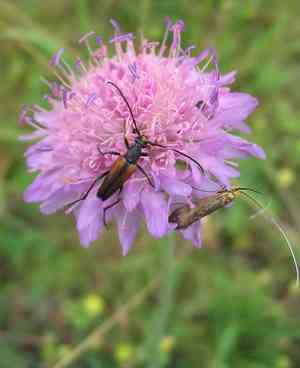
Widow flower (Knautia) (Knautia)
Also known as: Field Scabious, Blue Buttons
Knautia is a genus of flowering plants in the family Caprifoliaceae, commonly known as field scabious. It is primarily found in Europe and Asia. The plants are appreciated for their summer-blooming flowers, which come in shades of blue, purple, and pink.
In This Article
Attributes of Widow flower (Knautia)
Lifespan
Perennial
Plant Height
30-90 cm (12-36 inches)
Spread
Not typically measured for crown diameter; focus is on height and spread.
Leaf Color
Green
Flower Size
2-4 cm (0.8-1.6 inches)
Flower Color
Purple, blue, pink
Images of Widow flower (Knautia)
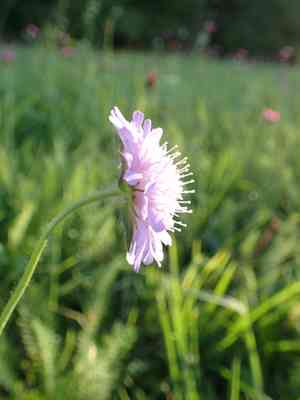
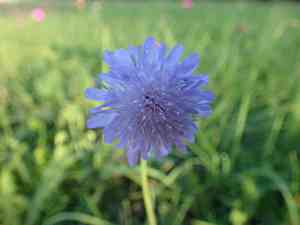
Quickly Identify Widow flower (Knautia)
1
Identify Knautia by its distinctive pincushion-like flower heads, which feature numerous small, tubular flowers clustered together. The leaves are typically oblong or oval with a slightly serrated edge.
Scientific Classification of Widow flower (Knautia)
Phylum
Tracheophyta
Class
Magnoliopsida
Order
Dipsacales
Family
Caprifoliaceae
Genus
Knautia
Planting and Growing of Widow flower (Knautia)
Care Difficulty
Moderate
Watering Schedule
Every 3 days
Sunlight Requirements
Full sun
Sunshine Duration
6-8 hours
Ideal Temperature
60-75℉
Soil Type
Potting Mix, Peat Mix
Soil pH
6.5-7.5
Fertilizer Type
Balanced
Pruning Season
Spring, Summer
Pruning Area
Branches, Leaves
Pruning Frequency
2 times a year
Repotting Season
Spring
Pot Type
Plastic, Ceramic
 How to Water Widow flower (Knautia)?
Watering Knautia involves a well-considered balance, crucial for its health. Typically, it requires about 500 milliliters per session. Ensure the soil is moist yet not waterlogged after watering. The goal is to maintain moderately moist soil, allowing the top 2-3 centimeters to dry out between watering sessions.
What are the symptoms of an underwatered Widow flower (Knautia)?
›
What should I do if my Widow flower (Knautia) is not getting enough water?
›
What are the symptoms of an overwatered Widow flower (Knautia)?
›
How to save an overwatered Widow flower (Knautia)?
›
 What Are the Sunlight Requirements for Widow flower (Knautia)?
Ideal lighting for Knautia includes full sun to partial sun, promoting vibrant blooms and strong structure. It benefits from the energy for flowering and maintaining healthy foliage critical for photosynthesis.
What kind of sunlight does Knautia prefer?
›
How can I ensure Knautia gets ideal lighting?
›
Benefits of ideal light for Knautia?
›
 What Is the Ideal Temperature Range for Widow flower (Knautia)?
The ideal temperature range for Knautia is between 60°F and 75°F. In this range, Knautia thrives well with optimal growth and blooming. This moderate temperature allows for balanced hydration and nutrient uptake, ensuring the plant maintains vibrant flowers and a healthy structure.
 What Soil is Best for Widow flower (Knautia)?
Knautia thrives in well-drained soils, as it helps prevent root rot and other moisture-related issues. Such soils allow for proper air circulation around the roots, promoting healthy growth. This plant doesn't demand excessively fertile soil. A moderate level of fertility ensures that Knautia has access to essential nutrients without the risk of nutrient burn, leading to robust blossoms. Knautia prefers slightly alkaline soil conditions, which enable it to absorb nutrients effectively and produce vibrant flowers. Alkaline conditions minimize the risk of nutrient lockout.
 How to Fertilize Widow flower (Knautia)?
For Knautia, consider using a balanced fertilizer with an NPK ratio of 10-10-10. Apply about 1 tablespoon of granular fertilizer per square foot. When using liquid fertilizer, mix according to package instructions, generally around 1 tablespoon per gallon of water. Be careful not to overfertilize, as this plant is naturally adapted to low-nutrient soils.
 How to Prune Widow flower (Knautia)?
Prune your Knautia in spring to shape it, and extend the flowering season by deadheading through summer. Avoid heavy pruning in autumn, as the plant needs strength for winter dormancy. Light shaping can be done again in late summer to prepare it for a tidy appearance through the colder months. Be watchful of pests that might target freshly pruned Knautia, such as aphids or slugs. Regular inspections of the plant after pruning will help in early detection and management of these pests, ensuring your Knautia remains healthy and vibrant in the garden.
 How to Propagate Widow flower (Knautia) plant?
1
Start by collecting seeds from mature Knautia plants. Prepare a seed tray with a well-draining potting mix. Sow the seeds evenly across the surface, covering them lightly with soil. Keep the tray moist and place it in a warm location with indirect light.
2
Choose a healthy parent plant and use sterilized shears to cut a 4-6 inch section of a non-flowering stem. Remove lower leaves and dip the cut end in rooting hormone. Plant the cutting in a pot filled with a mixture of peat and perlite. Ensure high humidity around the cutting.
3
In early spring, dig up a mature Knautia plant. Gently separate the root ball into smaller sections with your hands or a sharp knife, making sure each section has roots and shoots. Replant the divisions at the same depth in prepared garden soil.
 How to Repot Widow flower (Knautia) plant?
1
Knautia plants show signs they're ready for repotting when their roots start circling the pot or poking out from the drainage holes. Spring and early summer are optimal, as new growth is vigorous and helps the plant recover more quickly from any root disturbance.
2
Select a pot only slightly larger than the current one to help prevent overwatering and soil taking too long to dry out. A pot with adequate drainage holes is essential to avoid waterlogging, which Knautia doesn't tolerate. Ceramic or terracotta materials offer good breathability.
3
Choose a loamy, well-draining potting mix. This consistency ensures that water doesn't stagnate and roots have space to breathe, promoting healthier growth. Including some grit or sand can enhance drainage, making it more suitable for a plant like Knautia.
Learn More About Widow flower (Knautia) Diseases
Anthracnose
Bacterial Leaf Spot
Bacterial Wilt
Crown Gall
Cyst Nematode
Damping-off
Downy Mildew
Drought Stress
Fusarium Wilt
Gray Mold
Leaf Spot
Mosaic
Nutrient Deficiency
Nutrient Toxicity
Powdery Mildew
Root Rot
Root-knot Nematode
Rusts
Sooty Mold
Spider Mites
Temperature Stress
Thrips Damage
White Mold

