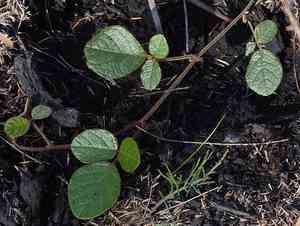
Dusky coral pea (Kennedia rubicunda)
Also known as: Dusky Coral Pea, Coral Vine
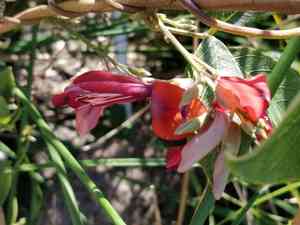
The plant in question is a robust climber, capable of reaching lengths up to 4 meters. It features oval leaflets grouped in threes, each leaflet measuring approximately 2.5 to 13 cm in length. The dark red pea flowers are arranged in racemes and bloom primarily from late winter to spring, with a peak period from fall to winter. Following the flowering phase, the plant produces oblong pods that are 5 to 10 cm long and 8 to 13 mm wide, characterized by a rusty, hairy texture and containing 10 to 15 seeds per pod.
In This Article
Attributes of Dusky coral pea
Lifespan
Perennial
Plant Type
Herb
Plant Height
Up to 3 meters
Spread
Variable, depending on support structure
Leaf Color
Dark green
Flower Size
Approximately 3 cm
Flower Color
Red
Images of Dusky coral pea
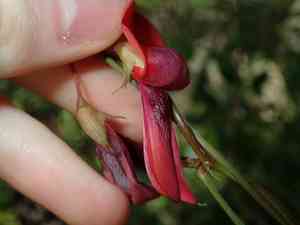
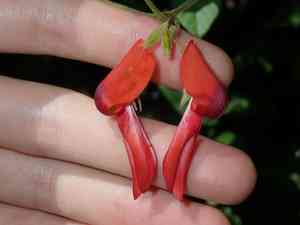
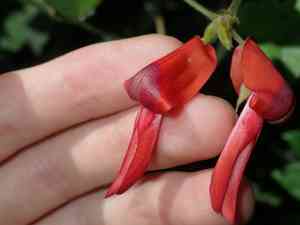
Quickly Identify Dusky coral pea
1
Identifiable by its elongated trifoliate leaves and vibrant red pea-like flowers. The plant produces bean-shaped pods after flowering. It uses tendrils to climb and spread across surfaces.
Scientific Classification of Dusky coral pea
Phylum
Vascular plants
Class
Dicotyledons
Order
Fabales
Family
Legume
Genus
Coral pea
Species
Dusky coral pea
Planting and Growing of Dusky coral pea
Care Difficulty
Easy
Watering Schedule
Every 2 days
Sunlight Requirements
Full sun
Sunshine Duration
6-10 hours
Ideal Temperature
60-75℉
Soil Type
Potting Mix, Peat Mix
Soil pH
6.5-7.5
Fertilizer Type
Balanced
Pruning Season
Spring, Summer
Pruning Area
Branches, Leaves
Pruning Frequency
2 times a year
Repotting Season
Spring
Pot Type
Plastic, Ceramic
 How to Water Dusky coral pea?
For Kennedia rubicunda, it is essential to water it thoroughly but not excessively. Aim for about 500 ml each time, ensuring the water reaches deep into the root zone without leaving the soil waterlogged. This balance helps maintain optimal moisture levels without promoting root rot.
What are the symptoms of an underwatered Dusky coral pea?
›
What should I do if my Dusky coral pea is not getting enough water?
›
What are the symptoms of an overwatered Dusky coral pea?
›
How to save an overwatered Dusky coral pea?
›
 What Are the Sunlight Requirements for Dusky coral pea?
Kennedia rubicunda thrives in full sun to partial sun, ideally receiving 6 to 8 hours of sunlight daily. This exposure boosts photosynthetic efficiency, promoting more vibrant, lush foliage and prolific blooming, vital for garden aesthetics and ecosystem balance.
What is the ideal sunlight intensity?
›
What time of day is best for sun exposure?
›
How can I ensure the plant gets sufficient sunlight?
›
 What Is the Ideal Temperature Range for Dusky coral pea?
The ideal temperature range for Kennedia rubicunda is between 60°F and 75°F. This range provides the plant with optimal conditions for growth and flower production. At these temperatures, metabolic processes proceed smoothly, promoting healthy foliage and vibrant blooms.
 What Soil is Best for Dusky coral pea?
Kennedia rubicunda thrives in soils that have excellent drainage. Good drainage prevents root rot and helps maintain the right moisture balance, essential for healthy root development and floral growth. This plant benefits from soils rich in organic matter that provide essential nutrients. A nutrient-rich soil promotes vigorous growth and vibrant blooms, contributing to the plant's overall vitality and resilience. Moderate moisture retention is ideal for Kennedia rubicunda, ensuring that the plant receives adequate hydration without becoming waterlogged. This balance aids in maintaining healthy root systems.
 How to Fertilize Dusky coral pea?
For Kennedia rubicunda, use a balanced liquid fertilizer diluted to half-strength. Apply about 1 quart per mature plant during the growing season. Ensure the soil is moist, not dry, before applying fertilizer to avoid root burn.
 How to Prune Dusky coral pea?
Begin by cleaning your pruning tools with a disinfectant to avoid transferring any diseases. Identify the main branches of the Kennedia rubicunda and target dead, damaged, or diseased wood first. Use sharp pruning shears to make clean cuts about a quarter inch above a bud. Prune selectively to maintain the natural form of the plant, focusing on thinning out dense areas to improve air circulation and light penetration.
More About Pruning Techniques→
 How to Propagate Dusky coral pea plant?
1
Prior to sowing, it's beneficial to soak the seeds in warm water for 24 hours to soften the seed coat and facilitate easier germination. This step is crucial in breaking dormancy and enhancing germination rates.
2
Prepare a well-draining potting mix that combines loamy soil, sand, and compost. This mixture provides the optimal environment for seed growth and rooting of cuttings by ensuring adequate aeration and nutrient availability.
3
For cutting propagation, select healthy, semi-hardwood stems about 10-15 cm long. Remove the lower leaves and dip the cut end in rooting hormone before planting in the prepared medium to encourage root development.
 How to Repot Dusky coral pea plant?
1
Kennedia rubicunda shows signs of needing repotting when roots begin to escape from drainage holes or the soil seems waterlogged despite usual watering habits. Also, if the plant's growth has noticeably slowed, it's time to refresh its environment.
2
Select a pot that is one size larger than the current one. The new pot should be slightly wider than the root ball and must have drainage holes to prevent overwatering, ensuring root health and preventing rot.
3
Opt for well-draining sandy loam soil, which helps avoid root rot in Kennedia rubicunda. This soil type retains enough moisture to hydrate the plant while allowing excess water to drain away, minimizing the risk of waterlogging.
Learn More About Dusky coral pea Diseases
Anthracnose
Bacterial Leaf Spot
Bacterial Soft Rot
Bacterial Wilt
Black Spot
Chemical Injury
Crown Gall
Cyst Nematode
Damping-off
Downy Mildew
Drought Stress
Fusarium Wilt
Gray Mold
Leaf Curl
Leaf Spot
Mosaic
Nutrient Deficiency
Nutrient Toxicity
Powdery Mildew
Root Rot
Root-knot Nematode
Rusts
Sooty Mold
Spider Mites
Temperature Stress
Thrips Damage
White Mold



