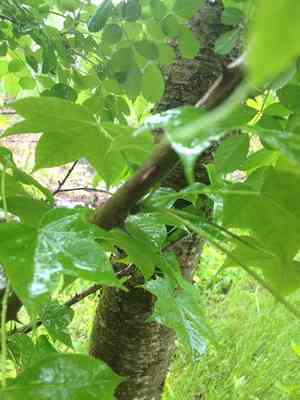
Prickly castor oil tree (Kalopanax septemlobus)
Also known as: Castor aralia, Japanese aralia, Tree aralia
The tree you're referring to is the Prickly Castor Oil Tree (Kalopanax septemlobus). Native to northeastern Asia, this deciduous tree is popular in North American landscaping because of its cold-hardiness and tropical look. It blooms with clusters of white flowers in late summer, which develop into small dark berries.
In This Article
Attributes of Prickly castor oil tree
Lifespan
Perennial
Plant Type
Tree
Plant Height
30 m
Spread
20 m
Leaf Color
Green
Flower Size
20 cm to 30 cm
Flower Color
White Green
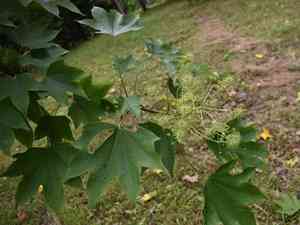
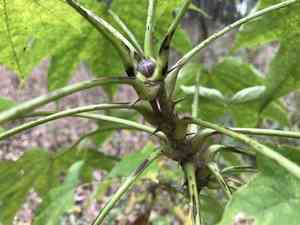
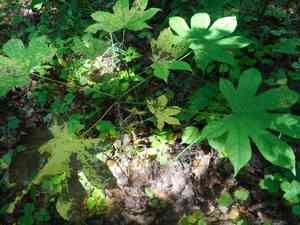
Images of Prickly castor oil tree
Quickly Identify Prickly castor oil tree
1
Showy white flowers in large umbels up to 12 inches (30 cm) in diameter.
2
Distinctive lobed leaves resembling castor bean plant, providing unique texture.
3
Small glossy black drupes in tight clusters, measuring 0.2 to 0.4 inches (5-10 mm).
4
Dark green glossy palmate leaves up to 14 inches (35 cm) wide with toothed edges.
5
Rugged trunk with deep ridges and dark gray bark, symbolizing strength and resilience.
Scientific Classification of Prickly castor oil tree
Phylum
Vascular plants
Class
Dicotyledons
Order
Carrots, ivies and allies
Family
Ivy
Genus
Castor aralia
Species
Prickly castor oil tree
Planting and Growing of Prickly castor oil tree
Care Difficulty
Moderate
Watering Schedule
Every 2 days
Sunlight Requirements
Partial sun
Sunshine Duration
4-8 hours
Ideal Temperature
60-75℉
Soil Type
Potting Mix, Peat Mix
Soil pH
6.5-7.5
Fertilizer Type
Balanced
Pruning Season
Spring, Summer
Pruning Area
Branches, Leaves
Pruning Frequency
Once a year
Repotting Season
Spring
Pot Type
Plastic, Ceramic
 How to Water Prickly castor oil tree?
For Kalopanax septemlobus, ensure the soil is thoroughly moist, reaching about a depth of 10-15 cm after watering. This tree prefers a consistent moisture level, avoiding both drought and waterlogging, to mimic its natural environment.
What are the symptoms of an underwatered Prickly castor oil tree?
›
What should I do if my Prickly castor oil tree is not getting enough water?
›
What are the symptoms of an overwatered Prickly castor oil tree?
›
How to save an overwatered Prickly castor oil tree?
›
 What Are the Sunlight Requirements for Prickly castor oil tree?
Kalopanax prefers partial sun with up to four to six hours of light, ensuring vitality and avoiding stress. Adequate light fosters robust growth, vibrant leaves, and maximum photosynthetic efficiency.
More About Sunlight Requirements Techniques→
What is the best kind of light for Kalopanax septemlobus?
›
How can I achieve ideal lighting conditions for Kalopanax septemlobus?
›
What benefits does Kalopanax septemlobus gain from ideal lighting?
›
 What Is the Ideal Temperature Range for Prickly castor oil tree?
Kalopanax septemlobus thrives best within a temperature range of 60 to 75 degrees Fahrenheit. This range ensures optimal photosynthesis and metabolism, allowing for vigorous growth and healthy development.
 What Soil is Best for Prickly castor oil tree?
Kalopanax septemlobus thrives in well-drained soil that prevents waterlogging and root rot. Good drainage allows the roots to access necessary oxygen and prevent disease, ensuring vigorous growth and healthy foliage. The plant prefers soil that is moderately fertile, providing essential nutrients for robust growth. Such fertility supports the lush foliage and the plant's growth vigor, contributing to its overall health. Soils that retain moisture without becoming soggy are ideal for Kalopanax septemlobus. Appropriate moisture levels ensure that the plant doesn't dry out, particularly during the growing season, leading to strong and healthy growth.
 How to Fertilize Prickly castor oil tree?
For Kalopanax septemlobus, the recommended fertilizer amount should be moderate. Use a balanced water-soluble fertilizer at a dilution rate as recommended on the product, typically about one tablespoon per gallon of water. This ensures that the nutrients are adequately provided without overwhelming the plant.
 How to Prune Prickly castor oil tree?
Start by inspecting the plant for dead or diseased branches. Use sharp pruning shears to cleanly remove these parts near the base. Then, thin out overcrowded areas by cutting back branches to a main stem or a healthy bud. Aim to create an open structure for better air circulation and sunlight penetration.
More About Pruning Techniques→
 How to Propagate Prickly castor oil tree plant?
1
Start by filling a seed tray with a mix of half peat and half sand. This creates a well-draining medium that retains moisture while avoiding waterlogging, promoting healthy germination.
2
Select a healthy branch, and cut a section about 10-15 cm long just below a leaf node. Remove the leaves from the bottom half and dip the cut end in rooting hormone to encourage root development.
3
Sow seeds on the surface of the seed bed and lightly cover them with a thin layer of soil. Ensure they are spaced adequately to avoid overcrowding, which can lead to disease.
 How to Repot Prickly castor oil tree plant?
1
Repotting Kalopanax septemlobus is necessary when you observe signs such as roots emerging from drainage holes, slowed growth, or compacted soil. These indicators suggest that the plant needs more space to foster healthy development. Usually, repotting in spring or autumn is ideal due to milder temperatures and minimized stress on the plant.
2
Select a pot that is one to two sizes larger than the current one. Ensure it has drainage holes to prevent water logging, which can lead to root rot. A slightly larger pot encourages root expansion without overwhelming the plant, striking a balance between space and stability.
3
Opt for well-draining loamy soil rich in organic matter. This type of soil helps retain essential moisture and nutrients while allowing excess water to escape, preventing root rot. It mimics the plant's natural habitat conditions and supports healthy growth.



