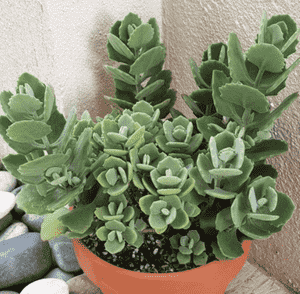
Millot kalanchoe(Kalanchoe millotii)

Millot kalanchoe (Kalanchoe millotii)

Also known as: Millot Kalanchoe

Millot kalanchoe leaves grow in pairs, with a dense layer of white tomenta on their surface. The tomenta are fuzzy like "bunny ears." The tomenta on the new leaves in particular are unusually white and endearing.

Attributes of Millot kalanchoe

Lifespan
Perennial
Plant Type
Succulent, Herb
Plant Height
30 cm
Spread
10 cm to 50 cm
Leaf Color
Green Silver
Flower Size
2.5 cm
Flower Color
White Green

ForwardPlant - Identify plants with a snap

Identify and diagnose plants, get toxicity alerts, and explore safety guides for all types of fungi.

Try for Free

Images of Millot kalanchoe

Millot kalanchoe(Kalanchoe millotii)

Quickly Identify Millot kalanchoe

1
Identify Kalanchoe millotii by its soft, velvety leaves that are gray-green in color with scalloped or toothed edges. The plant typically grows in a small, shrubby form and may produce small, star-shaped flowers.

Scientific Classification of Millot kalanchoe

Phylum
Vascular plants
Class
Dicotyledons
Order
Saxifragales
Family
Stonecrop
Genus
kalanchoe
Species
Millot kalanchoe

Planting and Growing of Millot kalanchoe

Care Difficulty
Easy
Watering Schedule
Every 2 days
Sunlight Requirements
Partial sun
Sunshine Duration
6-10 hours
Ideal Temperature
65-75℉
Soil Type
Potting Mix, Peat Mix
Soil pH
6.5-7.5
Fertilizer Type
Balanced
Pruning Season
Spring, Summer
Pruning Area
Branches, Leaves
Pruning Frequency
2 times a year
Repotting Season
Spring
Pot Type
Plastic, Ceramic

water icon How to Water Millot kalanchoe?

For Kalanchoe millotii, water until the soil feels consistently damp without becoming soggy. It’s important to let excess water drain thoroughly to encourage healthy root growth and prevent root rot. Aim for about 150 ml depending on your pot size.
What are the symptoms of an underwatered Millot kalanchoe?
What should I do if my Millot kalanchoe is not getting enough water?
What are the symptoms of an overwatered Millot kalanchoe?
How to save an overwatered Millot kalanchoe?

sunlight icon What Are the Sunlight Requirements for Millot kalanchoe?

Sunlight Requirements: Partial sun, Full sun
Duration of light: 4-6 hours daily
Partial sun to full sun ensures Kalanchoe millotii remains lush and healthy. Sufficient light exposure supports photosynthesis, enhances leaf color, and fosters growth, making the plant more resilient and aesthetically appealing.
How much sunlight does Kalanchoe millotii need?
How do I ensure Kalanchoe millotii receives ideal sunlight indoors?
Why is optimal sunlight important for Kalanchoe millotii?
More About Sunlight Requirements Techniques

temperature icon What Is the Ideal Temperature Range for Millot kalanchoe?

Ideal Temperature: 65 ~ 75℉
Kalanchoe millotii thrives best in environments with ambient temperatures ranging from 65 to 75°F. This range provides a warm yet not overly hot setting that mirrors its native conditions, promoting optimal growth, photosynthesis, and overall health.

soil icon What Soil is Best for Millot kalanchoe?

Soil type: Sandy soil, Loam, Sandy loam
Soil PH: 6.5 ~ 7.5
Kalanchoe millotii thrives in well-drained soil to prevent root rot. This requirement is crucial as it mimics its natural habitat, ensuring healthy growth and vibrant foliage. While not overly demanding, Kalanchoe millotii benefits from moderately fertile soil which supplies essential nutrients for robust growth and abundant flowering, enhancing its aesthetic appeal. Good aeration is important to allow oxygen to reach the roots, fostering a healthier root system and improving nutrient uptake which results in a more resilient plant.

fertilize icon How to Fertilize Millot kalanchoe?

Fertilizer type: Balanced
Kalanchoe millotii enjoys a balanced approach when it comes to fertilizer. A quarter-strength liquid fertilizer is ideal, applied every two weeks during the growing season. Avoid the temptation to over-fertilize as this can be more harmful than not fertilizing at all.

prune icon How to Prune Millot kalanchoe?

Pruning Time: Spring, Summer, Autumn
Focus on removing leggy growths, spent flowers, and any yellow or damaged leaves. These sections do not contribute significantly to the plant's health and removing them will encourage new, vigorous growth. When pruning, make clean cuts just above a leaf node, ensuring there is no jagged edge left behind. This method helps direct the plant’s energy towards producing new, healthy shoots. Cutting above a node encourages bushiness. After pruning, place the Kalanchoe millotii in a bright spot but away from harsh sunlight for a few days. This allows the plant to heal its wounds effectively without the added stress of intense sun exposure.

propagate icon How to Propagate Millot kalanchoe plant?

Propagate Time: Spring, Early summer
1
When propagating by cutting, choose a healthy stem from the plant that is free of pests and diseases. The cutting should be around 3-4 inches long with a few leaves attached. This helps to ensure successful rooting.
2
Use well-draining soil rich in nutrients for planting the cuttings or germinating seeds. A soil mix containing perlite and peat moss is ideal for ensuring aeration and moisture retention.
3
Insert the cutting into the soil after allowing the cut end to callous for a couple of days. For seeds, sprinkle them on the surface of the soil tray and barely cover with soil to allow for germination.
More About Propagating Techniques

repot icon How to Repot Millot kalanchoe plant?

Repotting frequency: Every 2-3 years
1
It's time to repot your Kalanchoe millotii when you notice roots growing through the drainage holes or the soil seems to dry out faster than usual. Another sign is the plant appearing top-heavy or outgrowing its current pot. Repot during the growing seasons of spring or summer for optimal recovery.
2
Select a pot that is no more than one to two inches larger in diameter than the current pot. This helps prevent overwatering by ensuring quicker drying of the soil. Opt for pots with drainage holes to avoid waterlogging, which can lead to root rot.
3
Use a well-draining cactus or succulent mix when repotting Kalanchoe millotii. Such mixes often contain sand, perlite, or pumice, facilitating good drainage and preventing root rot. The soil should remain airy to allow proper root aeration and mineral absorption.
More About Repotting Techniques

ForwardPlant - Identify plants with a snap

Find the best spots for them to optimize their health, simply using your phone.

Try for Free

Toxicity of Millot kalanchoe

Is Millot kalanchoe toxic to cat?

Millot kalanchoe presents a moderate toxicity threat to cats, especially when consumed in excessive quantities. Every part of the plant holds toxic properties, and cats might find themselves inclined to nibble on the leaves or stems. Should a cat ingest any portion of the millot kalanchoe, signs of physical distress may appear, potentially impacting the animal's well-being. Given that eating millot kalanchoe can lead to health issues, it is essential for cat owners to keep a watchful eye on their pets and restrict their access to this plant. If a cat does ingest millot kalanchoe, it is imperative for owners to obtain prompt veterinary assistance to secure the best possible outcome for their furry friend.

Is Millot kalanchoe toxic to dog?

Millot kalanchoe presents a slight toxicity threat to dogs. Although the plant is not extremely toxic, consuming it in significant amounts could result in poisoning. Dogs may be drawn to and gnaw on any section of this plant, since every part is deemed toxic. Signs of poisoning from millot kalanchoe can differ but may involve vomiting, diarrhea, lethargy, or alterations in behavior. If you believe your dog has consumed millot kalanchoe, it is essential to obtain prompt veterinary assistance to secure the optimal outcome for your pet.

Identify toxic plants for your safety

Learn which plants are harmful to you and your pets, and make informed choices for a safer home!

Try for Free
WARNING
The judgment on toxicity and danger is for reference only. We DO NOT GUARANTEE any accuracy of such judgment. Therefore, you SHALL NOT rely on such judgment. It is IMPORTANT TO SEEK PROFESSIONAL ADVICE in advance when necessary.
More About Toxic Techniques

