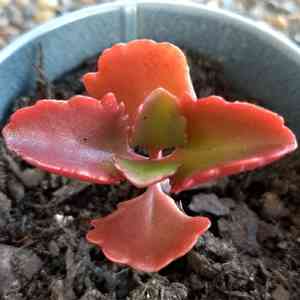
Tugela cliff-kalanchoe (Kalanchoe longiflora)
Also known as: Long-flowered Kalanchoe, Kalanchoe doringoana
Tugela cliff-kalanchoe (Kalanchoe longiflora) is a succulent shrub indigenous to South Africa. Tugela cliff-kalanchoe grows at high altitudes on shale slopes and cliff edges. It's also called long-flower kalanchoe. Due to agriculture and trampling by livestock, tugela cliff-kalanchoe is considered a rare plant in the wild. It is often planted ornamentally in rock gardens and valued for its drought tolerance.
In This Article
Attributes of Tugela cliff-kalanchoe
Lifespan
Perennial
Plant Type
Succulent, Herb
Plant Height
40 cm
Spread
30 cm
Leaf Color
Green Blue Red Brown
Flower Size
1.1 cm to 1.4 cm
Flower Color
Yellow
Images of Tugela cliff-kalanchoe
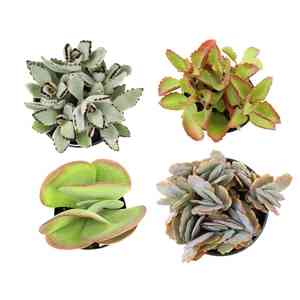
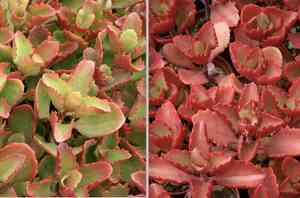
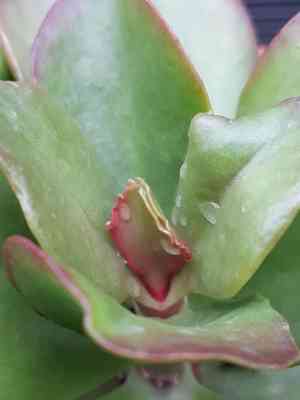
Quickly Identify Tugela cliff-kalanchoe
1
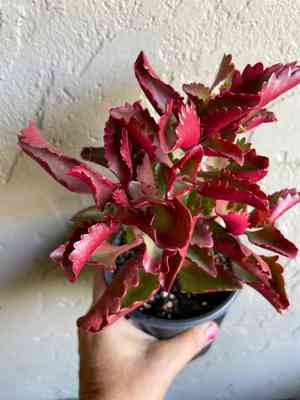
Identify Kalanchoe longiflora by its distinctive red-tinged, scalloped leaves and the long tubular yellow flowers that can appear in clusters. The leaves are typically fleshy and can have a reddish tint at the edges.
Scientific Classification of Tugela cliff-kalanchoe
Phylum
Vascular plants
Class
Dicotyledons
Order
Saxifragales
Family
Stonecrop
Genus
kalanchoe
Species
Tugela cliff-kalanchoe
Planting and Growing of Tugela cliff-kalanchoe
Care Difficulty
Easy
Watering Schedule
Every 3 days
Sunlight Requirements
Full sun
Sunshine Duration
4-8 hours
Ideal Temperature
65-75℉
Soil Type
Potting Mix, Peat Mix
Soil pH
6.5-7.5
Fertilizer Type
Balanced
Pruning Season
Spring, Summer
Pruning Area
Branches, Leaves
Pruning Frequency
2 times a year
Repotting Season
Spring
Pot Type
Plastic, Ceramic
 How to Water Tugela cliff-kalanchoe?
Ensure that you provide around 200ml of water for Kalanchoe longiflora each time. This amount is suitable to moisten the root zone adequately without causing waterlogging. You should water the plant thoroughly until you notice that the excess water starts draining out. This helps ensure that the roots are getting enough moisture without retaining excess water that can cause rot.
What are the symptoms of an underwatered Tugela cliff-kalanchoe?
›
What should I do if my Tugela cliff-kalanchoe is not getting enough water?
›
What are the symptoms of an overwatered Tugela cliff-kalanchoe?
›
How to save an overwatered Tugela cliff-kalanchoe?
›
 What Are the Sunlight Requirements for Tugela cliff-kalanchoe?
Kalanchoe longiflora thrives best in full to partial sun environments. Adequate sunlight promotes energetic photosynthesis, enhancing its growth and the production of vibrant flowers that contribute to its ornamental value.
More About Sunlight Requirements Techniques→
Optimal Sun Exposure
›
Flexible Location Choices
›
Benefits of Ideal Lighting
›
 What Is the Ideal Temperature Range for Tugela cliff-kalanchoe?
Kalanchoe longiflora thrives in environments where temperatures are consistently between 65°F and 75°F. This range allows the plant to maintain optimal growth and robust health. These temperatures mimic the subtropical conditions the plant is accustomed to in its natural habitat.
 What Soil is Best for Tugela cliff-kalanchoe?
Kalanchoe longiflora prefers soil with excellent drainage to prevent root rot. Sandy or loamy soils help water percolate through the soil quickly, maintaining the right moisture balance. This is crucial as it mimics the plant's natural habitat and supports healthy root growth. While these succulents can survive in low-nutrient environments, a nutrient-rich soil enhances their growth. Adding some organic matter can provide essential nutrients and improve soil structure, leading to more vigorous plant growth and better flowering. Aeration in the soil is essential for Kalanchoe longiflora as it ensures that roots receive enough oxygen. Soil that has good air penetration supports healthier root development and prevents common issues like root rot.
 How to Fertilize Tugela cliff-kalanchoe?
For Kalanchoe longiflora, use a balanced fertilizer with a concentration of 10-10-10 or 20-20-20. When applying liquid fertilizer, dilute it to half-strength to avoid over-fertilization and keep the plant healthy.
 How to Prune Tugela cliff-kalanchoe?
Select a pair of sharp, sterilized pruning shears for the task. For smaller, more delicate cuts, a pair of sharp scissors can suffice. Ensure tools are clean to maintain plant health. Before starting, examine the plant for any dead, damaged, or diseased parts and remove these first. Prune back to a point where the tissue is healthy, ensuring optimal plant vitality. To maintain a compact shape, periodically pinch back leggy stems to encourage a fuller appearance. Use your fingers to pinch off the soft, terminal growth, which will stimulate branching. After removing unwanted stems, focus on shaping the plant. Aim for a balanced form by evenly pruning around the plant, which promotes a symmetrical growth pattern.
 How to Propagate Tugela cliff-kalanchoe plant?
1
Choose healthy, non-flowering stems from the Kalanchoe longiflora plant. The cuttings should be about 3-5 inches long with a few leaves at the top. Ensure the stems are free from any diseases or pests.
2
Trim the cut end of each stem just below a leaf node and remove the lower leaves, leaving a few at the top. Dip the cut end in rooting hormone to encourage faster rooting before planting in a suitable medium.
3
Insert the prepared cuttings into a well-draining potting mix. Ensure that at least one node is under the soil and the leaves are not touching the soil surface to prevent rotting.
 How to Repot Tugela cliff-kalanchoe plant?
1
Kalanchoe longiflora needs repotting when roots appear through drainage holes or when growth significantly slows. Repot during spring or autumn to ensure optimal conditions for recovery and root development.
2
Select a pot just slightly larger than the current one, ideally made of porous material like terracotta. This ensures good air circulation and prevents water from lingering at the root zone, which reduces the risk of root rot.
3
Choose a well-draining succulent mix, preferably with added perlite or sand. This ensures excess water drains quickly, reducing the risk of root rot and providing an ideal environment for healthy root growth.
Toxicity
consumption
WARNING
The judgment on toxicity and danger is for reference only. We DO NOT GUARANTEE any accuracy of such judgment. Therefore, you SHALL NOT rely on such judgment. It is IMPORTANT TO SEEK PROFESSIONAL ADVICE in advance when necessary.



