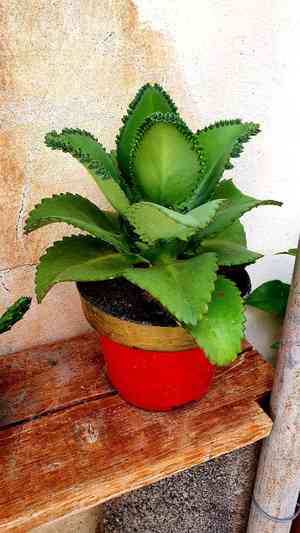
Mother of thousands (Kalanchoe laetivirens)
Also known as: Mother of Thousands, Devil's Backbone, Mexican Hat Plant
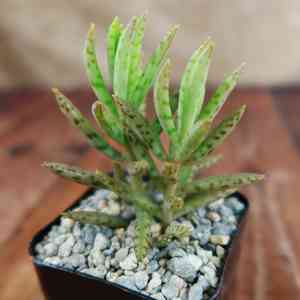
Each leaf of Kalanchoe laetivirens is long deltoid or elliptic, dark green or sage green, and has a coarsely serrated margin. Seedlings with round opposite leaves sprout naturally between each serrate margin, and each seedling is ready to grow into a new plant when it lands in the soil. The mother of thousands grows and reproduces at an alarming rate, and can soon take over every corner.
Attributes of Mother of thousands
Images of Mother of thousands
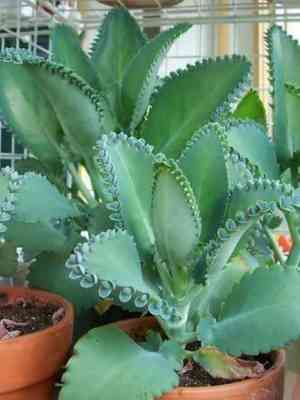
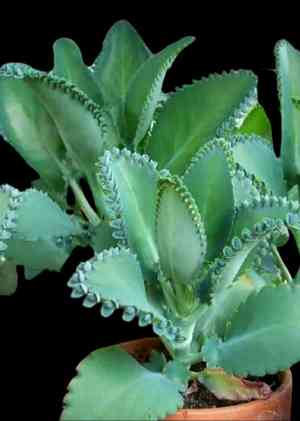
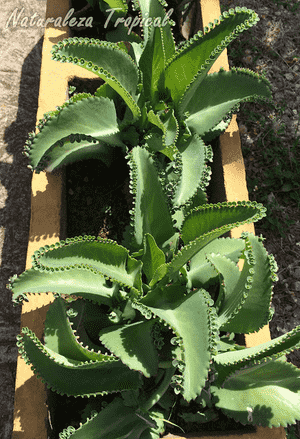
Quickly Identify Mother of thousands
Scientific Classification of Mother of thousands
Planting and Growing of Mother of thousands
 How to Water Mother of thousands?
 What Are the Sunlight Requirements for Mother of thousands?
 What Is the Ideal Temperature Range for Mother of thousands?
 What Soil is Best for Mother of thousands?
 How to Fertilize Mother of thousands?
 How to Prune Mother of thousands?
 How to Propagate Mother of thousands plant?
 How to Repot Mother of thousands plant?
Toxicity of Mother of thousands
Is Mother of thousands toxic to cat?
The mother of thousands plant poses a slight toxicity hazard to cats. Consuming any part of this plant, especially in significant quantities, can result in poisoning. Following exposure, felines might display common signs of distress, such as digestive disturbances. It is essential to keep a close eye on cats for any symptoms of illness and to promptly seek veterinary assistance if they come into contact with the mother of thousands.
Is Mother of thousands toxic to dog?
The Mother of Thousands plant poses a moderate toxicity risk for dogs. Canines may suffer poisoning if they consume significant quantities of this plant. Every part of the Mother of Thousands is regarded as toxic and can lead to poisoning. If a dog consumes any portion of this plant, they could show symptoms such as vomiting, diarrhea, lethargy, or behavioral changes. It is essential for dog owners to keep a close eye on their pets and prevent them from coming into contact with Mother of Thousands. Should a dog ingest any part of this plant, it is vital to seek prompt veterinary assistance to ensure the best possible outcome for the dog's health.



