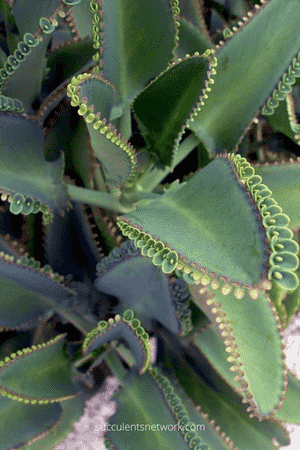
Mother of thousands(Kalanchoe daigremontiana)

Mother of thousands (Kalanchoe daigremontiana)

Also known as: Mexican hat plant, Maternity plant

The Mother of Thousands, a succulent plant originating from Madagascar, is also known by names such as "Alligator Plant" and "Devil's Backbone" due to its distinctively shaped leaves. It propagates through small "plantlets" that develop along the edges of its leaves. While it is popular for its ornamental appeal, it can become invasive in dry regions.

Attributes of Mother of thousands

Lifespan
Perennial
Plant Type
Succulent, Herb
Plant Height
50 cm to 1 m
Spread
30 cm
Leaf Color
Green Brown Silver
Flower Size
2 cm to 3 cm
Flower Color
Pink Red Silver

ForwardPlant - Identify plants with a snap

Identify and diagnose plants, get toxicity alerts, and explore safety guides for all types of fungi.

Try for Free

Images of Mother of thousands

Mother of thousands(Kalanchoe daigremontiana)

Quickly Identify Mother of thousands

1
To identify Kalanchoe daigremontiana, look for its distinctively triangular, fleshy leaves that are typically spotted with small plantlets along the edges. The leaves are usually green with purple spots or streaks. The plant can grow up to 3 feet tall.

Scientific Classification of Mother of thousands

Phylum
Vascular plants
Class
Dicotyledons
Order
Saxifragales
Family
Stonecrop
Genus
kalanchoe
Species
Mother of thousands

Planting and Growing of Mother of thousands

Care Difficulty
Easy
Watering Schedule
Every 2 days
Sunlight Requirements
Full sun
Sunshine Duration
4-8 hours
Ideal Temperature
65-85℉
Soil Type
Potting Mix, Peat Mix
Soil pH
6.5-7.5
Fertilizer Type
Balanced
Pruning Season
Spring, Summer
Pruning Area
Branches, Leaves
Pruning Frequency
Once a year
Repotting Season
Spring
Pot Type
Plastic, Ceramic

water icon How to Water Mother of thousands?

When watering Kalanchoe daigremontiana, ensure the soil is moistened without becoming waterlogged. Water with about 50 ml to allow the top inch of soil to dry out between waterings, which mimics their natural arid environment.
What are the symptoms of an underwatered Mother of thousands?
What should I do if my Mother of thousands is not getting enough water?
What are the symptoms of an overwatered Mother of thousands?
How to save an overwatered Mother of thousands?
More About Watering Techniques

sunlight icon What Are the Sunlight Requirements for Mother of thousands?

Sunlight Requirements: Full sun, Partial sun
Duration of light: 4-6 hours daily
Kalanchoe daigremontiana thrives best with 4 to 6 hours of sun, preferably with morning sun exposure. Ideal lighting promotes healthy growth, structural integrity, and vibrant foliage, ensuring the plant's capability to photosynthesize effectively.
What is the best type of sunlight?
How can I ensure the plant gets ideal sunlight?
What benefits does ideal sunlight provide?
More About Sunlight Requirements Techniques

temperature icon What Is the Ideal Temperature Range for Mother of thousands?

Ideal Temperature: 65 ~ 85℉
The ideal temperature range for Kalanchoe daigremontiana is between 65°F and 85°F. This succulent thrives in warm environments mimicking its native habitat. Consistent temperatures within this range will promote healthy growth and flowering.

soil icon What Soil is Best for Mother of thousands?

Soil type: Sandy soil, Loam
Soil PH: 6.5 ~ 7.5
Kalanchoe daigremontiana thrives in well-draining soils, which prevent water from pooling around the roots. Proper drainage helps avoid root rot, ensuring the plant maintains its health and vigor. The soil should strike a balance between retaining enough moisture for the plant's needs while ensuring excess water escapes. This balance supports healthy growth and prevents overwatering issues. This plant benefits from soils that are rich in organic matter, as they provide essential nutrients for growth. Nutrient-rich soils contribute to lush foliage and robust health. More About Soil

fertilize icon How to Fertilize Mother of thousands?

Fertilizer type: Balanced
Kalanchoe daigremontiana requires a balanced and diluted fertilizer mix. Use half the recommended strength of a regular houseplant fertilizer to avoid root burn. Apply during the growing season to support healthy development without overdoing it.

prune icon How to Prune Mother of thousands?

Pruning Time: Spring, Summer, Autumn, Winter
Begin by sterilizing your pruning tools with rubbing alcohol to prevent any disease transmission. Identify the parts of the plant that need trimming, focusing on diseased or dried-out leaves. Carefully cut away excess growth at the base or stem junctions, maintaining the plant's shape. Remove any plantlets that might overburden the mother plant, ensuring better air circulation and light penetration. After pruning, give the plant a slight watering and ensure it receives adequate indirect sunlight. Monitor the new growth for any signs of stress or disease, adjusting care routines accordingly.

propagate icon How to Propagate Mother of thousands plant?

Propagate Time: Early spring,Summer
1
Choose mature leaves from a healthy plant, ensuring they are free from disease or damage. This increases the chances of successful rooting and new plant growth.
2
Using sterilized scissors, carefully cut the leaf close to the base and allow it to callous for 1-2 days. This step prevents rot and encourages rooting.
3
Insert the calloused leaf gently into the prepared potting mix, making sure it is secure but not too deep to allow for air circulation and prevent moisture buildup.
More About Propagating Techniques

repot icon How to Repot Mother of thousands plant?

Repotting frequency: Every 2 years
1
Repotting Kalanchoe daigremontiana is necessary when you notice signs such as confined roots peeking out from drainage holes, soil that dries out too quickly, or the plant outgrowing its current container. These indicators often mean that the plant needs more space to thrive.
2
When selecting a pot for your Kalanchoe daigremontiana, opt for one that's just a couple of inches larger in diameter than its current pot. A slightly larger size ensures ample room for root expansion without leading to excessive moisture retention, reducing the risk of root rot.
3
Choose a gritty and well-aerated cactus mix to ensure optimal drainage for Kalanchoe daigremontiana. This kind of soil prevents waterlogged conditions that could lead to root rot, thereby promoting a robust root system and healthy plant growth.
More About Repotting Techniques

ForwardPlant - Identify plants with a snap

Find the best spots for them to optimize their health, simply using your phone.

Try for Free

Toxicity of Mother of thousands

Is Mother of thousands toxic to cat?

The mother of thousands plant presents a low-level toxicity hazard to cats. Instances of poisoning typically arise from the consumption of a considerable amount of the plant. Every part of the mother of thousands is toxic, making the intake of its leaves, stems, or flowers a matter of concern. If a cat consumes mother of thousands, it may show symptoms of physical distress or illness. Cat owners should keep a vigilant eye on their pets and seek urgent veterinary attention if they suspect poisoning, as prompt intervention is essential for mitigating the health effects on the cat.

Is Mother of thousands toxic to dog?

The mother of thousands plant presents a mild toxicity risk for dogs. Poisoning generally occurs when a dog ingests the plant in significant quantities. All components of the mother of thousands are regarded as toxic, indicating that consuming any part of this plant could result in poisoning. Symptoms of poisoning might encompass vomiting, diarrhea, lethargy, or alterations in behavior. If you believe your dog has consumed mother of thousands, it is crucial to obtain prompt veterinary assistance to guarantee appropriate treatment and symptom management.

Identify toxic plants for your safety

Learn which plants are harmful to you and your pets, and make informed choices for a safer home!

Try for Free
WARNING
The judgment on toxicity and danger is for reference only. We DO NOT GUARANTEE any accuracy of such judgment. Therefore, you SHALL NOT rely on such judgment. It is IMPORTANT TO SEEK PROFESSIONAL ADVICE in advance when necessary.
More About Toxic Techniques