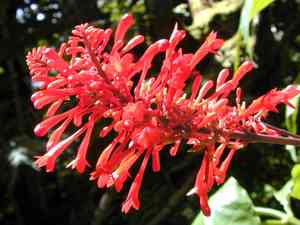
Mexican honeysuckle (Justicia spicigera)
Also known as: Orange Plume Flower, Yaxan, Muicle, Moyotle
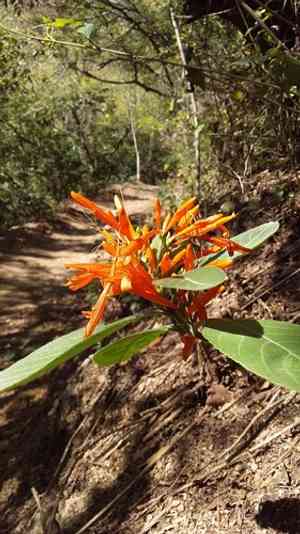
Mexican honeysuckle (Justicia spicigera) is a perennial shrub known for its vibrant orange blooms. It thrives best in full sun but can also tolerate partial shade. Native to regions including Belize, Costa Rica, El Salvador, Honduras, and Mexico, this plant prefers well-draining soil and regular watering, particularly during dry periods. While it is not frost-resistant, it flourishes in warm climates with moderate to high humidity. Light pruning can help maintain its shape and encourage fuller growth. Interestingly, the plant is also used to make a tea that turns the steeping water blue.
In This Article
Attributes of Mexican honeysuckle
Lifespan
Perennial
Plant Type
Herb
Plant Height
1.8 m
Spread
1.2 m
Leaf Color
Green
Flower Size
2.5 cm to 5 cm
Flower Color
Orange
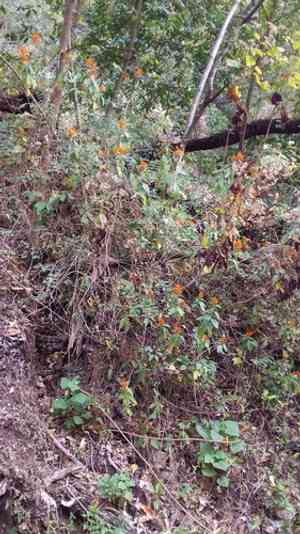
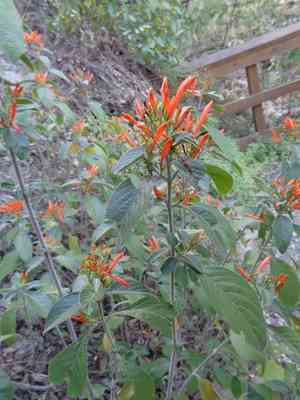
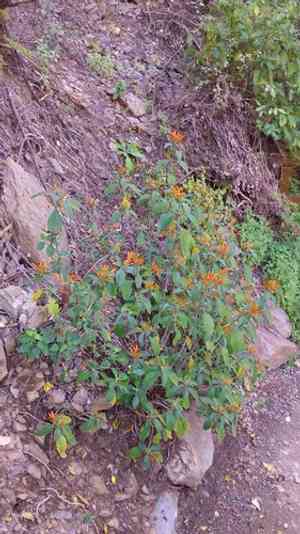
Images of Mexican honeysuckle
Quickly Identify Mexican honeysuckle
1
Look for tubular orange flowers and lanceolate leaves. The plant typically grows in a bushy form and is often about 3 to 4 feet tall.
Scientific Classification of Mexican honeysuckle
Phylum
Vascular plants
Class
Dicotyledons
Order
Lamiales
Family
Acanthus
Genus
Water-willows
Species
Mexican honeysuckle
Planting and Growing of Mexican honeysuckle
Care Difficulty
Easy
Watering Schedule
Every 4 days
Sunlight Requirements
Full sun
Sunshine Duration
6-10 hours
Ideal Temperature
65-77℉
Soil Type
Potting Mix, Peat Mix
Soil pH
6.5-7.5
Fertilizer Type
Balanced
Pruning Season
Spring, Summer
Pruning Area
Branches, Leaves
Pruning Frequency
2 times a year
Repotting Season
Spring
Pot Type
Plastic, Ceramic
 How to Water Mexican honeysuckle?
Justicia spicigera, commonly known as Mexican Honeysuckle, thrives with consistent moisture. Water thoroughly to ensure the soil is evenly saturated but not soggy. A good rule of thumb is to water until you see a bit of drainage from the bottom of the pot, ensuring the root system has received adequate moisture.
What are the symptoms of an underwatered Mexican honeysuckle?
›
What should I do if my Mexican honeysuckle is not getting enough water?
›
What are the symptoms of an overwatered Mexican honeysuckle?
›
How to save an overwatered Mexican honeysuckle?
›
 What Are the Sunlight Requirements for Mexican honeysuckle?
Justicia spicigera prospers best under partial to full sunlight conditions, with benefits including enhanced growth, rich blooming, and improved resistance to common pests and diseases.
More About Sunlight Requirements Techniques→
What is the best lighting condition for Justicia spicigera?
›
How to ensure ideal lighting for Justicia spicigera?
›
What are the benefits of ideal lighting for Justicia spicigera?
›
 What Is the Ideal Temperature Range for Mexican honeysuckle?
Justicia spicigera thrives best in a warm environment where temperatures typically range between 65°F to 77°F. Maintaining this range will facilitate optimal growth and flowering. Keeping the plant within this temperature range can help maximize photosynthesis efficiency and support lush, vibrant foliage. Deviating from this range might stunt growth or impact the overall health of the plant.
 What Soil is Best for Mexican honeysuckle?
Justicia spicigera thrives best in soil that provides excellent drainage to prevent waterlogging. Good drainage is essential to avoid root rot and ensure healthy growth. Rich and fertile soil is crucial for fulfilling the nutritional needs of the plant. The presence of organic matter supports robust growth and vibrant blooms. While drainage is important, the soil should also retain some moisture. Consistent moisture levels aid in the sustained flowering and lush foliage of the plant.
 How to Fertilize Mexican honeysuckle?
For Justicia spicigera, a balanced fertilizer with an N-P-K ratio of around 10-10-10 is ideal. During the growing season, use about half of the recommended fertilizer package amount per application to avoid overfeeding the plant, which can lead to undesirable growth.
 How to Prune Mexican honeysuckle?
Identify any stems that are weak or over-elongated. Use your shears to cut them back by about one-third to promote new, stronger growth. This will also help the plant maintain a compact, attractive shape. Once the Justicia spicigera flowers start to fade, use your shears to remove spent blooms. This encourages the plant to direct energy towards new flower production and keeps the plant looking fresh. As the Justicia spicigera grows, regularly trim the edges to maintain your preferred shape. This prevents the plant from becoming too woody and encourages bushy growth that leads to more flowers.
More About Pruning Techniques→
 How to Propagate Mexican honeysuckle plant?
1
Select a healthy, non-flowering stem approximately 10-15 cm long. Make a clean cut just below a node to increase the chances of successful rooting. Ensure the cutting has at least two sets of leaves, removing the lower set before planting.
2
For cuttings, dip the base in rooting hormone before placing it in moist, well-draining soil. For seeds, sow them about 1 cm deep in potting mix. Ensure the planting medium is kept consistently moist to encourage root development.
3
Once roots have developed in cuttings or seedlings have grown to a manageable size, transplant them to their final location. Ensure they are placed in well-draining soil and receive adequate sunlight, which is imperative for robust growth.
 How to Repot Mexican honeysuckle plant?
1
Justice spicigera should be repotted when you notice its roots are beginning to encircle the pot, or if water takes too long to drain through the soil. These signs indicate that the plant has outgrown its current home, and it's best to repot during its growing seasons in Spring or Summer to minimize stress.
2
Opt for a pot that is 1-2 inches larger in diameter than the current one. This will give the roots space to expand without overwhelming them with too much soil, which could retain excess moisture and lead to root rot. Ensure the pot has drainage holes to maintain ideal soil moisture levels.
3
A well-draining, organic-rich soil mixture is optimal for Justicia spicigera. The right mix will support robust root growth by providing essential nutrients and enabling good air circulation. Avoid overly dense soils, which can suffocate the roots and hinder plant health.
Learn More About Mexican honeysuckle Diseases
Anthracnose
Bacterial Leaf Spot
Bacterial Soft Rot
Bacterial Wilt
Black Spot
Chemical Injury
Crown Gall
Damping-off
Downy Mildew
Drought Stress
Fusarium Wilt
Gray Mold
Leaf Curl
Leaf Spot
Mosaic
Nutrient Deficiency
Nutrient Toxicity
Powdery Mildew
Root Rot
Root-knot Nematode
Sooty Mold
Spider Mites
Temperature Stress
Thrips Damage
White Mold



