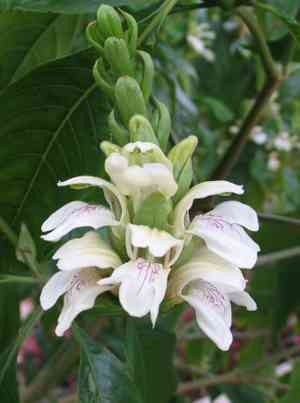
Malabar nut (Justicia adhatoda)
Also known as: Adulsa, Adhatoda
The Berberis aristata, commonly known as Indian barberry or tree turmeric, features dense branching that makes it an excellent choice for natural hedges in the Himalayan region. This plant's roots and stems are used to produce a vibrant yellow dye. Additionally, its wood is utilized for making charcoal and decorative beads due to its density.
In This Article
Attributes of Malabar nut
Lifespan
Perennial
Plant Type
Shrub
Plant Height
4 m
Spread
2 m
Leaf Color
Green
Flower Size
2.5 cm to 3 cm
Flower Color
White
Images of Malabar nut
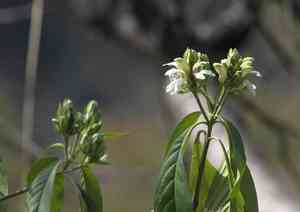
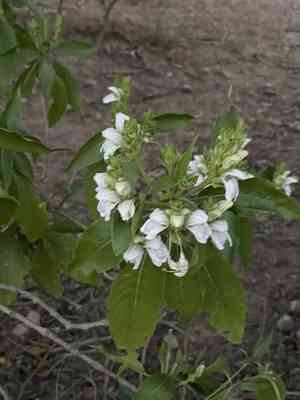
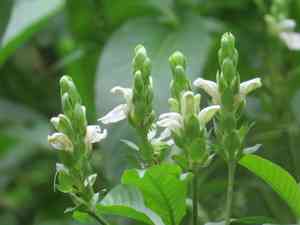
Quickly Identify Malabar nut
1
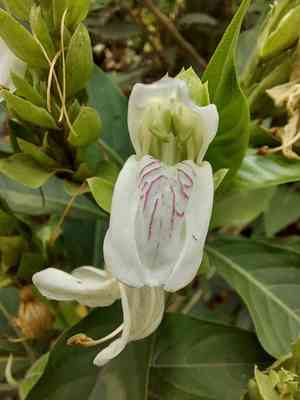
To identify Justicia adhatoda, look for its lance-shaped leaves that can measure up to 20 cm in length and 4-8 cm in width. The flowers are white with purple streaks and grow in dense spikes. The plant has a characteristic odor, especially when the leaves are crushed.
Scientific Classification of Malabar nut
Phylum
Vascular plants
Class
Dicotyledons
Order
Mints plantains olives and allies
Family
Acanthus
Genus
Water-willows
Species
Malabar nut
Planting and Growing of Malabar nut
Care Difficulty
Easy
Watering Schedule
Every 8 days
Sunlight Requirements
Partial sun
Sunshine Duration
6-8 hours
Ideal Temperature
60-75℉
Soil Type
Potting Mix, Peat Mix
Soil pH
6.5-7.5
Fertilizer Type
Balanced
Pruning Season
Spring, Summer
Pruning Area
Branches, Leaves
Pruning Frequency
2 times a year
Repotting Season
Spring
Pot Type
Plastic, Ceramic
 How to Water Malabar nut?
Justicia adhatoda favors consistent moisture, but be mindful to avoid waterlogging. When watering, the water should thoroughly soak through the soil, ensuring that every root can access it; however, it should not sit stagnant. Allow the top inch of soil to dry out before watering again.
What are the symptoms of an underwatered Malabar nut?
›
What should I do if my Malabar nut is not getting enough water?
›
What are the symptoms of an overwatered Malabar nut?
›
How to save an overwatered Malabar nut?
›
 What Are the Sunlight Requirements for Malabar nut?
Ideal light for Justicia adhatoda lies in partial to full sun conditions, meaning around 4 to 6 hours of sunlight daily. Such conditions foster robust growth, enhance resistance to pests, and promote abundant flowering.
More About Sunlight Requirements Techniques→
What is the optimal sunlight exposure for Justicia adhatoda?
›
How can I ensure Justicia adhatoda gets the right light level?
›
What are the benefits of ideal light for Justicia adhatoda?
›
 What Is the Ideal Temperature Range for Malabar nut?
The ideal temperature range for Justicia adhatoda is between 60°F and 75°F. This range ensures optimal growth and flowering, mimicking the subtropical climates where it naturally thrives. Temperatures within this range promote healthy leaf development and enhance the plant's medicinal properties, which are a key characteristic of Justicia adhatoda.
 What Soil is Best for Malabar nut?
Justicia adhatoda thrives in well-draining soil to prevent waterlogging which can lead to root rot. This condition allows for adequate air circulation and healthy root development, essential for vibrant growth. This plant benefits from soil rich in organic matter. Nutrient-rich soil provides the necessary minerals and elements for robust growth, enhancing the plant's medicinal properties and overall health. Optimal growth is promoted in soil that maintains constant moisture without being waterlogged. This balance supports steady growth and minimizes stress, ensuring a healthy, thriving plant.
 How to Fertilize Malabar nut?
Justicia adhatoda requires careful fertilization to thrive. Apply liquid fertilizer at a concentration of 1/4 the recommended dose for general houseplants. For slow-release fertilizer, use about 10 grams per plant annually. Always ensure that fertilizers are well-diluted to prevent root burn and other adverse effects.
 How to Prune Malabar nut?
Before you start pruning Justicia adhatoda, make sure you have clean and sharp pruning shears. Using the right tools prevents damage to the plant and ensures clean cuts that heal quickly. Look for branches that are dead, diseased, or broken. These should be pruned first to prevent the spread of diseases and to promote healthy growth. Remove these branches at their base or where they join a healthy branch. Justicia adhatoda benefits from being slightly shaped. Trim back overgrown branches to encourage a bushier growth habit. Aim to create a balanced shape so that light and air can penetrate to the inner branches. If your plant is too dense, selectively remove some internal branches to improve air circulation and light penetration. This thinning helps reduce the risk of disease and supports overall health.
More About Pruning Techniques→
 How to Propagate Malabar nut plant?
1
Collect seeds from healthy Justicia adhatoda plants once they mature on the plant. It's important to select seeds from plants that exhibit desirable traits for better propagation results.
2
Select a healthy stem from the parent plant and cut a section that is around 6-8 inches long. Ensure to remove leaves from the lower half to prevent rot when planted in soil.
3
Carefully dig up a healthy parent plant and gently separate the root ball into smaller sections, ensuring each section has sufficient roots and stems.
 How to Repot Malabar nut plant?
1
Justicia adhatoda should be repotted when you notice roots emerging from the drainage holes of its current container or when the growth appears stunted, indicating that the roots have outgrown their space. Spring is ideal for this process due to its active growth phase.
2
Select a pot that is one size larger than the current one, with adequate drainage holes to prevent waterlogging. A slightly porous material like terracotta helps improve aeration and prevents root rot by allowing moisture to escape.
3
A well-draining, fertile mix is essential for Justicia adhatoda. This kind of soil prevents waterlogging and supplies adequate nutrients, enhancing both aeration and root development for healthier plant growth.
Learn More About Malabar nut Diseases
Anthracnose
Bacterial Leaf Spot
Bacterial Soft Rot
Bacterial Wilt
Black Spot
Chemical Injury
Crown Gall
Cyst Nematode
Damping-off
Downy Mildew
Drought Stress
Fusarium Wilt
Gray Mold
Leaf Curl
Leaf Spot
Mosaic
Nutrient Deficiency
Nutrient Toxicity
Powdery Mildew
Root Rot
Root-knot Nematode
Rusts
Sooty Mold
Spider Mites
Temperature Stress
Thrips Damage
White Mold



