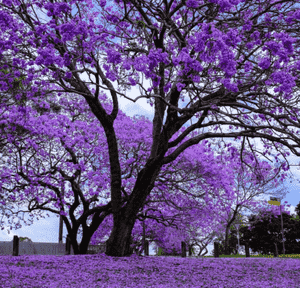
Blue jacaranda (Jacaranda mimosifolia)
Also known as: Fern tree, Brazilian rosewood
The blue jacaranda (Jacaranda mimosifolia), originally from southern South America, is a popular tree in many global cities. Notably, Pretoria in South Africa is famously called the Jacaranda City due to the abundance of these striking blue trees. This tree is frequently mentioned in various songs and literary works.
In This Article
Attributes of Blue jacaranda
Lifespan
Perennial
Plant Type
Tree
Plant Height
5 m to 20 m
Spread
4.5 m to 9 m
Leaf Color
Green
Flower Size
18 cm
Flower Color
Purple Blue
Images of Blue jacaranda
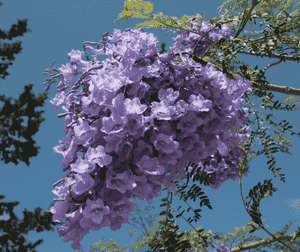

Quickly Identify Blue jacaranda
1
Bipinnately compound leaves over 1 foot long with narrow elliptical leaflets.
2
Lavender-blue trumpet-shaped flowers in terminal panicles during late spring and summer.
3
Flat woody fruit capsules measuring 2 inches wide by 3 inches long.
Scientific Classification of Blue jacaranda
Phylum
Vascular plants
Class
Dicotyledons
Order
Mints plantains olives and allies
Family
Bignonia
Genus
Jacaranda
Species
Blue jacaranda
Planting and Growing of Blue jacaranda
Care Difficulty
Easy
Watering Schedule
Every 4 days
Sunlight Requirements
Full sun
Sunshine Duration
4-6 hours
Ideal Temperature
68-77℉
Soil Type
Potting Mix, Peat Mix
Soil pH
6.5-7.5
Fertilizer Type
Balanced
Pruning Season
Spring, Summer
Pruning Area
Branches, Leaves
Pruning Frequency
2 times a year
Repotting Season
Spring
Pot Type
Plastic, Ceramic
 How to Water Blue jacaranda?
Jacaranda mimosifolia requires thorough watering, aiming for about 1000 milliliters each time. Ensure you water until the soil is evenly moist but not soggy, allowing the excess to drain away. The goal is to keep the root zone adequately hydrated without overwaterlogging.
More About Watering Techniques→
What are the symptoms of an underwatered Blue jacaranda?
›
What should I do if my Blue jacaranda is not getting enough water?
›
What are the symptoms of an overwatered Blue jacaranda?
›
How to save an overwatered Blue jacaranda?
›
 What Are the Sunlight Requirements for Blue jacaranda?
Jacaranda mimosifolia thrives in full sun, where it benefits most from 6 to 8 hours of daily sunlight. This exposure level maximizes photosynthesis, supporting healthier growth and vibrant flowers essential for its beauty.
More About Sunlight Requirements Techniques→
What is the ideal lighting for Jacaranda mimosifolia?
›
How can one achieve ideal lighting conditions for this plant?
›
What are the benefits of ideal lighting for Jacaranda mimosifolia?
›
 What Is the Ideal Temperature Range for Blue jacaranda?
The ideal temperature range for Jacaranda mimosifolia is between 68°F to 77°F. These temperatures provide optimal conditions for growth and flowering. It ensures the plant receives adequate warmth without the risk of overheating, facilitating healthy physiological processes.
 What Soil is Best for Blue jacaranda?
Jacaranda mimosifolia thrives in a nutrient-rich soil environment that supports robust growth and vibrant blooms. Fertile loamy soil is ideal because it provides a good balance of nutrients and organic matter, which helps the plant to establish strong roots and maintain healthy foliage. This plant requires well-drained soil to prevent waterlogging, which can lead to root rot. A mix of loam and sandy elements ensures adequate drainage while retaining sufficient moisture, promoting optimal plant health and stability. Jacaranda mimosifolia prefers its soil to be moist but not overly saturated. Proper watering practices and a bed of soil that holds moisture while allowing excess water to pass through are important for the plant's vigor and resilience against drought stress.
More About Soil→
 How to Fertilize Blue jacaranda?
When fertilizing Jacaranda mimosifolia, use a balanced fertilizer diluted to half strength to avoid burning the roots. For liquid fertilizers, use about 5-10 ml per gallon of water. Slow-release fertilizers should be applied sparingly around the drip line, about 50-100 grams each time.
More About Fertilizing Techniques→
 How to Prune Blue jacaranda?
Begin by examining your Jacaranda tree for any dead, diseased, or damaged branches. These should be removed first as they can harbor pests and diseases that may spread to healthy parts of the tree. Ensure you have the right tools for the job, such as sharp pruning shears, a pruning saw, and loppers. Sharp tools make clean cuts that heal faster, minimizing stress on the tree. Prune to shape the canopy by cutting back overgrown branches. Focus on maintaining an attractive, balanced structure that enhances sunlight penetration and air circulation, crucial for the tree's health. Eliminate suckers (vigorous shoots growing from the root) and water sprouts (vertical shoots growing from branches) to direct energy toward the main branches and maintain tree vigor.
More About Pruning Techniques→
 How to Propagate Blue jacaranda plant?
1
Before planting, Jacaranda seeds require a pre-soaking step. Soak the seeds in lukewarm water for 24 hours to help soften the seed coat. This process helps improve germination rates by encouraging water absorption.
2
Select healthy branches for cuttings approximately 6 inches long. Cut just below a node where the leaf meets the stem. Remove any flowers and excess leaves to reduce moisture loss and focus the plant's energy on root development.
3
Plant the cuttings in a well-draining potting mix and cover them with a plastic cover to maintain humidity. For seeds, plant them in a seed tray with a thin layer of soil on top and keep the tray in a warm, bright location.
 How to Repot Blue jacaranda plant?
1
Observe the roots peeking out of the drain holes or compacted soil, indicating the need for a new home. Early growth lag or yellowing leaves also signal the root system is possibly stressed, entangled, or nutrient-deprived.
2
Opt for a pot slightly larger than the current one to accommodate new root growth. Ensure there are ample drainage holes; this avoids excess water retention, which can lead to root rot, giving your jacaranda space and air.
3
Choose well-draining, nutrient-rich soil to provide optimal root conditions. A mix enhanced with sand or perlite ensures that water drains efficiently, preventing waterlogged roots and allowing roots to breathe and expand freely.



