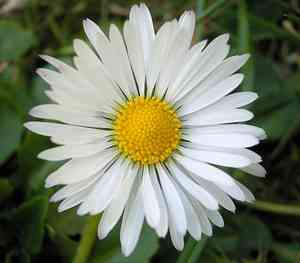
Menzies' goldenbush (Isocoma menziesii)
Also known as: Decumbent goldenbush, Green-leaved dune goldenbush
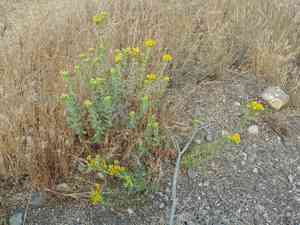
The plant you are referring to is likely Menzies' goldenbush (*Isocoma menziesii*). This perennial shrub can reach heights of up to 91 cm and spread about 1.5 m in width. Native to California's coastal regions, it thrives in sandy soils. Blooming from spring through fall, it showcases dense clusters of yellow flowers that attract butterflies, bees, and moths.
In This Article
Attributes of Menzies' goldenbush
Lifespan
Perennial
Plant Type
Shrub
Plant Height
1.02 m to 2 m
Spread
1.8 m
Leaf Color
Green
Flower Size
2.5 mm to 8 mm
Flower Color
Yellow
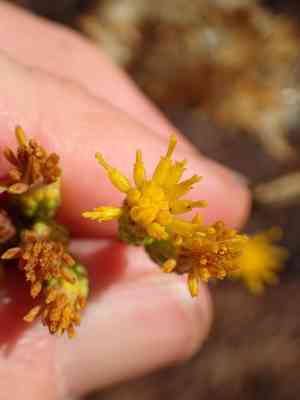
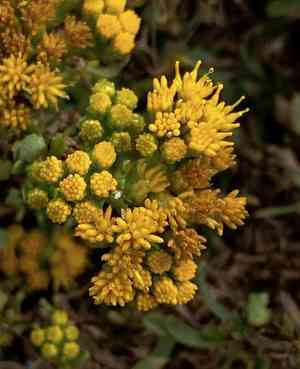
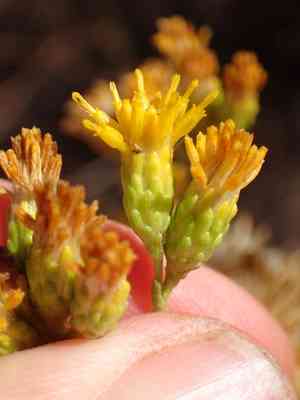
Images of Menzies' goldenbush
Quickly Identify Menzies' goldenbush
1
Isocoma menziesii can be identified by its shrubby appearance, reaching heights between 1 to 4 feet. Its leaves are narrow, green, and occasionally sticky. The plant produces clusters of small, bright yellow flowers, typically blooming from late summer to fall.
Scientific Classification of Menzies' goldenbush
Phylum
Vascular plants
Class
Dicotyledons
Order
Asterales
Family
Daisy
Genus
Jimmyweeds
Species
Menzies' goldenbush
Planting and Growing of Menzies' goldenbush
Care Difficulty
Easy
Watering Schedule
Every 2 days
Sunlight Requirements
Full sun
Sunshine Duration
4-8 hours
Ideal Temperature
60-75℉
Soil Type
Potting Mix, Peat Mix
Soil pH
6.5-7.5
Fertilizer Type
Balanced
Pruning Season
Spring, Summer
Pruning Area
Branches, Leaves
Pruning Frequency
2 times a year
Repotting Season
Spring
Pot Type
Terracotta, Plastic
 How to Water Menzies' goldenbush?
Isocoma menziesii should receive around 500 milliliters of water at each watering session. Ensure that the water reaches the roots but doesn't oversaturate the soil. The ideal approach is to water thoroughly until the water starts to drain from the bottom of the pot, ensuring deep hydration of the root system while preventing waterlogging.
What are the symptoms of an underwatered Menzies' goldenbush?
›
What should I do if my Menzies' goldenbush is not getting enough water?
›
What are the symptoms of an overwatered Menzies' goldenbush?
›
How to save an overwatered Menzies' goldenbush?
›
 What Are the Sunlight Requirements for Menzies' goldenbush?
Being a full sun plant, the ideal light range entails exposure to unfiltered sunlight for 6 to 8 hours each day. Proper sunlight ensures a robust metabolic process, leading to impressive flowering and improved overall plant health.
More About Sunlight Requirements Techniques→
What is the best lighting for Isocoma menziesii?
›
How can I ensure it gets ideal light?
›
What benefits does ideal light provide?
›
 What Is the Ideal Temperature Range for Menzies' goldenbush?
The ideal temperature range for Isocoma menziesii, commonly known as Menzies' goldenbush, lies between 60-75°F. This range represents the conditions under which the plant is most likely to thrive, displaying optimal growth and nutrient uptake. Providing these temperatures helps in simulating its natural habitat, ensuring the plant can perform essential photosynthetic and metabolic processes efficiently.
 What Soil is Best for Menzies' goldenbush?
Isocoma menziesii thrives in well-drained soil, which prevents root rot and other moisture-related issues. This kind of soil ensures that the roots have access to oxygen and are not waterlogged, promoting healthy plant growth. This plant can withstand nutrient-poor conditions, making it ideal for low-maintenance gardens. It does not require frequent fertilization, which reduces the gardener's workload and is more sustainable in nutrient-deficient regions. The plant's ability to withstand dry conditions makes it suitable for areas with limited water supply. This trait minimizes watering needs and helps in conserving water resources, while still allowing the plant to flourish.
 How to Fertilize Menzies' goldenbush?
For Isocoma menziesii, applying liquid fertilizer requires careful measurement. Use a balanced, water-soluble fertilizer diluted to half the strength recommended on the packaging. Generally, 50-100 ml per plant depending on the size of the plant is sufficient. Avoid over-fertilizing as this can harm the plant.
 How to Prune Menzies' goldenbush?
Begin by identifying dead or unhealthy stems and cut them back to the base. Focus next on thinning out crowded areas, which will promote better air circulation. This reduces the risk of diseases. Maintain the desired shape by trimming back outlier stems, keeping the plant looking neat and vibrant. Aim to maintain a balanced form to promote even growth. The optimal time for pruning Isocoma menziesii is in early spring before new growth fully begins. Repeat lightly in midsummer if needed. When pruning, make cuts at a 45-degree angle, which helps water run off and prevents rot. Always cut above a node to encourage new branching from that point.
More About Pruning Techniques→
 How to Propagate Menzies' goldenbush plant?
1
Start by filling a seed tray with a well-draining potting mix. Sow the seeds lightly, covering them with a thin layer of soil. Keep the soil consistently moist and provide warmth and light to encourage germination.
2
Select healthy stems and use sharp pruning shears to take 4-6 inch cuttings. Strip the leaves from the lower half and treat the cuttings with rooting hormone to enhance root development before planting them in a suitable medium.
3
Carefully dig up the plant and gently separate the roots with your hands or a clean tool. Replant the divisions in prepared soil and water them thoroughly to ensure successful establishment.
 How to Repot Menzies' goldenbush plant?
1
Isocoma menziesii should be repotted when you notice its roots are overflowing from the drainage holes or if the plant has become too large for its current pot. Another signal is when growth seems stunted due to root-bound compactness. Observing these signs ensures your plant remains healthy and continues to thrive.
2
Select a pot that is one size larger than the current one with adequate drainage holes. A slightly bigger pot allows the roots to spread comfortably, ensuring robust growth by providing ample space and good air circulation. Proper drainage helps prevent root rot by allowing excess water to escape.
3
Opt for a well-draining sandy mix, as Isocoma menziesii thrives in soil that mimics its natural environment. This kind of soil prevents waterlogging, which is crucial in avoiding root rot, while also ensuring that essential nutrients are readily available to the plant.
Toxicity
Ingestion
WARNING
The judgment on toxicity and danger is for reference only. We DO NOT GUARANTEE any accuracy of such judgment. Therefore, you SHALL NOT rely on such judgment. It is IMPORTANT TO SEEK PROFESSIONAL ADVICE in advance when necessary.
Learn More About Menzies' goldenbush Diseases
Anthracnose
Bacterial Leaf Spot
Bacterial Wilt
Crown Gall
Cyst Nematode
Damping-off
Downy Mildew
Drought Stress
Fusarium Wilt
Gray Mold
Leaf Curl
Leaf Spot
Mosaic
Nutrient Deficiency
Nutrient Toxicity
Powdery Mildew
Root Rot
Root-knot Nematode
Rusts
Sooty Mold
Spider Mites
Temperature Stress
Thrips Damage
White Mold



