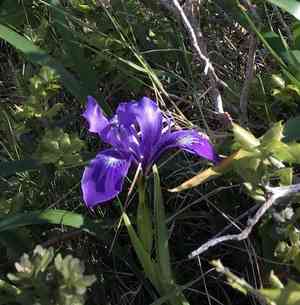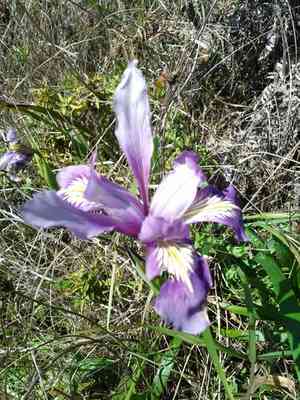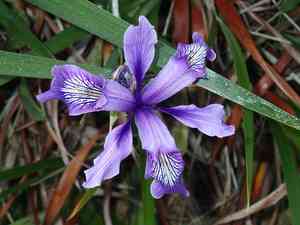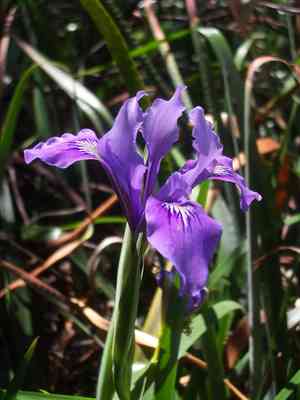
Douglas Iris(Iris douglasiana)

Douglas Iris (Iris douglasiana)

Also known as: Douglas Iris

Douglas Iris (Iris douglasiana) is a versatile flowering plant commonly used in gardens. Known for its ease of care once established, it can be utilized in several ways:

1. **Aesthetic Beauty**: Its striking blue to purple blooms bring vibrant color to garden beds.
2. **Ground Cover**: It serves as an excellent ground cover, particularly in shaded areas under trees.
3. **Native and Drought-Tolerant Gardens**: As a California native, it's perfect for native plant gardens and requires little water.
4. **Cut Flowers**: Its attractive flowers work well in floral arrangements.
5. **Erosion Control**: The plant's robust root system helps prevent soil erosion, especially on slopes.

These attributes make Douglas Iris a valuable addition to a variety of garden designs.

Attributes of Douglas Iris

Lifespan
Perennial
Plant Type
Herb
Plant Height
15 cm to 91 cm
Spread
50 cm
Leaf Color
Green Blue
Flower Size
8 cm
Flower Color
Purple Blue

PlantJoy - Identify plants with a snap

Identify and diagnose plants, get toxicity alerts, and explore safety guides for all types of fungi.

Try for Free

Images of Douglas Iris

Douglas Iris(Iris douglasiana)

Quickly Identify Douglas Iris

1
Dense clumps of arching foliage, 18 inches (45 cm) tall.
2
Year-round presence of leaves.
3
Pale blue flowers, 1-2 feet (30-60 cm) tall.
4
Flower color ranges from lavender-blue to almost white.
5
Characteristic Iris family flower form.

Scientific Classification of Douglas Iris

Phylum
Vascular plants
Class
Monocotyledons
Order
Asparagales
Family
Iris
Genus
Irises
Species
Douglas Iris

Planting and Growing of Douglas Iris

Care Difficulty
Easy
Watering Schedule
Every 3 days
Sunlight Requirements
Partial sun
Sunshine Duration
6-8 hours
Ideal Temperature
60-75℉
Soil Type
Potting Mix, Peat Mix
Soil pH
6.5-7.5
Fertilizer Type
Balanced
Pruning Season
Spring, Summer
Pruning Area
Branches, Leaves
Pruning Frequency
2 times a year
Repotting Season
Spring
Pot Type
Plastic, Ceramic

water icon How to Water Douglas Iris?

For Iris douglasiana, each watering session should penetrate the soil thoroughly until the root zone is moist, ensuring approximately 250 ml per session. This helps maintain soil moisture while avoiding waterlogging.
What are the symptoms of an underwatered Douglas Iris?
What should I do if my Douglas Iris is not getting enough water?
What are the symptoms of an overwatered Douglas Iris?
How to save an overwatered Douglas Iris?

sunlight icon What Are the Sunlight Requirements for Douglas Iris?

Sunlight Requirements: Partial sun
Duration of light: 4 to 6 hours
Iris douglasiana prefers partial sun, ideally receiving about 4 to 6 hours of filtered sunlight per day. This range supports robust leaf development and vibrant flowering while preventing leaf damage caused by extreme sun exposure.
Best Time for Sun Exposure
Filtered Sunlight Solutions
Sunlight Monitoring Setup
More About Sunlight Requirements Techniques

temperature icon What Is the Ideal Temperature Range for Douglas Iris?

Ideal Temperature: 60 ~ 75℉
The ideal temperature range for growing Iris douglasiana is between 60°F and 75°F. Within this range, the plant exhibits optimal growth and vitality, responding well to both daytime warmth and cooler nighttime temperatures. Maintaining these temperatures ensures healthy foliage and vibrant blooms.

soil icon What Soil is Best for Douglas Iris?

Soil type: Sandy loam, Loam, Clay soil
Soil PH: 6.5 ~ 7.5
Iris douglasiana thrives in well-drained soil since it prevents root rot, ensuring healthy root development and vigorous growth. Good drainage allows the plant to absorb nutrients efficiently. Soil rich in organic matter promotes lush foliage and vibrant blooms. Organic matter improves soil fertility, providing essential nutrients and enhancing overall soil structure for better aeration. While this iris prefers well-drained conditions, soil that retains some moisture is ideal. This balance ensures the plant receives adequate water during dry spells without becoming waterlogged.

fertilize icon How to Fertilize Douglas Iris?

Fertilizer type: Balanced
For Iris douglasiana, it is essential to apply fertilizer thoughtfully. When using liquid fertilizer, a half-strength solution is generally sufficient. This ensures that the plant receives essential nutrients without the risk of over-fertilization. Typically, one cup of the liquid solution per plant every month is adequate. For slow-release fertilizers, use 1-2 tablespoons per plant, lightly worked into the top inch of the soil to ensure proper nutrient distribution.

prune icon How to Prune Douglas Iris?

Pruning Time: Spring, Summer
Begin by scanning the plant for any damaged, diseased, or yellowing leaves. These should be the first to get pruned to direct the plant’s energy toward healthy growth. Once the flowers have faded, cut them back to encourage more blooms. Use your shears to snip off the spent flower stalks close to the base. More About Pruning Techniques

propagate icon How to Propagate Douglas Iris plant?

Propagate Time: Spring, Early spring, Late spring
1
Collect seeds from mature Iris douglasiana pods in the fall and store them in a cool, dry place until spring to ensure proper germination when planted.
2
Fill the seed tray with a well-draining seed starting mix and moisten it slightly before sowing the seeds evenly on the surface. Cover with a thin layer of soil.
3
Dig up and gently separate the rhizomes with a sharp knife during early spring, ensuring each division has viable roots and at least one growing eye for successful propagation.
More About Propagating Techniques

repot icon How to Repot Douglas Iris plant?

Repotting frequency: Every 2-3 years
1
Iris douglasiana shows signs it needs repotting when the roots crowd the pot, peeking out of drainage holes. Spring or autumn is ideal for transplanting, aligning with its growth cycles for minimal stress.
2
Select a pot slightly larger than the current one with ample drainage holes. This ensures roots have space to grow, preventing root rot. Clay pots work well, offering breathability and maintaining soil moisture balance.
3
Opt for a well-draining sandy soil mix, enriched with organic material. This combination mirrors the plant's natural habitat, enhancing aeration and nutrient availability, which are crucial for robust growth post-transplant.

PlantJoy - Identify plants with a snap

Find the best spots for them to optimize their health, simply using your phone.

Try for Free

Toxicity

Ingestion

Identify toxic plants for your safety

Learn which plants are harmful to you and your pets, and make informed choices for a safer home!

Try for Free
WARNING
The judgment on toxicity and danger is for reference only. We DO NOT GUARANTEE any accuracy of such judgment. Therefore, you SHALL NOT rely on such judgment. It is IMPORTANT TO SEEK PROFESSIONAL ADVICE in advance when necessary.