Meyer's morning-glory(Ipomoea meyeri)

Meyer's morning-glory (Ipomoea meyeri)

Also known as: Morning Glory, Blue Dawn Flower

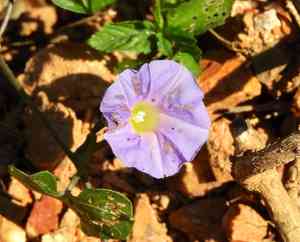
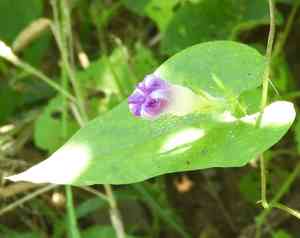
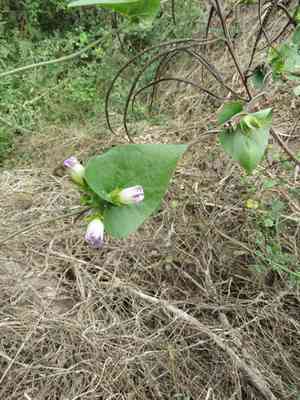
Meyer's morning-glory (Ipomoea cordatotriloba) is a perennial vine notable for its heart-shaped leaves and eye-catching, funnel-shaped flowers. These blossoms, which primarily open in the morning, exhibit a range of colors from deep purple to blue, providing a vivid addition to any landscape.

**Key Characteristics:**
- **Leaves:** Distinctly heart-shaped.
- **Flowers:** Funnel-shaped, varying from deep purple to blue.
- **Bloom Time:** Predominantly in the morning.

**Growing Conditions:**
- **Climate:** Prefers tropical and subtropical regions.
- **Sunlight:** Thrives in full sun.
- **Soil:** Well-drained soil is ideal.
- **Resilience:** Adaptable to various environmental conditions.

This vine is commonly used for ornamental purposes, enhancing trellises, fences, and ground covers with its vibrant flowers and robust growth.

Attributes of Meyer's morning-glory

Lifespan
Perennial
Plant Type
Vine, Herb
Plant Height
3-6 meters (10-20 feet)
Spread
1-3 meters (3-10 feet)
Leaf Color
Dark green
Flower Size
5-7 centimeters (2-3 inches)
Flower Color
Blue to purplish

ForwardPlant - Identify plants with a snap

Identify and diagnose plants, get toxicity alerts, and explore safety guides for all types of fungi.

Try for Free

Images of Meyer's morning-glory

Meyer's morning-glory(Ipomoea meyeri)

Quickly Identify Meyer's morning-glory

1
To identify Ipomoea meyeri, look for its heart-shaped leaves and bright blue to purplish funnel-shaped flowers. The plant typically climbs by twining around supports, and its stems can be quite woody at the base.

Scientific Classification of Meyer's morning-glory

Phylum
Vascular plants
Class
Dicotyledons
Order
Solanales
Family
Morning-glory
Genus
Morning glories
Species
Meyer's morning-glory

Planting and Growing of Meyer's morning-glory

Care Difficulty
Moderate
Watering Schedule
Every 4 days
Sunlight Requirements
Full sun
Sunshine Duration
6-12 hours
Ideal Temperature
68-86℉
Soil Type
Potting Mix, Peat Mix
Soil pH
6.5-7.5
Fertilizer Type
Balanced
Pruning Season
Spring, Summer
Pruning Area
Branches, Leaves
Pruning Frequency
2 times a year
Repotting Season
Spring
Pot Type
Terracotta, Plastic

water icon How to Water Meyer's morning-glory?

For Ipomoea meyeri, water until the soil is thoroughly moist but not waterlogged. The soil should feel evenly damp to the touch, ensuring that moisture reaches the roots while not pooling up. This plant prefers well-drained conditions, so always allow the excess water to drain away freely.
What are the symptoms of an underwatered Meyer's morning-glory?
What should I do if my Meyer's morning-glory is not getting enough water?
What are the symptoms of an overwatered Meyer's morning-glory?
How to save an overwatered Meyer's morning-glory?

sunlight icon What Are the Sunlight Requirements for Meyer's morning-glory?

Sunlight Requirements: Full sun, Partial sun
Duration of light: 6 to 8 hours daily
Ipomoea meyeri prefers full to partial sun, ideally receiving 6-8 hours of light. Proper light exposure promotes vigorous growth and abundant blooming, crucial for its aesthetic appeal.
Optimal Lighting for Growth
Adjusting to Partial Sunlight
Using Artificial Grow Lights

temperature icon What Is the Ideal Temperature Range for Meyer's morning-glory?

Ideal Temperature: 68 ~ 86℉
The ideal temperature range for Ipomoea meyeri, typically between 68°F and 86°F, ensures optimal growth and flowering. This temperature range supports efficient photosynthesis and metabolism, which are crucial for robust development. Maintaining these conditions helps in preventing stress and reducing the likelihood of diseases.

soil icon What Soil is Best for Meyer's morning-glory?

Soil type: Sandy soil, Loam, Sandy loam
Soil PH: 6.5 ~ 7.5
Ipomoea meyeri thrives best in well-drained soil, which prevents waterlogging and ensures the roots get ample air. This clarification promotes strong and healthy growth, reducing the risk of root rot. This plant benefits from soil that is rich in organic matter. A nutrient-rich substrate supports vigorous foliage and flowering, ensuring the plant has all it needs for robust development. Ipomoea meyeri prefers soil that retains a moderate amount of moisture. Keeping the soil optimally moist helps maintain plant vitality and supports sustained growth without the stress of drought.

fertilize icon How to Fertilize Meyer's morning-glory?

Fertilizer type: Balanced
When fertilizing Ipomoea meyeri, it's crucial to balance the nutrients. Typically, use a balanced 10-10-10 NPK fertilizer. For liquid fertilizers, dilute to half strength to avoid root burn and apply about 200 ml per plant.

prune icon How to Prune Meyer's morning-glory?

Pruning Time: Spring, Summer
Before you start, examine the plant for any dead or damaged growth. Remove these parts first, cutting just above a healthy leaf node to encourage new growth. After removing dead growth, focus on shaping the plant. Prune excess growth that disrupts symmetry, ensuring you maintain the natural shape while allowing air and light to reach the center. To encourage more blooms, prune back to a pair of healthy leaves or a node. This method encourages the explosion of flowers and maintains the plant's energy focus on blooming. More About Pruning Techniques

propagate icon How to Propagate Meyer's morning-glory plant?

Propagate Time: Spring, Early summer
1
Before planting, soak seeds in warm water for 12 hours to improve germination rates, and ensure they are viable and ready for propagation.
2
Choose a healthy stem that is free from disease and has at least a couple of leaves, and cut at an angle just below a node.
3
Plant seeds or cuttings into well-draining soil, keep them moist, and place them in a warm location with indirect sunlight.
More About Propagating Techniques

repot icon How to Repot Meyer's morning-glory plant?

Repotting frequency: Every 2-3 years
1
Ipomoea meyeri typically needs repotting when its roots outgrow the current container, often visible when roots emerge from the drainage holes. Additional signs include slowed growth or the soil drying out rapidly after watering.
2
Select a pot that is one size larger than the current, with ample drainage holes to prevent waterlogging. The ideal pot will provide room for root growth, fostering a healthier plant.
3
Use a well-draining potting mix rich in organic matter, allowing roots to breathe while retaining adequate moisture. This fosters healthier root development and prevents root rot.

ForwardPlant - Identify plants with a snap

Find the best spots for them to optimize their health, simply using your phone.

Try for Free