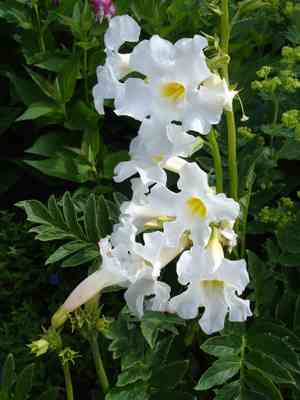
Chinese trumpet-flower (Incarvillea delavayi)
Also known as: Hardy Gloxinia, Chinese Trumpet Flower
The scientific name of the Chinese trumpet-flower is Incarvillea delavayi. Ideally, it thrives in gardens with plenty of sunlight and well-drained soil. Originating from southwestern China, this plant is characterized by its trumpet-shaped flowers and can attract slugs.
In This Article
Attributes of Chinese trumpet-flower
Lifespan
Perennial, Annual
Plant Type
Herb
Plant Height
30 cm to 61 cm
Spread
30 cm
Leaf Color
Green
Flower Size
3.5 cm
Flower Color
Pink White Red Purple
Images of Chinese trumpet-flower
Quickly Identify Chinese trumpet-flower
1
Trumpet-shaped bright pink flowers in clusters atop 2 feet (60 cm) tall stalks.
2
Pinnately compound leaves with deep lobes, spreading bushy appearance, 4-6 inches (10-15 cm) long.
3
Fern-like leaves forming rosettes up to 12 inches (30 cm) long, intricate lace-like texture.
4
Leafless erect stem, smooth green with occasional branching near base, up to 2 feet (60 cm).
5
Flowers clustered, 5-12 blossoms, 2 1/2 inches (6.35 cm) long, pink-red with yellow throats.
Scientific Classification of Chinese trumpet-flower
Phylum
Vascular plants
Class
Dicotyledons
Order
Lamiales
Family
Bignonia
Genus
Incarvillea
Species
Chinese trumpet-flower
Planting and Growing of Chinese trumpet-flower
Care Difficulty
Easy
Watering Schedule
Every 2 days
Sunlight Requirements
Partial sun
Sunshine Duration
6-10 hours
Ideal Temperature
60-75℉
Soil Type
Potting Mix, Peat Mix
Soil pH
6-7.5
Fertilizer Type
Balanced
Pruning Season
Spring, Summer
Pruning Area
Branches, Leaves
Pruning Frequency
Once a year
Repotting Season
Spring
Pot Type
Plastic, Ceramic
 How to Water Chinese trumpet-flower?
Incarvillea delavayi requires watering until the soil is thoroughly moist but not waterlogged. You should aim for around 500 ml per watering session, allowing the soil to dry slightly between the waterings. This ensures that the soil remains consistently moist without encouraging mold growth or root rot.
What are the symptoms of an underwatered Chinese trumpet-flower?
›
What should I do if my Chinese trumpet-flower is not getting enough water?
›
What are the symptoms of an overwatered Chinese trumpet-flower?
›
How to save an overwatered Chinese trumpet-flower?
›
 What Are the Sunlight Requirements for Chinese trumpet-flower?
Partial sun over 4 to 6 hours. Providing this range helps Incarvillea delavayi achieve balanced growth, vibrant foliage, and lush blooming habits, enhancing its overall aesthetic and health.
More About Sunlight Requirements Techniques→
Light Intensity:
›
Duration of Light Exposure:
›
Positioning:
›
 What Is the Ideal Temperature Range for Chinese trumpet-flower?
The ideal temperature range for cultivating Incarvillea delavayi falls between 60°F and 75°F. This range ensures optimal growth and flowering, as it provides a moderate warmth that supports essential physiological processes.
 What Soil is Best for Chinese trumpet-flower?
Incarvillea delavayi thrives in well-drained soil, which helps prevent waterlogging that can lead to root rot. This type of soil ensures that the roots remain healthy and can absorb nutrients efficiently, promoting vigorous growth. Moderately fertile soil provides a balanced supply of essential nutrients to Incarvillea delavayi. This ensures robust flowering and foliage development, keeping the plant vibrant and flourishing. While drainage is crucial, retaining some moisture in the soil helps support continuous growth and blooming. Maintaining the right balance prevents the plant from experiencing drought stress.
 How to Fertilize Chinese trumpet-flower?
Incarvillea delavayi typically requires a balanced approach to fertilization. It's best to use a diluted liquid fertilizer at half strength every two weeks during the growing season. For slow-release granules, apply approximately 150 grams per plant to avoid over-fertilization and maintain steady nutrient availability.
 How to Prune Chinese trumpet-flower?
Prune during late spring to early summer when flowering is less intense, allowing the plant to focus energy on new growth rather than recovery from pruning. Avoid cutting during harsh temperature drops to prevent plant stress. Ensure tools are clean and sharp to prevent the spread of disease and minimize plant damage. Regular maintenance of garden tools is essential; this keeps them in good condition and ready for use whenever needed.
More About Pruning Techniques→
 How to Propagate Chinese trumpet-flower plant?
1
After flowering, allow the seed pods to dry on the plant before collecting. This ensures the seeds are mature and ready for planting. Be sure to store seeds in a cool, dry place until ready to sow.
2
Cut a healthy, non-flowering stem about 10-15 cm long. Remove the lower leaves, keeping at least two leaves at the top. This step helps minimize water loss through transpiration.
3
When dividing the plant, carefully lift the root ball from the soil, shake off excess soil, and use a sharp knife to cut sections of the plant ensuring each division has roots and shoots. Replant immediately in well-prepared soil.
 How to Repot Chinese trumpet-flower plant?
1
The prime time to repot Incarvillea delavayi is when you observe limited growth or root-bound symptoms. If the roots start emerging from the drainage holes or the soil becomes compacted, it's a clear indicator that repotting is needed. Early Spring or Autumn are ideal seasons for this transition, as the plant is not in its peak growing period and can recover more easily from repotting stress.
2
Select a pot that is about 2-3 inches larger in diameter than the current one. Ensure it has good drainage to prevent waterlogging, which can lead to root rot. A slightly heavier pot also helps provide stability, especially for taller plants that may become top-heavy as they mature. The right pot not only aids in healthy plant development but also complements the aesthetic value of Incarvillea delavayi's beautiful blooms.
3
Opt for a well-drained loamy soil that retains moisture yet provides adequate drainage to prevent root suffocation. Amending the soil with some organic matter can enhance fertility, offering the necessary nutrients for robust growth. This mixture ensures that water reaches the roots without the risk of waterlogging, promoting healthy and vibrant blooms.
Learn More About Chinese trumpet-flower Diseases
Anthracnose
Bacterial Leaf Spot
Bacterial Soft Rot
Bacterial Wilt
Black Spot
Chemical Injury
Crown Gall
Cyst Nematode
Damping-off
Downy Mildew
Drought Stress
Fusarium Wilt
Gray Mold
Leaf Curl
Leaf Spot
Mosaic
Nutrient Deficiency
Nutrient Toxicity
Powdery Mildew
Root Rot
Root-knot Nematode
Rusts
Sooty Mold
Spider Mites
Temperature Stress
Thrips Damage
White Mold



