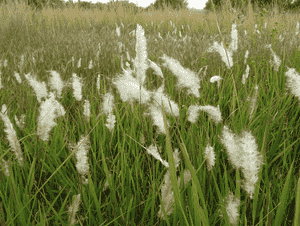
Cogongrass(Imperata cylindrica)

Cogongrass (Imperata cylindrica)

Also known as: Bladey grass, Silver spikegrass, Alang-alang

Cogongrass (Imperata cylindrica) poses a significant fire risk and demonstrates remarkable resilience after wildfires due to several factors:

1. **Highly Flammable**: Its pointed, sharp blades are highly flammable, even when not fully dried, making it prone to ignite and spread fires rapidly.
2. **Rhizome Survival**: Underground rhizomes remain intact and unharmed during fires, allowing the plant to regrow quickly and dominate the landscape post-fire.
3. **Aggressive Growth**: The species regenerates swiftly, outpacing native vegetation and maintaining its presence through rapid recolonization.

Additionally, Cogongrass has cultural uses in Southeast Asia, where it is traditionally utilized for thatching roofs and crafting woven items like bags and mats.

Attributes of Cogongrass

Lifespan
Perennial
Plant Type
Herb
Plant Height
60 cm to 3 m
Spread
60 cm
Leaf Color
Green Red
Flower Size
3 cm
Flower Color
White Green Red Brown

PlantJoy - Identify plants with a snap

Identify and diagnose plants, get toxicity alerts, and explore safety guides for all types of fungi.

Try for Free

Images of Cogongrass

Cogongrass(Imperata cylindrica)

Quickly Identify Cogongrass

1
Upright, elongate foliage reaching 4 feet (1.2 meters) with reddish tips.
2
Feathery, silver-white plumes above foliage during flowering season.
3
Plume-like inflorescence with white, hairy panicle measuring 12 inches (30 cm) long.
4
Dry, fluffy caryopsis concealed in fuzzy, white seed heads for wind dispersal.
5
Linear, stiff, yellow-green leaves up to 30 inches (76 cm) long with serrated edges.

Scientific Classification of Cogongrass

Phylum
Vascular plants
Class
Monocotyledons
Order
Grasses, sedges and allies
Family
Grass
Genus
Satintails
Species
Cogongrass

Planting and Growing of Cogongrass

Care Difficulty
Moderate
Watering Schedule
Every 2 days
Sunlight Requirements
Full sun
Sunshine Duration
4-8 hours
Ideal Temperature
68-86℉
Soil Type
Potting Mix, Peat Mix
Soil pH
6-7.5
Fertilizer Type
Balanced
Pruning Season
Spring, Summer
Pruning Area
Branches, Leaves
Pruning Frequency
2 times a year
Repotting Season
Spring
Pot Type
Plastic, Ceramic

water icon How to Water Cogongrass?

Imperata cylindrica, also known as cogon grass, prefers to be moist but not drenched. When watering, aim for approximately 250 ml per session, ensuring the soil is damp but not waterlogged. It thrives best in a setting where the soil dries slightly between waterings, reflecting its native habitat. Ensure that excess water drains well to prevent root rot.
What are the symptoms of an underwatered Cogongrass?
What should I do if my Cogongrass is not getting enough water?
What are the symptoms of an overwatered Cogongrass?
How to save an overwatered Cogongrass?

sunlight icon What Are the Sunlight Requirements for Cogongrass?

Sunlight Requirements: Full sun
Duration of light: 6-8 hours sunlight
Ideal light for Imperata cylindrica is full sun. Under these conditions, the plant exhibits optimum growth with vibrant foliage coloration, high photosynthetic efficiency, and an adaptive resilience to environmental conditions.
Optimal Light Intake
Position Adjustment
Monitoring Sun Intensity
More About Sunlight Requirements Techniques

temperature icon What Is the Ideal Temperature Range for Cogongrass?

Ideal Temperature: 68 ~ 86℉
The ideal temperature range for Imperata cylindrica, also known as cogon grass, is between 68°F and 86°F. Within this range, the plant experiences optimal growth and vigorous development, as the metabolism and photosynthesis processes are most efficient. Maintaining this temperature ensures healthy leaf coloration and robust structural integrity.

soil icon What Soil is Best for Cogongrass?

Soil type: Sandy soil, Loam
Soil PH: 6 ~ 7.5
Imperata cylindrica thrives in well-draining soil. This ensures that water does not stagnate around the roots, which can cause root rot, and provides the plant with optimal conditions for healthy growth. While not overly demanding, Imperata cylindrica benefits from soil enriched with organic matter. This provides essential nutrients that support vibrant growth and enhance the plant’s red foliage. The plant requires soil that retains enough moisture to keep roots hydrated without becoming waterlogged. Proper moisture levels prevent stress and support lush and continual growth.

fertilize icon How to Fertilize Cogongrass?

Fertilizer type: Balanced
For Imperata cylindrica, the fertilizer amount should be moderate to ensure optimal growth. Typically, use a balanced (10-10-10) NPK fertilizer, applying at the rate of 1 pound per 100 square feet. Avoid over-application to prevent nutrient runoff and potential harm to the roots.

prune icon How to Prune Cogongrass?

Pruning Time: Spring, Summer, Autumn
Start by identifying any dead or diseased stems and cut them back to the base. 2. Thin out any crowded stems to allow sunlight to reach the base; remove them at ground level. 3. Trim back the remaining stems by one-third to encourage bushier growth. 4. Regularly dispose of waste and clean tools to prevent disease spread. Always wear gardening gloves to protect your hands from sharp blades and potential irritants in the plant sap. Additionally, ensure to sterilize cutting tools before and after use to minimize the risk of spreading diseases between plants.

propagate icon How to Propagate Cogongrass plant?

Propagate Time: Spring, Late spring, Early spring, Summer
1
Begin by collecting mature seeds from the plant during the appropriate season. For division, carefully dig out the plant and separate rhizomes, ensuring each piece has roots attached.
2
Fill seed trays with a well-draining potting mix and plant seeds at an appropriate depth. Water lightly and place the trays in a warm, sunny location to encourage germination.
3
Use a gardening spade to divide the clump into sections. Make sure each section has sufficient roots and is free of any diseases. Replant the divisions at the same depth as the original.
More About Propagating Techniques

repot icon How to Repot Cogongrass plant?

Repotting frequency: Every 1-2 years
1
Imperata cylindrica signals the need for repotting when its roots are visibly growing through drainage holes, or if its growth has significantly slowed down. Ideally, repot during the active growing periods of spring or summer to ensure a quick recovery.
2
Select a pot that's one size larger than the current one with ample drainage holes. A slightly larger pot helps prevent water logging, while ensuring sufficient space for root growth, leading to a healthier and more robust plant.
3
Opt for a well-draining sandy soil mix. Such soil prevents water accumulation and root rot while providing essential nutrients. The improved drainage promotes root health and encourages vigorous growth.

PlantJoy - Identify plants with a snap

Find the best spots for them to optimize their health, simply using your phone.

Try for Free

