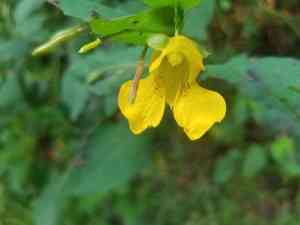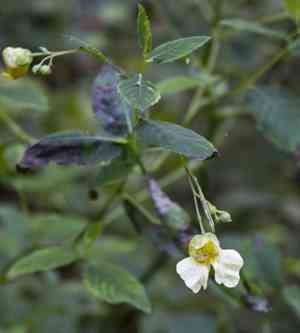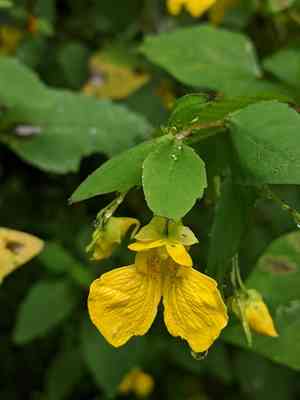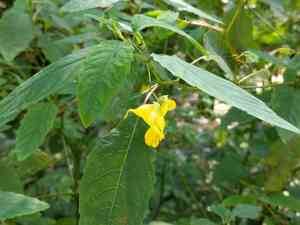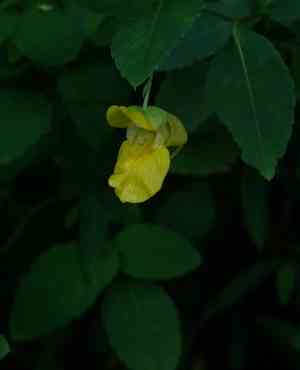
Yellow jewelweed(Impatiens pallida)

Yellow jewelweed (Impatiens pallida)

Also known as: Pale snapweed, Pale jewelweed

New England Aster (*Symphyotrichum novae-angliae*) is a plant found in Canada and the United States, thriving in wet soils. This species blooms from midsummer through the fall. Its vibrant flowers are predominantly pollinated by bees, which are drawn to their abundant nectar.

Attributes of Yellow jewelweed

Lifespan
Annual
Plant Type
Herb
Plant Height
61 cm to 1.8 m
Spread
30 cm to 60 cm
Leaf Color
Green
Flower Size
2.5 cm
Flower Color
Yellow

PlantJoy - Identify plants with a snap

Identify and diagnose plants, get toxicity alerts, and explore safety guides for all types of fungi.

Try for Free

Images of Yellow jewelweed

Yellow jewelweed(Impatiens pallida)

Quickly Identify Yellow jewelweed

1
Vibrant annual reaching 5 feet (1.5 m) tall and 2-3 feet (60-90 cm) wide.
2
Seed capsules explosively release seeds when touched, aiding dispersal.
3
Pale yellow flowers with reddish-brown splotches in racemes of 1-3.
4
Ovate, hairless leaves with slender petioles, 4 inches (10 cm) long.
5
Succulent stems, light green, with glaucous coating, up to 2 feet (60 cm) tall.

Scientific Classification of Yellow jewelweed

Phylum
Vascular plants
Class
Dicotyledons
Order
Ericales
Family
Balsam
Genus
Jewelweed
Species
Yellow jewelweed

Planting and Growing of Yellow jewelweed

Care Difficulty
Easy
Watering Schedule
Every 8 days
Sunlight Requirements
Partial sun
Sunshine Duration
4-8 hours
Ideal Temperature
65-75℉
Soil Type
Potting Mix, Peat Mix
Soil pH
6.5-7.5
Fertilizer Type
Balanced
Pruning Season
Spring, Summer
Pruning Area
Branches, Leaves
Pruning Frequency
2 times a year
Repotting Season
Spring
Pot Type
Plastic, Ceramic

water icon How to Water Yellow jewelweed?

Impatiens pallida prefers consistently moist soil. Therefore, one should ensure that the top inch of soil remains damp. Watering should continue until water begins to trickle out of the drainage holes, indicating that the soil is sufficiently moist without being waterlogged.
What are the symptoms of an underwatered Yellow jewelweed?
What should I do if my Yellow jewelweed is not getting enough water?
What are the symptoms of an overwatered Yellow jewelweed?
How to save an overwatered Yellow jewelweed?

sunlight icon What Are the Sunlight Requirements for Yellow jewelweed?

Sunlight Requirements: Partial sun, Full shade
Duration of light: 2-6 hours daily
Partial sun to full shade is ideal, allowing Impatiens pallida to maximize photosynthesis while minimizing stress, ensuring vibrant growth and prolific blooms.
What is the best lighting condition?
How to achieve ideal light conditions?
What are the benefits of ideal lighting?

temperature icon What Is the Ideal Temperature Range for Yellow jewelweed?

Ideal Temperature: 65 ~ 75℉
For optimal growth of Impatiens pallida, maintaining a temperature range between 65°F and 75°F is ideal. This range supports healthy photosynthesis, promoting robust foliage and vibrant flowering. Additionally, consistent temperatures within this range minimize stress and enhance disease resistance.

soil icon What Soil is Best for Yellow jewelweed?

Soil type: Loam, Sandy loam
Soil PH: 6.5 ~ 7.5
Impatiens pallida thrives in soil that retains moisture well without becoming waterlogged. This helps to keep the plant hydrated, which is crucial for its succulent-like, juicy stems and helps it bloom luxuriantly. A nutrient-rich soil is essential for this plant's growth. Soils rich in organic matter support the plant's need for nutrients that facilitate the production of vibrant flowers and healthy foliage. While liking moisture, Impatiens pallida also demands soil with good drainage to prevent root rot. Proper drainage ensures excess water does not stagnate around the roots, providing an optimal environment for root health.

fertilize icon How to Fertilize Yellow jewelweed?

Fertilizer type: Balanced
For Impatiens pallida, optimal fertilization involves using a balanced fertilizer at a dilution rate of one tablespoon per gallon of water for liquid fertilizers. Apply carefully to ensure the solution doesn’t splash onto the foliage.

prune icon How to Prune Yellow jewelweed?

Pruning Time: Spring, Summer, Autumn
Over-pruning can stress the plant, leading to reduced growth and fewer blooms. Always limit the amount you cut to about one-third of the plant's overall vitality at a time. This ensures that the plant has enough foliage for photosynthesis and doesn't shock the system, allowing for optimal recovery and growth. Clean your pruning tools before and after use to avoid the transmission of diseases. A simple solution of rubbing alcohol or diluted bleach can be used to disinfect your tools. This practice is essential especially when dealing with plants showing signs of disease, as it prevents spreading to healthy plants. Perform pruning tasks during dry, mild days. Wet weather can create a breeding ground for fungal infections in the wounds you've opened on the plant. Additionally, ensure that extreme temperatures are avoided, as they can exacerbate stress on recently pruned plants. Ideal conditions facilitate quicker healing and regrowth.

propagate icon How to Propagate Yellow jewelweed plant?

Propagate Time: Late spring,Early summer
1
Fill the seed tray with a quality seed-starting mix. Moisten the mix slightly before planting the seeds to promote better germination conditions.
2
Scatter the seeds evenly across the surface of the soil. Cover lightly with a thin layer of soil or vermiculite to keep them stable yet allowing light penetration.
3
Using pruning shears, cut a healthy non-flowering stem about 4-6 inches long. Remove leaves from the lower part to enhance root development.
More About Propagating Techniques

repot icon How to Repot Yellow jewelweed plant?

Repotting frequency: Every 1-2 years
1
Look for signs like roots growing out of the drainage holes or visible crowding of roots within the pot. The growing season, especially in spring or early summer, is ideal for repotting as the plant is actively growing and can recover more rapidly.
2
Choose a pot that is one size larger than the current one. This helps prevent an excessively large root space that could retain too much moisture and lead to root rot. A pot with drainage holes is essential to ensure excess water can escape.
3
Opt for a light and rich potting mix that offers good drainage. This soil type ensures the roots have access to nutrients while preventing waterlogged conditions that can harm the plant's health.

PlantJoy - Identify plants with a snap

Find the best spots for them to optimize their health, simply using your phone.

Try for Free

Toxicity of Yellow jewelweed

Is Yellow jewelweed toxic to humans?

Yellow jewelweed possesses toxic properties when consumed in significant amounts. Its stems, leaves, and flowers harbor calcium oxide, a potentially harmful compound that can lead to gastrointestinal disturbances. Individuals may experience symptoms such as abdominal discomfort, bloating, diarrhea, nausea, and vomiting. The highest risk of poisoning arises from the consumption of the plant in its raw state, as cooking diminishes its toxicity substantially. Nevertheless, even after cooking, the small quantities of calcium oxide present in the heated leaves can provoke issues for those suffering from arthritis, gout, rheumatism, and kidney stones.

Identify toxic plants for your safety

Learn which plants are harmful to you and your pets, and make informed choices for a safer home!

Try for Free
WARNING
The judgment on toxicity and danger is for reference only. We DO NOT GUARANTEE any accuracy of such judgment. Therefore, you SHALL NOT rely on such judgment. It is IMPORTANT TO SEEK PROFESSIONAL ADVICE in advance when necessary.
More About Toxic Techniques