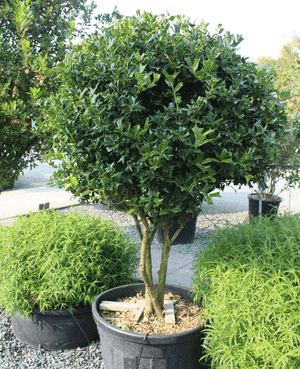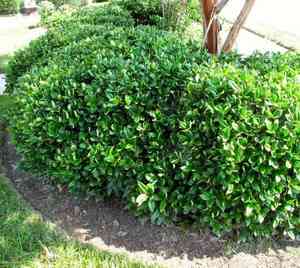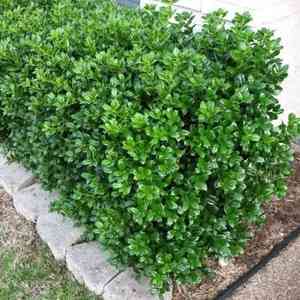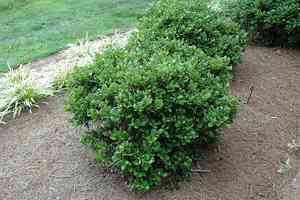
Chinese holly(Ilex cornuta)

Chinese holly (Ilex cornuta)

Also known as: Chinese Holly, Horned Holly

Chinese holly (Ilex cornuta), originating from China and Korea, is an evergreen shrub commonly used in ornamental gardening. Known for its ease of cultivation and low maintenance, it produces fruits that are highly esteemed compared to other holly varieties.

Attributes of Chinese holly

Lifespan
Perennial
Plant Type
Shrub
Plant Height
1 m to 10 m
Spread
1.8 m to 2.5 m
Leaf Color
Green
Flower Size
3 mm to 4 mm
Flower Color
White Yellow

PlantJoy - Identify plants with a snap

Identify and diagnose plants, get toxicity alerts, and explore safety guides for all types of fungi.

Try for Free

Images of Chinese holly

Chinese holly(Ilex cornuta)

Quickly Identify Chinese holly

1
Horn-shaped leaves with spiny projections resembling bull horns.
2
Dioecious nature requiring both male and female specimens for seed production.
3
Small, dull-white, fragrant flowers with 4-parted radial blossoms.
4
Conspicuous berry-like drupes on female plants, vibrant to subdued red in color.
5
Slender stem with dense branchlets, transitioning from green to reddish-green in winter.

Scientific Classification of Chinese holly

Phylum
Vascular plants
Class
Dicotyledons
Order
Hollies and allies
Family
Holly
Genus
Ilex
Species
Chinese holly

Planting and Growing of Chinese holly

Care Difficulty
Easy
Watering Schedule
Every 4 days
Sunlight Requirements
Full sun
Sunshine Duration
4-8 hours
Ideal Temperature
60-77℉
Soil Type
Potting Mix, Peat Mix
Soil pH
6.5-7.5
Fertilizer Type
Balanced
Pruning Season
Spring, Summer
Pruning Area
Branches, Leaves
Pruning Frequency
2 times a year
Repotting Season
Spring
Pot Type
Plastic, Ceramic

water icon How to Water Chinese holly?

For Ilex cornuta, also known as Chinese Holly, you should aim to provide around 500 milliliters of water per session. The goal is to moisten the soil thoroughly without leaving it soggy. Ensure that the water penetrates deep into the soil, which helps promote deep and healthy root growth. Always check the top inch of the soil; if it feels dry, it's time to water. This depth ensures that the root system can access moisture without the risk of waterlogging.
What are the symptoms of an underwatered Chinese holly?
What should I do if my Chinese holly is not getting enough water?
What are the symptoms of an overwatered Chinese holly?
How to save an overwatered Chinese holly?
More About Watering Techniques

sunlight icon What Are the Sunlight Requirements for Chinese holly?

Sunlight Requirements: Full sun, Partial sun
Duration of light: 6 to 8 hours daily
Ilex cornuta benefits from partial to full sun conditions, roughly 6 to 8 hours of light daily. This exposure supports robust growth and healthy foliage, mimicking its natural environment.
Ideal Sunlight Exposure
Light Adjustment for Seasons
Implementing Light Solutions
More About Sunlight Requirements Techniques

temperature icon What Is the Ideal Temperature Range for Chinese holly?

Ideal Temperature: 60 ~ 77℉
Ilex cornuta, or the Chinese holly, thrives in a temperature range between 60°F and 77°F. This range supports optimal photosynthesis and metabolic activities, ensuring robust growth and healthy foliage. Maintaining consistent temperatures within this range helps prevent stress and promotes vibrant leaf coloration.

soil icon What Soil is Best for Chinese holly?

Soil type: Loam, Sandy loam
Soil PH: 6.5 ~ 7.5
Ilex cornuta thrives in well-drained soil that prevents waterlogging, which can cause root rot. This type of soil ensures that excess moisture is efficiently removed, helping in the healthy growth and development of the plant. The plant benefits from soil that retains moderate moisture, supporting its hydration needs while avoiding soggy conditions. This balance aids in providing a consistent water supply without drowning the roots. Incorporating organic matter like compost into the soil can enhance nutrient availability, benefiting the plant’s growth. Organic matter also improves soil structure and drainage, creating an optimal growing environment. More About Soil

fertilize icon How to Fertilize Chinese holly?

Fertilizer type: Balanced
Ilex cornuta benefits from a balanced fertilization approach. For liquid fertilizers, use a solution diluted to half the recommended strength. Apply approximately one gallon per shrub, ensuring even distribution around the base. As for solid fertilizers, apply about 1.5 to 2 pounds per bush throughout the growing season, considering the shrub's size and age. More About Fertilizing Techniques

prune icon How to Prune Chinese holly?

Pruning Time: Spring, Summer, Autumn
Begin by assessing the overall shape of your Ilex cornuta and decide what form you wish to achieve. Use sharp, sterilized pruning shears to trim branches, starting with the outermost shoots. Cut just above a leaf node to encourage healthy regrowth, and maintain an even shape as you work your way around the plant. Regularly stepping back to view the plant from a distance will help you create a balanced shape.

propagate icon How to Propagate Chinese holly plant?

Propagate Time: Spring, Early summer
1
Choose healthy stems that are disease-free and about 3-4 inches long. It is crucial to select stems from vigorous plants to ensure the best chances for successful rooting.
2
Remove leaves from the lower half of the cutting and dip the cut end into rooting hormone. This preparation helps focus the cutting's energy on root development.
3
Insert the cuttings into a tray filled with well-draining potting mix. Ensure the soil contacts the base of the cutting to allow adequate water absorption.
More About Propagating Techniques

repot icon How to Repot Chinese holly plant?

Repotting frequency: Every 2-3 years
1
Ilex cornuta should be repotted when you notice roots circling the inside of the pot or protruding from drainage holes. Another sign is if water is slow to drain, indicating the roots have consumed most of the soil space. Spring and autumn provide the best conditions because the plant will be less stressed with moderate temperatures and will quickly adapt.
2
Select a pot that is one size larger than the current one with ample drainage holes. This allows room for growth without overwhelming the plant. Ensure the pot is made from a breathable material like terracotta, which prevents water from getting trapped and causing root rot, while also providing the stability needed for this upright shrub.
3
Use well-draining potting soil enriched with organic matter. This provides the essential nutrients without retaining excess moisture which can lead to root rot. A slightly acidic to neutral pH level is preferred, supporting healthy growth and root development.

PlantJoy - Identify plants with a snap

Find the best spots for them to optimize their health, simply using your phone.

Try for Free

Toxicity of Chinese holly

Is Chinese holly toxic to humans?

Chinese holly berries pose a toxicity risk when consumed due to the presence of the chemical saponin. Ingesting even a couple of these berries can lead to symptoms such as vomiting, dehydration, diarrhea, and drowsiness. Children are particularly at risk, as these berries are often utilized as festive Christmas decorations, and their vibrant red hue can make them appear tempting for young children.

Is Chinese holly toxic to cat?

Cats could display mild toxicity after consuming significant quantities of the fruits from Chinese holly. If ingested, your cat may show signs of physical distress or sickness. Although the precise toxic compounds in Chinese holly remain unidentified, pet owners should be wary of the fruits that pose a risk to their pets. If your cat appears unwell and you suspect ingestion, it is essential to seek veterinary assistance promptly to safeguard their health and well-being.

Is Chinese holly toxic to dog?

Chinese holly presents a moderate toxicity threat to dogs. If ingested in significant quantities, especially the fruits—which are the most toxic components of the plant—canines may suffer from poisoning. Indicative symptoms of this poisoning can manifest as gastrointestinal disturbances, including vomiting and diarrhea. Therefore, it is vital for dog owners to keep a close eye on their pets and deter them from consuming excessive amounts of Chinese holly. Should a dog happen to eat Chinese holly and display signs of poisoning, it is essential to secure prompt veterinary attention to ensure adequate treatment and full recovery.

Identify toxic plants for your safety

Learn which plants are harmful to you and your pets, and make informed choices for a safer home!

Try for Free
WARNING
The judgment on toxicity and danger is for reference only. We DO NOT GUARANTEE any accuracy of such judgment. Therefore, you SHALL NOT rely on such judgment. It is IMPORTANT TO SEEK PROFESSIONAL ADVICE in advance when necessary.
More About Toxic Techniques