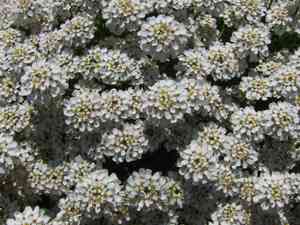
Evergreen candytuft (Iberis sempervirens)
Also known as: Perennial candytuft, Garrex's Candytuft
The flowering plant known as *Lavandula angustifolia*, commonly referred to as English lavender, originates from Southern Europe. This plant is highly favored in gardens for its beautiful and aromatic blossoms.
In This Article
Attributes of Evergreen candytuft
Lifespan
Perennial, Annual, Biennial
Plant Type
Herb
Plant Height
30 cm
Spread
40 cm
Leaf Color
Green Blue
Flower Size
2.5 cm to 8 cm
Flower Color
White
Images of Evergreen candytuft
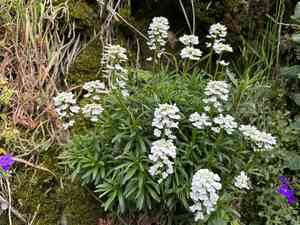
Quickly Identify Evergreen candytuft
1
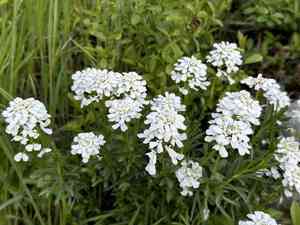
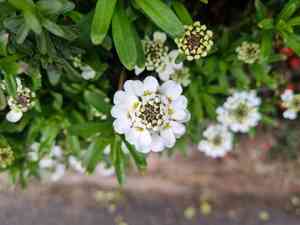
Dense white flowers with four clawed petals in crowded racemes, blooming in early to late spring.
2
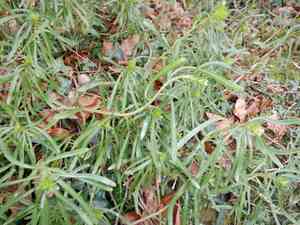
Narrow, dark green, shiny, leathery leaves with entire margins, 0.5-2 inches (1.3-5 cm) long.
3
Flat-topped raceme of small white blooms, each petal scissor-shaped, with delicate yellow dots.
4
Green orbicular-elliptic capsule turning brown, dehiscing to disperse narrowly winged seeds.
5
Decumbent stem turning woody, rooting where touching ground, with raised leaf scars on older twigs.
Scientific Classification of Evergreen candytuft
Phylum
Vascular plants
Class
Dicotyledons
Order
Brassicales
Family
Cruciferae
Genus
Iberis
Species
Evergreen candytuft
Planting and Growing of Evergreen candytuft
Care Difficulty
Easy
Watering Schedule
Every 4 days
Sunlight Requirements
Full sun
Sunshine Duration
4-8 hours
Ideal Temperature
60-70℉
Soil Type
Potting Mix, Peat Mix
Soil pH
6.5-7.5
Fertilizer Type
Balanced
Pruning Season
Spring, Summer
Pruning Area
Branches, Leaves
Pruning Frequency
2 times a year
Repotting Season
Spring
Pot Type
Plastic, Ceramic
 How to Water Evergreen candytuft?
When watering Iberis sempervirens, you should aim to thoroughly moisten the top layer of soil. This perennial prefers a moderate watering strategy. Allow the top inch of soil to dry out completely before re-watering, a principle that prevents root rot and simulates its native conditions.
More About Watering Techniques→
What are the symptoms of an underwatered Evergreen candytuft?
›
What should I do if my Evergreen candytuft is not getting enough water?
›
What are the symptoms of an overwatered Evergreen candytuft?
›
How to save an overwatered Evergreen candytuft?
›
 What Are the Sunlight Requirements for Evergreen candytuft?
Iberis sempervirens flourishes best in full sun to partial sun conditions. Receiving sustained sunlight enhances bloom production and plant structure.
More About Sunlight Requirements Techniques→
What is the ideal lighting condition?
›
How to achieve ideal lighting conditions?
›
What are the benefits of ideal lighting?
›
 What Is the Ideal Temperature Range for Evergreen candytuft?
The ideal temperature range for cultivating Iberis sempervirens is between 60°F and 70°F. This range provides optimal conditions for growth and blossom. At these temperatures, the plant's metabolic processes function optimally, ensuring healthy development and vibrant blooming. Maintaining this range helps in avoiding stress conditions that could otherwise impair growth, ensuring the plant stays vigorous and resilient.
 What Soil is Best for Evergreen candytuft?
Iberis sempervirens thrives in well-drained soil, which helps prevent root rot and other moisture-related diseases. This ensures healthy root growth and robust flowering. A soil with moderate fertility is ideal for this plant, providing necessary nutrients while preventing excessive foliage growth which could overshadow blooms. Position the plant in areas with sunlit soil as it helps maintain vigorous growth and vibrant flower production due to optimal photosynthesis.
More About Soil→
 How to Fertilize Evergreen candytuft?
For Iberis sempervirens, it's crucial to use a teaspoon of liquid fertilizer diluted in a gallon of water when applying. For a slow-release granular fertilizer, apply about one ounce per square foot of soil. This balanced approach ensures adequate nutrition without overwhelming the plant.
More About Fertilizing Techniques→
 How to Prune Evergreen candytuft?
Start by removing any dead or diseased stems to maintain plant health. Next, trim back the stems by about one-third after the blooming season in spring to encourage a second flush. Use sharp, clean shears to make clean cuts just above a leaf node. For Iberis sempervirens that have become leggy or overgrown, cut back more severely in late spring or early summer. You can safely trim back up to half of the plant's size; this drastic cut will rejuvenate the plant, promoting fresh, vigorous growth.
More About Pruning Techniques→
 How to Propagate Evergreen candytuft plant?
1
Gather seeds from mature plants in the spring. Ensure they are completely dry before storing them in a cool, dry place until ready to sow.
2
Select healthy stems and take 10-15 cm cuttings just below a node. Remove lower leaves and dip in rooting hormone before placing in a prepared growing medium.
3
In early spring, carefully dig up the mature plant and divide the root ball using a sharp spade. Replant divisions immediately to prevent roots from drying out.
 How to Repot Evergreen candytuft plant?
1
It's time to repot Iberis sempervirens when you notice its roots circling the pot or emerging from drainage holes. Another signal is a decline in growth or bloom quality, indicating the current pot is too cramped or the soil has lost nutrients. Always aim to repot during its dormant stages, primarily in spring or autumn, to minimize plant stress.
2
Selecting the appropriate pot is crucial to ensure your Iberis sempervirens thrives. Opt for a pot with excellent drainage holes to prevent water-logging. The pot should be just slightly larger than the root ball to give the roots room to spread without overwhelming them with too much soil, which can retain excess moisture.
3
For Iberis sempervirens, a well-draining soil mix is essential. Look for soil that feels gritty and contains perlite or sand to enhance drainage, as retaining excess moisture can lead to root rot. Using an alkaline soil mix also helps maintain the plant's thriving conditions, as it prefers a higher pH level.
Learn More About Evergreen candytuft Diseases
Anthracnose
Bacterial Leaf Spot
Bacterial Soft Rot
Clubroot
Crown Gall
Cyst Nematode
Damping-off
Downy Mildew
Drought Stress
Fusarium Wilt
Gray Mold
Leaf Spot
Mosaic
Nutrient Deficiency
Nutrient Toxicity
Powdery Mildew
Root Rot
Root-knot Nematode
Rusts
Sooty Mold
Spider Mites
Temperature Stress
Thrips Damage
White Mold
Chemical Injury



