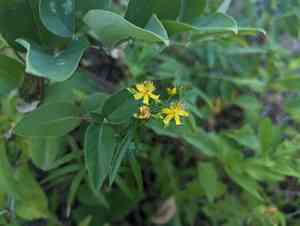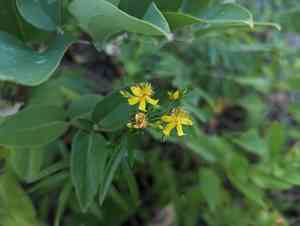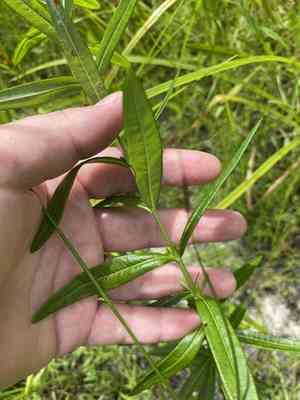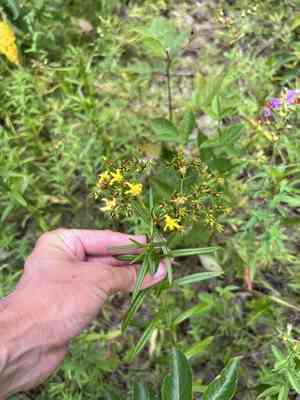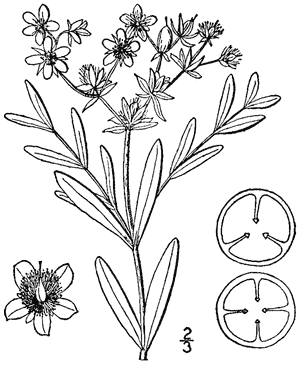
Creeping St. John's wort(Hypericum adpressum)

Creeping St. John's wort (Hypericum adpressum)

Also known as: Creeping St. John's Wort, Prostrate St. John's Wort

Creeping St. John's Wort (Hypericum calycinum) is a robust and versatile perennial ground cover. Here are its key features and uses:

### Characteristics:
1. **Vigorous Growth**: Known for its rapid spread, making it ideal for quickly covering large areas.
2. **Foliage**: Rich green leaves that can turn reddish in cooler temperatures.
3. **Flowers**: Produces large, bright yellow flowers with five petals and prominent, brush-like stamens.
4. **Size**: Reaches a height of 12-18 inches.
5. **Adaptability**: Thrives in a variety of soil conditions and can grow in full sun to partial shade.
6. **Hardiness**: Suitable for USDA zones 5-9.

### Uses:
1. **Ground Cover**: Excellent for quickly covering hillsides, embankments, and other large areas.
2. **Erosion Control**: Its dense root system helps prevent soil erosion.
3. **Ornamental Use**: Adds vibrant color and texture to gardens, borders, and rock gardens.
4. **Understory Planting**: Works well under trees and shrubs where grass may not thrive.

Creeping St. John's Wort is appreciated for its hardiness, ease of maintenance, and ability to adapt to various growing conditions, making it a popular choice for both functional and decorative purposes in landscaping.

Attributes of Creeping St. John's wort

Lifespan
Perennial
Plant Type
Herb
Plant Height
10-30 cm
Spread
Spreads up to 1 meter
Leaf Color
Green
Flower Size
1-2 cm
Flower Color
Yellow

ForwardPlant - Identify plants with a snap

Identify and diagnose plants, get toxicity alerts, and explore safety guides for all types of fungi.

Try for Free

Images of Creeping St. John's wort

Creeping St. John's wort(Hypericum adpressum)

Quickly Identify Creeping St. John's wort

1
Look for its prostrate growth habit, small yellow flowers with five petals, and opposite leaf arrangement. The plant typically forms dense mats and is often found in wetland areas.

Scientific Classification of Creeping St. John's wort

Phylum
Vascular plants
Class
Dicotyledons
Order
Malpighiales
Family
St. John's wort
Genus
St. John's worts
Species
Creeping St. John's wort

Planting and Growing of Creeping St. John's wort

Care Difficulty
Easy
Watering Schedule
Every 8 days
Sunlight Requirements
Partial sun
Sunshine Duration
4-8 hours
Ideal Temperature
60-75℉
Soil Type
Potting Mix, Peat Mix
Soil pH
6-7.5
Fertilizer Type
Balanced
Pruning Season
Spring, Summer
Pruning Area
Branches, Leaves
Pruning Frequency
2 times a year
Repotting Season
Spring
Pot Type
Plastic, Ceramic

water icon How to Water Creeping St. John's wort?

For Hypericum adpressum, water about 200 ml each time. Ensure that the soil is moist but not waterlogged, aiming to keep the soil evenly moist. Use a scientific approach to gauge the water requirement with the 'finger test' or a moisture meter. A soil moisture level of around 50-70% is generally ideal for this plant.
What are the symptoms of an underwatered Creeping St. John's wort?
What should I do if my Creeping St. John's wort is not getting enough water?
What are the symptoms of an overwatered Creeping St. John's wort?
How to save an overwatered Creeping St. John's wort?

sunlight icon What Are the Sunlight Requirements for Creeping St. John's wort?

Sunlight Requirements: Partial sun, Full sun
Duration of light: 5 to 7 hours
Partial to full sun is ideal, with 5-7 hours of daylight balance; this promotes vibrant blooms and healthy foliage, ensuring the plant's full potential is realized.
How much sunlight does Hypericum adpressum need?
What are the solutions for achieving ideal light conditions for Hypericum adpressum?
What benefits does ideal lighting provide to Hypericum adpressum?

temperature icon What Is the Ideal Temperature Range for Creeping St. John's wort?

Ideal Temperature: 60 ~ 75℉
For optimal growth of Hypericum adpressum, maintaining a consistent temperature between 60°F and 75°F is crucial. This range allows for proper metabolic functions and encourages blooming. Any significant deviation from this range may stress the plant, potentially leading to inhibited growth or health issues.

soil icon What Soil is Best for Creeping St. John's wort?

Soil type: Loam, Sandy loam
Soil PH: 6 ~ 7.5
Hypericum adpressum thrives in well-drained soils. Ensuring water can easily pass through the soil helps prevent root rot and maintains healthy root systems, allowing your plants to grow robustly. This plant prefers soils with a moderate nutrient content. Overly rich soil can lead to leggy growth, while poor soil might stunt its development. An optimal balance ensures balanced growth and vibrant blooms. While Hypericum adpressum needs well-drained soil, it also appreciates soil that can retain some moisture. This balance helps maintain consistent hydration without waterlogging, providing a stable growing environment.

fertilize icon How to Fertilize Creeping St. John's wort?

Fertilizer type: Balanced
For Hypericum adpressum, applying fertilizer lightly is key. Use a balanced liquid fertilizer diluted to half strength, about 1 tablespoon per gallon of water for liquid feeds. For solid fertilization, a slow-release granular product can be spread sparingly across the soil surface, approx. 2 tablespoons per square foot, to avoid overfeeding and burning the plant.

prune icon How to Prune Creeping St. John's wort?

Pruning Time: Spring, Autumn
Use sharp, clean pruning shears to avoid damaging the plant and ensure a clean cut. Disinfect tools before and after pruning to prevent the spread of diseases. Begin by removing any dead, damaged, or diseased stems. Cut these branches back to the point of healthy tissue, ensuring a clean and angled cut to facilitate water runoff. Next, thin out the center of the shrub if it appears too dense to increase light penetration and air circulation. After addressing any dead or diseased areas, you can shape the plant by lightly trimming the outer edges. Try to maintain the plant's natural shape and avoid over-pruning, which can stress the plant and reduce flower production. More About Pruning Techniques

propagate icon How to Propagate Creeping St. John's wort plant?

Propagate Time: Spring,Late spring,Early spring,Summer
1
Collect seeds from mature Hypericum adpressum plants in late summer or early autumn. Ensure the seeds are thoroughly dried and stored in a cool, dry place until sowing to improve germination rates.
2
Select healthy, non-flowering stems of Hypericum adpressum for cuttings. Cut about 4-6 inches in length using clean pruners or scissors, making sure to include several nodes on each cutting.
3
In early spring, divide mature Hypericum adpressum clumps by carefully digging up the entire plant and separating sections with at least three to four shoots each. Replant the divisions promptly to encourage new growth.
More About Propagating Techniques

repot icon How to Repot Creeping St. John's wort plant?

Repotting frequency: Every 1-2 years
1
You should consider repotting Hypericum adpressum when you notice roots starting to emerge from the drainage holes of its pot, which signals that the plant has outgrown its current container. Another sign is when the plant faces slow growth during its active growth period, indicating it's struggling to extract nutrients from the limited soil.
2
Opt for a pot that is one to two inches larger in diameter than the current one. The pot should have ample drainage holes to prevent waterlogging, as Hypericum prefer moist but not soggy conditions. A wider pot can also provide stability for this plant, which tends to spread horizontally.
3
Select a well-drained loamy mix, rich in organic matter. Such soil ensures that excess water drains efficiently and roots can breathe, reducing risks of root rot. Additionally, loamy soils maintain adequate moisture, which Hypericum adpressum requires for healthy growth.

ForwardPlant - Identify plants with a snap

Find the best spots for them to optimize their health, simply using your phone.

Try for Free