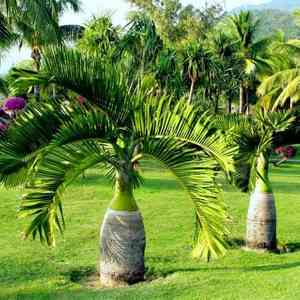
Bottle palm (Hyophorbe lagenicaulis)
Also known as: Bottle Palm, Spindle Palm
The Bottle Palm, known scientifically as Hyophorbe lagenicaulis, is distinguished by its unique, bottle-shaped trunk, which is particularly noticeable when the tree is young. This palm is indigenous to Mauritius and is currently facing severe habitat destruction, leading to its classification as critically endangered. Despite this, the Bottle Palm is extensively grown in various warm climates worldwide, aiding in its preservation outside its native environment.
In This Article
Attributes of Bottle palm
Lifespan
Perennial
Plant Type
Tree
Plant Height
3.5 m to 6 m
Spread
3 m to 4.5 m
Leaf Color
Green
Flower Size
1 cm to 2 cm
Flower Color
Green White Gray
Images of Bottle palm

Quickly Identify Bottle palm
1
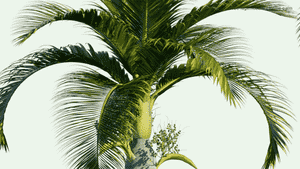
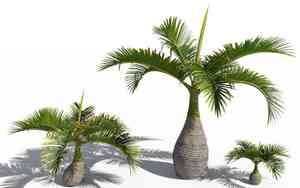
The Bottle Palm can be identified by its distinct bottle-shaped trunk, which is thick at the base and tapers off towards the top. It features long, feather-like fronds with leaflets that are arranged oppositely. Its flowers are small and inconspicuous, typically white or cream-colored.
Scientific Classification of Bottle palm
Phylum
Vascular plants
Class
Monocotyledons
Order
Palms, bullanocks, and allies
Family
Palm
Genus
Hyophorbe
Species
Bottle palm
Planting and Growing of Bottle palm
Care Difficulty
Easy
Watering Schedule
Every 2 days
Sunlight Requirements
Full sun
Sunshine Duration
4-6 hours
Ideal Temperature
65-75℉
Soil Type
Potting Mix, Peat Mix
Soil pH
6.5-7.5
Fertilizer Type
Balanced
Pruning Season
Spring, Summer
Pruning Area
Branches, Leaves
Pruning Frequency
2 times a year
Repotting Season
Spring
Pot Type
Ceramic, Plastic
 How to Water Bottle palm?
The Hyophorbe lagenicaulis, commonly known as the Bottle Palm, should be watered until the soil is evenly moist, but not soggy. About 1000 milliliters is ideal to thoroughly moisten the root zone without waterlogging the soil. Always check that the top 2 inches of soil are dry before the next watering to prevent root rot.
What are the symptoms of an underwatered Bottle palm?
›
What should I do if my Bottle palm is not getting enough water?
›
What are the symptoms of an overwatered Bottle palm?
›
How to save an overwatered Bottle palm?
›
 What Are the Sunlight Requirements for Bottle palm?
This plant flourishes best when it receives a combination of full to partial sun, ideally 6 to 8 hours daily. Adequate lighting supports its unique growth form, enhancing the bottle shape of its trunk and ensuring lush foliage.
More About Sunlight Requirements Techniques→
Optimal Sun Exposure
›
Achieving Ideal Light
›
Benefits of Ideal Lighting
›
 What Is the Ideal Temperature Range for Bottle palm?
The ideal temperature range for Hyophorbe lagenicaulis, also known as the Bottle Palm, is between 65°F to 75°F. This range ensures optimal growth and health for the plant. Within this temperature band, the plant can efficiently carry out photosynthesis and other vital processes. The climate should be kept stable, without sudden changes, to maintain the plant's overall wellbeing.
 What Soil is Best for Bottle palm?
Hyophorbe lagenicaulis thrives in well-drained soil conditions which prevent waterlogging and root rot. Ensuring proper drainage allows for the roots to breathe and absorb nutrients efficiently, promoting healthy growth. While not overly demanding, this plant benefits from soils with moderate nutrient content. A well-balanced soil rich in organic matter supports robust growth and vibrant foliage, enhancing the plant's overall appearance. Hyophorbe lagenicaulis prefers soils with low salinity levels. High salt content can damage the roots and inhibit nutrient uptake, so selecting a soil with low salinity ensures optimal health and vitality for the plant.
 How to Fertilize Bottle palm?
For Hyophorbe lagenicaulis, the amount of fertilizer should be moderate. Using a balanced 14-14-14 fertilizer is suitable. Liquid fertilizers should be diluted to half their recommended strength, allowing the plant to absorb nutrients without the risk of chemical burns. For slow-release fertilizers, follow label instructions, but generally half a tablespoon per gallon of soil should suffice.
 How to Prune Bottle palm?
Begin by examining the tree from top to bottom, identifying any fronds that are brown or damaged. Use them as your target for removal. Position your sterilized pruning shears or a sharp knife at the base of the dead frond, making a clean cut. Avoid leaving a stub. After cutting, review the canopy again. Ensure the tree maintains a balanced appearance to promote even growth and healthy appearance.
More About Pruning Techniques→
 How to Propagate Bottle palm plant?
1
Soak the seeds in lukewarm water for 24 hours to soften the outer shell, enhancing the germination process by allowing moisture to penetrate effectively.
2
Place the soaked seeds evenly in a seed tray filled with sterile potting mix. Cover them lightly with soil, ensuring a depth of about twice the seed's diameter.
3
Cover the seed tray with plastic wrap or a cover to maintain humidity levels. This aids in creating a microclimate that encourages germination.
 How to Repot Bottle palm plant?
1
Hyophorbe lagenicaulis should be repotted when you notice that the roots are becoming tightly packed and starting to circle the pot. Another sign is if the plant's growth has noticeably slowed, despite optimal care. Performing repotting during its active growing seasons—spring or summer—helps minimize stress.
2
Select a pot that is one size larger than the current one. Ensure the new pot has ample drainage holes to prevent waterlogging, which could lead to root rot. A slightly larger pot encourages healthy growth without overwhelming the plant with too much space.
3
Opt for a well-draining potting mix specifically designed for palms. The soil should retain some moisture while preventing water from settling. This balance provides necessary nutrients and helps avoid root diseases by maintaining an ideal moisture level around the roots.



