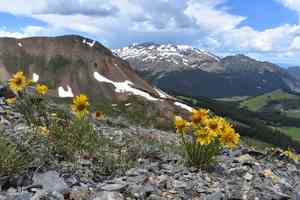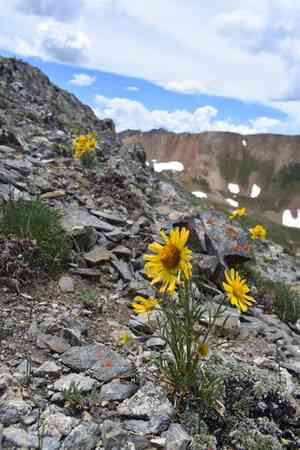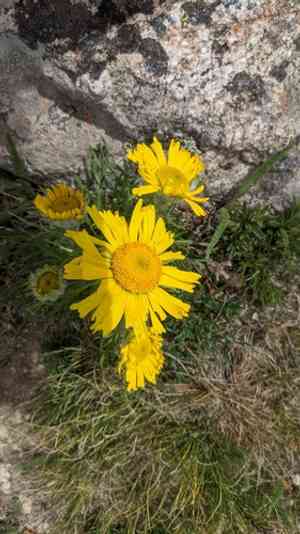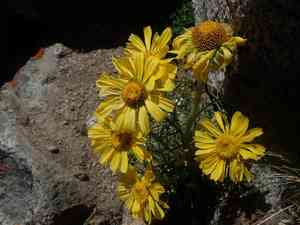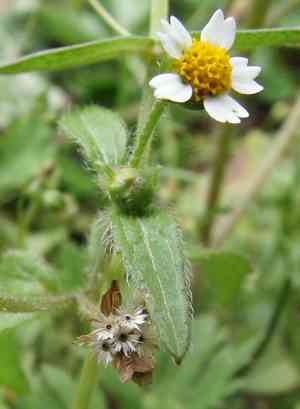
Old man of the mountains(Hymenoxys grandiflora)

Old man of the mountains (Hymenoxys grandiflora)

Also known as: Grand Sunray, Showy Four-nerve Daisy

The Old Man of the Mountains, or Oreocereus celsianus, exhibits several adaptations that ensure its survival in arid regions:

1. **Water Conservation:** Its thick, succulent stems store ample water, allowing it to endure long periods without rainfall.
2. **Protective Features:** The plant is covered with dense spines and a layer of white hair, which protect it from harsh sunlight and minimize water loss by reducing transpiration.
3. **Root System:** It has an extensive root network that penetrates deep into the soil to access water from below the surface.
4. **Efficient Photosynthesis:** The plant employs CAM (Crassulacean Acid Metabolism) photosynthesis, which allows it to open its stomata at night to reduce water loss during the hot daytime hours.

These characteristics collectively enable the Old Man of the Mountains to thrive in challenging, arid environments by efficiently managing water and withstanding extreme conditions.

Attributes of Old man of the mountains

Lifespan
Perennial
Plant Type
Herb
Plant Height
0 mm to 30 cm
Spread
15-30 cm
Leaf Color
Green
Flower Size
4-6 cm
Flower Color
Yellow

ForwardPlant - Identify plants with a snap

Identify and diagnose plants, get toxicity alerts, and explore safety guides for all types of fungi.

Try for Free

Images of Old man of the mountains

Old man of the mountains(Hymenoxys grandiflora)

Quickly Identify Old man of the mountains

1
Identify Hymenoxys grandiflora by its basal rosette of leaves, bright yellow flowers with numerous small, daisy-like petals, and the presence of four distinct veins on the petals. The plant also has a stout, hairy stem.

Scientific Classification of Old man of the mountains

Phylum
Vascular plants
Class
Dicotyledons
Order
Asterales
Family
Daisy
Genus
Hymenoxys
Species
Old man of the mountains

Planting and Growing of Old man of the mountains

Care Difficulty
Moderate
Watering Schedule
Every 2 days
Sunlight Requirements
Full sun
Sunshine Duration
6-10 hours
Ideal Temperature
55-70℉
Soil Type
Potting Mix, Peat Mix
Soil pH
6.5-7.5
Fertilizer Type
Balanced
Pruning Season
Spring, Summer
Pruning Area
Branches, Leaves
Pruning Frequency
2 times a year
Repotting Season
Spring
Pot Type
Plastic, Ceramic

water icon How to Water Old man of the mountains?

The Hymenoxys grandiflora, or old man of the mountain, should be watered with approximately 250 milliliters each session. This amount ensures the soil remains slightly moist but not soggy, mimicking its natural alpine environment. Always aim to water until the soil is evenly moist but avoid standing water at the plant's base.
What are the symptoms of an underwatered Old man of the mountains?
What should I do if my Old man of the mountains is not getting enough water?
What are the symptoms of an overwatered Old man of the mountains?
How to save an overwatered Old man of the mountains?

sunlight icon What Are the Sunlight Requirements for Old man of the mountains?

Sunlight Requirements: Full sun
Duration of light: 6 to 8 hours
Hymenoxys grandiflora thrives best in full sun, ideally receiving 6 to 8 hours of direct sunlight daily. Adequate sun ensures vibrant foliage and profuse flowering, enhancing not only its beauty but also its ecological contributions.
What is the ideal location for planting?
How can I maximize the plant's growth potential?
What steps should be taken during different seasons?

temperature icon What Is the Ideal Temperature Range for Old man of the mountains?

Ideal Temperature: 55 ~ 70℉
Hymenoxys grandiflora thrives best within an ideal temperature range of 55°F to 70°F. This range facilitates optimal physiological functions such as photosynthesis and respiration, ensuring healthy growth and blooming. Consistent temperatures within this range reduce plant stress and enhance its natural defenses.

soil icon What Soil is Best for Old man of the mountains?

Soil type: Sandy soil, Loam
Soil PH: 6.5 ~ 7.5
Hymenoxys grandiflora thrives in well-drained soil conditions. It is essential to prevent waterlogging, which can lead to root rot and diminish plant health. A well-draining soil structure allows for proper air circulation, enabling the roots to breathe and grow healthily. This plant doesn't require highly fertile soil, but moderate fertility ensures adequate nutrient supply for optimal growth. Avoid overly rich soils, as they may lead to excessive foliage growth with fewer flowers. Balance is key for vibrant blooms. Preferring a pH range of 6.5 to 7.5, Hymenoxys grandiflora performs well in neutral to slightly alkaline conditions. Maintaining this pH range allows for efficient nutrient uptake and contributes to overall plant vigor and bloom quality.

fertilize icon How to Fertilize Old man of the mountains?

Fertilizer type: Balanced
When fertilizing Hymenoxys grandiflora, use a balanced fertilizer at half the strength recommended on the label. For liquid fertilizers, use approximately 1 teaspoon per gallon of water. For granular fertilizers, apply a small handful around the base, ensuring not to touch the stem.

prune icon How to Prune Old man of the mountains?

Pruning Time: Spring, Summer
Begin by sterilizing your pruning shears to prevent infection. Remove any spent or faded flowers at the base of the stem to encourage more blooms. Trim back any diseased or damaged stems to the main plant. Always cut at an angle to aid healing and water runoff. The optimal time to prune is at the beginning of the spring and late summer. Post-season pruning helps shape the plant and removes any damage from the previous season's growth. More About Pruning Techniques

propagate icon How to Propagate Old man of the mountains plant?

Propagate Time: Early summer, Late spring
1
Fill seed trays with well-draining soil. Scatter seeds lightly over the surface and cover with a thin layer of soil. Ensure consistent moisture and warmth for germination.
2
In early summer, carefully dig up established plants and gently separate the roots into smaller clumps, ensuring each has ample roots and shoots. Replant immediately in prepared soil.
3
After sowing seeds or planting divisions, water them thoroughly to settle the soil. Maintain consistent moisture but avoid waterlogging to prevent root rot.
More About Propagating Techniques

repot icon How to Repot Old man of the mountains plant?

Repotting frequency: Every 2-3 years
1
Hymenoxys grandiflora should be repotted when it shows signs of overcrowding, such as roots circling the pot or emerging from drainage holes. Early spring, when new growth begins, is usually the best time to perform this task for optimal recovery.
2
Select a pot that is only slightly larger than the current one, with ample drainage holes. A ceramic or terracotta pot helps regulate moisture, reducing the risk of root rot, which is crucial for the health of Hymenoxys grandiflora.
3
Opt for a well-draining soil mix, preferably one rich in organic matter but with added sand or perlite to improve drainage. Such a mix prevents waterlogging, thus promoting healthy root development and reducing the likelihood of disease.

ForwardPlant - Identify plants with a snap

Find the best spots for them to optimize their health, simply using your phone.

Try for Free

Toxicity

ingestion

Identify toxic plants for your safety

Learn which plants are harmful to you and your pets, and make informed choices for a safer home!

Try for Free
WARNING
The judgment on toxicity and danger is for reference only. We DO NOT GUARANTEE any accuracy of such judgment. Therefore, you SHALL NOT rely on such judgment. It is IMPORTANT TO SEEK PROFESSIONAL ADVICE in advance when necessary.