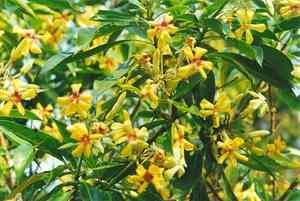
Native frangipani (Hymenosporum flavum)
Also known as: Wing seed tree, Australian frangipani
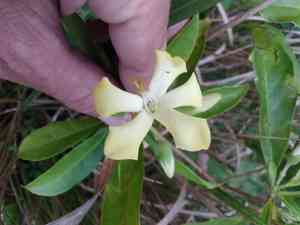
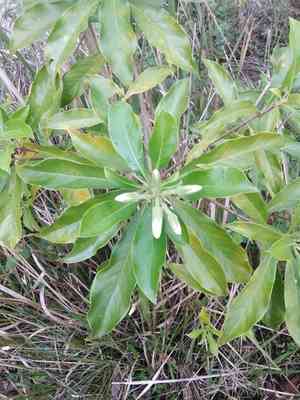
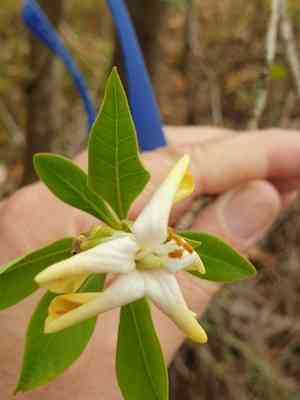
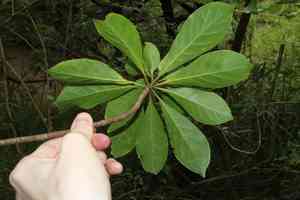
The plant blooms in spring, showcasing clusters of aromatic flowers that are roughly 5 cm across. These flowers start off as cream-colored and gradually turn yellow. After blooming, the plant produces elongated, pear-shaped seed pods. Its leaves are dark green, glossy, and typically measure about 10 cm in length and 4 cm in width.
In This Article
Attributes of Native frangipani
Lifespan
Perennial
Plant Type
Tree
Plant Height
8 m
Spread
4 m
Leaf Color
Green
Flower Size
2.5 cm to 5 cm
Flower Color
Yellow Cream
Images of Native frangipani
Quickly Identify Native frangipani
1
Slender evergreen tree, reaching up to 40 feet (12 meters) in height.
2
Shiny, green leaves clustered at branch ends, backdrop for fragrant yellow blooms.
Scientific Classification of Native frangipani
Phylum
Vascular plants
Class
Dicotyledons
Order
Apiales
Family
Cheesewood
Genus
Hymenosporum
Species
Native frangipani
Planting and Growing of Native frangipani
Care Difficulty
Easy
Watering Schedule
Every 2 days
Sunlight Requirements
Full sun
Sunshine Duration
4-6 hours
Ideal Temperature
60-75℉
Soil Type
Potting Mix, Peat Mix
Soil pH
6.5-7.5
Fertilizer Type
Balanced
Pruning Season
Spring, Summer
Pruning Area
Branches, Leaves
Pruning Frequency
2 times a year
Repotting Season
Spring
Pot Type
Plastic, Ceramic
 How to Water Native frangipani?
Hymenosporum flavum enjoys moderate watering. The golden rule is to maintain evenly moist soil, especially during its active growing season. Water deeply each time, ensuring that approximately 1000 ml soaks the root ball. Avoid waterlogging, as it could lead to root decay.
What are the symptoms of an underwatered Native frangipani?
›
What should I do if my Native frangipani is not getting enough water?
›
What are the symptoms of an overwatered Native frangipani?
›
How to save an overwatered Native frangipani?
›
 What Are the Sunlight Requirements for Native frangipani?
Hymenosporum flavum prefers full sun to partial sun exposure. Adequate light fosters health and blooming, increasing its aesthetic and resilience.
More About Sunlight Requirements Techniques→
Optimal Growth Environment
›
Solutions for Adequate Sunlight
›
Benefits of Ideal Lighting
›
 What Is the Ideal Temperature Range for Native frangipani?
The ideal temperature range for growing Hymenosporum flavum is between 60°F and 75°F. Within this range, the plant can thrive, grow vigorously, and produce vibrant blooms. Maintaining this temperature range ensures that the plant's metabolic processes function optimally, leading to healthy foliage and a strong root system.
 What Soil is Best for Native frangipani?
Hymenosporum flavum thrives in well-drained soil, preventing root rot by preventing water accumulation. Ensuring good drainage promotes healthy root development and robust plant growth, essential for this species. This plant prefers moderately fertile soil, rich in nutrients but not excessively saturated. Balanced fertility supports steady growth and enhances flowering potential, providing the nutrients needed without overwhelming the plant. An optimal pH range of 6.5 to 7.5 ensures that Hymenosporum flavum can absorb nutrients efficiently. Maintaining this pH range facilitates crucial nutrient uptake, boosting overall plant health and flowering.
 How to Fertilize Native frangipani?
For Hymenosporum flavum, use a balanced liquid fertilizer diluted to half-strength. Apply approximately 250-300 ml per application, ensuring even distribution around the root zone.
 How to Prune Native frangipani?
Begin by identifying any dead, damaged, or crossed branches. These should be removed first as they can inhibit the plant's growth and lead to poor air circulation. While the plant naturally has a tall, slender growth habit, strategic cuts can help maintain a more compact shape. Trim branches to promote a bushier growth profile and enhance flowering in subsequent seasons. Make sure that interior branches are not densely packed, as this could lead to reduced airflow and sunlight penetration, the crucial elements that help prevent mildew and other fungal diseases.
More About Pruning Techniques→
 How to Propagate Native frangipani plant?
1
Collect fresh seeds from mature plants or semi-hardwood cuttings from healthy branches. Ensure that the seeds are mature and the cuttings are healthy, showing no signs of disease or damage.
2
Use a well-draining potting mix for seeds or a mix of peat and perlite for cuttings to ensure adequate aeration and moisture retention conducive to germination and rooting.
3
Sow seeds evenly in the prepared seed trays or insert cuttings into the potting medium, ensuring they are upright and supported. Maintain consistent moisture without waterlogging.
 How to Repot Native frangipani plant?
1
Hymenosporum flavum, also known as the Sweetshade Tree, shows signs of needing repotting when roots start growing out of the drainage holes, or when growth seems stunted. Ideally, repot in spring or early summer when the plant naturally enters an active growth phase, ensuring it has the energy to recover from the procedure.
2
Select a pot that is one size larger than the current one. The pot should have adequate drainage holes to prevent waterlogging, which can lead to root rot. A marginally larger pot gives the roots room to develop without overwhelming them, maintaining stable soil moisture levels and encouraging healthy growth.
3
Opt for a well-draining potting mix, which is essential for preventing root rot and providing the necessary aeration. A good mix might include quality garden soil with added perlite or sand to enhance drainage. Such a medium retains enough moisture to nourish the plant while allowing excess water to escape.
Learn More About Native frangipani Diseases
Anthracnose
Bacterial Leaf Spot
Bacterial Wilt
Crown Gall
Damping-off
Downy Mildew
Drought Stress
Fusarium Wilt
Gray Mold
Leaf Curl
Leaf Spot
Mosaic
Nutrient Deficiency
Nutrient Toxicity
Powdery Mildew
Root Rot
Root-knot Nematode
Rusts
Sooty Mold
Spider Mites
Temperature Stress
Thrips Damage
White Mold



