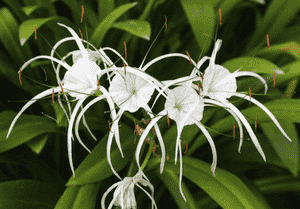
Beach spider lily(Hymenocallis littoralis)

Beach spider lily (Hymenocallis littoralis)

Also known as: Spider Lily, Beach Spider Lily

The Beach Spider Lily (Hymenocallis littoralis) is a bulbous perennial plant indigenous to the southeastern United States, as well as regions in Mexico, Central America, and South America. Known for its unique and striking appearance, it is frequently grown for its ornamental value in eye-catching displays.

Attributes of Beach spider lily

Lifespan
Perennial
Plant Type
Herb
Plant Height
1 m to 2 m
Spread
70 cm
Leaf Color
Green
Flower Size
20 cm
Flower Color
White Yellow

ForwardPlant - Identify plants with a snap

Identify and diagnose plants, get toxicity alerts, and explore safety guides for all types of fungi.

Try for Free

Images of Beach spider lily

Beach spider lily(Hymenocallis littoralis)

Quickly Identify Beach spider lily

1
This plant can be identified by its large, fragrant white flowers with long, thin petals that form a spider-like appearance. Its leaves are strap-like and glossy green.

Scientific Classification of Beach spider lily

Phylum
Vascular plants
Class
Monocotyledons
Order
Asparagus and allies
Family
Amaryllis
Genus
insmene
Species
Beach spider lily

Planting and Growing of Beach spider lily

Care Difficulty
Easy
Watering Schedule
Every 4 days
Sunlight Requirements
Full sun
Sunshine Duration
6-8 hours
Ideal Temperature
68-77℉
Soil Type
Potting Mix, Peat Mix
Soil pH
6.5-7.5
Fertilizer Type
Balanced
Pruning Season
Spring, Summer
Pruning Area
Branches, Leaves
Pruning Frequency
2 times a year
Repotting Season
Spring
Pot Type
Plastic, Ceramic

water icon How to Water Beach spider lily?

Watering for Hymenocallis littoralis should be generous but not excessive. This plant prefers consistently moist soil, so water until the top 2 inches of soil are wet, which typically means about 500 ml depending on pot size and climate.
What are the symptoms of an underwatered Beach spider lily?
What should I do if my Beach spider lily is not getting enough water?
What are the symptoms of an overwatered Beach spider lily?
How to save an overwatered Beach spider lily?
More About Watering Techniques

sunlight icon What Are the Sunlight Requirements for Beach spider lily?

Sunlight Requirements: Full sun, Partial sun
Duration of light: 6 to 8 hours daily
Hymenocallis littoralis flourishes in full to partial sun, ideally 6-8 hours daily. This light range encourages vibrant flowers and sturdy growth, making it a striking addition to any garden or home.
What is the best lighting condition for Hymenocallis littoralis?
How can I provide ideal lighting indoors?
What are the benefits of ideal lighting?
More About Sunlight Requirements Techniques

temperature icon What Is the Ideal Temperature Range for Beach spider lily?

Ideal Temperature: 68 ~ 77℉
The ideal temperature range for Hymenocallis littoralis is between 68°F and 77°F. This allows the plant to grow and thrive optimally by facilitating proper cellular and metabolic activities essential for its health.

soil icon What Soil is Best for Beach spider lily?

Soil type: Sandy soil, Loam
Soil PH: 6.5 ~ 7.5
Hymenocallis littoralis thrives in soil that provides excellent drainage, preventing root rot and supporting healthy root development. Ensuring a well-drained environment is crucial to allow air circulation and proper water absorption. This plant prefers consistently moist soil without being waterlogged. Maintaining adequate moisture levels enables the plant to draw sufficient nutrients and grow lush, vibrant foliage. Hymenocallis littoralis benefits from nutrient-rich soil, which supplies essential minerals and compounds needed for vigorous growth and vibrant blooms. Regularly supplementing with organic matter can enhance soil fertility. More About Soil

fertilize icon How to Fertilize Beach spider lily?

Fertilizer type: Balanced
When fertilizing Hymenocallis littoralis, it's crucial to provide just the right amount to ensure healthy growth. Typically, use half the recommended strength of a balanced liquid fertilizer every other week to prevent nutrient burn. For solid, slow-release fertilizers, follow the instructions on the package, but aim for a moderate feeding rate three times annually. Over-fertilizing can harm the plant, so less is often more. More About Fertilizing Techniques

prune icon How to Prune Beach spider lily?

Pruning Time: Spring, Summer
First, identify any yellow or dead foliage and remove these leaves using your shears. This improves the plant's appearance and directs energy towards healthy growth. Always trim leaves down to the base without cutting into the bulb. This helps maintain the natural shape and vitality of the Hymenocallis littoralis. To encourage further blooming, trim off the flower stalks of Hymenocallis littoralis once the flowers have wilted. This redirects the plant's energy and nutrients to producing new blooms rather than maintaining old ones. More About Pruning Techniques

propagate icon How to Propagate Beach spider lily plant?

Propagate Time: Spring, Early summer
1
Collect mature seeds from the plant and soak them in warm water for 24 hours to enhance germination rates. This process softens the hard seed coat and encourages the seed to sprout faster.
2
Use a well-draining, fertile soil mix. Mix in some sand or perlite to improve aeration. This will help provide the young plants with the nutrients they need while ensuring proper drainage.
3
For seeds, plant them at a shallow depth in the prepared soil. For division, ensure each section has at least one bulb and some roots before replanting. Water lightly to settle the soil.
More About Propagating Techniques

repot icon How to Repot Beach spider lily plant?

Repotting frequency: Every 2-3 years
1
Hymenocallis littoralis should be repotted when you notice roots growing out of the drainage holes, the soil drying out rapidly, or reduced growth. Early spring or late summer is ideal for repotting, as the plant is entering a phase of active growth.
2
Choose a pot that is 2 inches larger in diameter than the current one. This helps accommodate root growth without overwhelming the plant. Ensure the pot has ample drainage holes to prevent root rot, allowing the plant to thrive.
3
Opt for a well-draining loamy soil mix. This supports healthy root development and provides essential nutrients. Adding perlite or sand improves aeration, prevents waterlogging, and promotes robust plant growth.
More About Repotting Techniques

ForwardPlant - Identify plants with a snap

Find the best spots for them to optimize their health, simply using your phone.

Try for Free

Toxicity of Beach spider lily

Is Beach spider lily toxic to cat?

The beach spider lily is known to be toxic to cats. If felines consume any part of this plant, such as its leaves or roots, they face a risk of poisoning. Cats might accidentally ingest portions of the plant, resulting in potential toxicity. Symptoms of physical discomfort or illness may appear following ingestion, making it essential to keep a close eye on the cat's health. Should there be any suspicion that a cat has eaten beach spider lily, it is vital to seek immediate veterinary assistance to safeguard their health and to administer suitable treatment.

Is Beach spider lily toxic to dog?

The beach spider lily is recognized as toxic to dogs. If dogs mistakenly consume this plant, they can experience poisoning. All parts of the beach spider lily are poisonous, though particular attention should be given to the leaves and roots. Should a dog ingest any portion of the beach spider lily, it might show symptoms such as vomiting, diarrhea, excessive drooling, abdominal discomfort, or more severe reactions depending on the quantity ingested. It is vital for dog owners to prevent their pets from coming into contact with beach spider lily and to be vigilant for any signs of distress that may indicate poisoning. If a dog has consumed beach spider lily, seeking immediate veterinary attention is crucial for effective treatment and recovery.

Identify toxic plants for your safety

Learn which plants are harmful to you and your pets, and make informed choices for a safer home!

Try for Free
WARNING
The judgment on toxicity and danger is for reference only. We DO NOT GUARANTEE any accuracy of such judgment. Therefore, you SHALL NOT rely on such judgment. It is IMPORTANT TO SEEK PROFESSIONAL ADVICE in advance when necessary.
More About Toxic Techniques