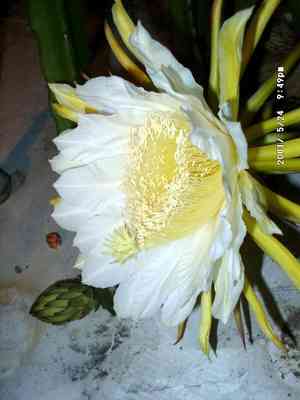
Costa rican pitahaya (Hylocereus costaricensis)
Also known as: Red-fleshed pitahaya
The Costa Rican pitahaya, also known as Hylocereus costaricensis, is a sun-loving succulent cactus that thrives in warm climates. It exhibits a creeping growth pattern, often climbing on rock walls or other trees for support. Its fragrant flowers bloom briefly at night, attracting bats for pollination.
In This Article
Attributes of Costa rican pitahaya
Lifespan
Perennial
Plant Type
Shrub
Plant Height
10 m
Spread
1 m
Leaf Color
Green (Note: as a cactus, it technically has modified stems rather than true leaves)
Flower Size
15 cm to 30 cm
Flower Color
White
Quickly Identify Costa rican pitahaya
1
Identify Hylocereus costaricensis by its climbing habit with three-sided green stems that have small, triangular spines. The flowers are large, funnel-shaped, and bloom at night; the petals are white with greenish outer segments.
Scientific Classification of Costa rican pitahaya
Phylum
Vascular plants
Class
Dicotyledons
Order
Pinks, cacti, and allies
Family
Cactuses
Genus
Night-blooming cactus
Species
Costa rican pitahaya
Planting and Growing of Costa rican pitahaya
Care Difficulty
Easy
Watering Schedule
Every 2 days
Sunlight Requirements
Full sun
Sunshine Duration
6-10 hours
Ideal Temperature
68-77℉
Soil Type
Potting Mix, Peat Mix
Soil pH
6-7.5
Fertilizer Type
Balanced
Pruning Season
Spring, Summer
Pruning Area
Branches, Leaves
Pruning Frequency
2 times a year
Repotting Season
Spring
Pot Type
Plastic, Ceramic
 How to Water Costa rican pitahaya?
For Hylocereus costaricensis, the watering amount should be around 250 ml per session. Ensure the soil is thoroughly moistened, but not waterlogged. Allow the topsoil to dry out before the next watering to prevent root rot.
What are the symptoms of an underwatered Costa rican pitahaya?
›
What should I do if my Costa rican pitahaya is not getting enough water?
›
What are the symptoms of an overwatered Costa rican pitahaya?
›
How to save an overwatered Costa rican pitahaya?
›
 What Are the Sunlight Requirements for Costa rican pitahaya?
Hylocereus costaricensis thrives in full to partial sun, ideally receiving 8 to 12 hours of sunlight per day, which supports its growth, blooming potential, and overall health.
More About Sunlight Requirements Techniques→
What is the best location for this plant to receive ideal lighting conditions?
›
How can I ensure the plant receives adequate sunlight indoors?
›
What benefits does the plant gain from ideal lighting conditions?
›
 What Is the Ideal Temperature Range for Costa rican pitahaya?
Hylocereus costaricensis prospers best in an environment where the temperature is consistently maintained between 68°F and 77°F. This range supports optimal metabolic processes, ensuring the plant is capable of thriving and producing high-quality fruit. Consistent temperatures within this ideal range can significantly enhance the plant's growth rate and fruit-bearing potential.
 What Soil is Best for Costa rican pitahaya?
Hylocereus costaricensis thrives in well-draining soils. This type of soil prevents water from accumulating, reducing the risk of root rot, and promoting healthy growth. The presence of organic matter in the soil supports nutrient provision and boosts microbial activity, ensuring that the plant receives the essential nutrients for optimal health. While drainage is crucial, the soil should also retain some moisture to support the plant during dry spells. A balance ensures the plant remains hydrated without waterlogging.
 How to Fertilize Costa rican pitahaya?
Hylocereus costaricensis, commonly known as pitaya or dragon fruit, requires a balanced amount of nutrients for optimal growth. A liquid fertilizer diluted to half strength should be used bi-weekly, applying an amount that sufficiently moistens the soil without waterlogging it. A balanced 20-20-20 fertilizer or one specifically formulated for cacti and succulents is advised. Alternatively, a slow-release fertilizer can be applied three times a year at the start of each growing season, using around one tablespoon per plant.
 How to Prune Costa rican pitahaya?
Over-pruning can stress the plant and reduce its fruiting potential. Always aim to retain a balanced frame and remove no more than a third of the plant at one time. Monitor the plant after pruning to ensure it's responding well. Signs of stress like wilting or discoloration indicate the need to adjust your approach.
More About Pruning Techniques→
 How to Propagate Costa rican pitahaya plant?
1
Choose a healthy, mature stem from the parent Hylocereus costaricensis plant. Ensure the cutting is free from disease or pests and has a firm, fleshy texture. Generally, the cutting should be about 15-30 cm long for optimal growth.
2
Once the cutting is selected, allow it to dry for a few days in a warm, dry area. This drying (or curing) helps prevent rot by sealing the cut surface with a calloused layer, which is essential for reducing the risk of infection once planted.
3
Plant the dried cutting in a well-draining cactus mix. Place the cutting about 5 cm deep into the soil, ensuring it stands upright without support. Water lightly after planting, but be careful not to overwater; the soil should be slightly moist, not soggy.
 How to Repot Costa rican pitahaya plant?
1
Hylocereus costaricensis shows it's time to repot when roots overflow from the drainage holes or if its growth slows significantly. Repotting during active growing seasons ensures the roots establish well.
2
Select a pot just a bit larger than its previous one to avoid excessive soil moisture retention. Ensure it has drainage holes to prevent root rot. This encourages healthy root development and optimal growth.
3
Opt for a well-draining cactus mix with added sand or perlite. It prevents waterlogging, allowing roots to breathe and grow robustly, essential for desert-adapted plants like Hylocereus costaricensis.
Learn More About Costa rican pitahaya Diseases
Anthracnose
Bacterial Leaf Spot
Bacterial Soft Rot
Bacterial Wilt
Black Spot
Chemical Injury
Damping-off
Drought Stress
Fusarium Wilt
Gray Mold
Leaf Spot
Mosaic
Nutrient Deficiency
Nutrient Toxicity
Powdery Mildew
Root Rot
Root-knot Nematode
Sooty Mold
Spider Mites
Temperature Stress
Thrips Damage
White Mold



