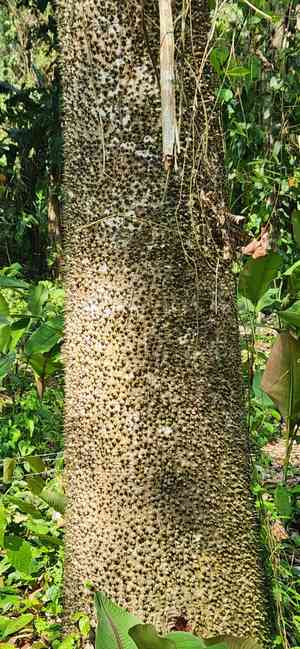
Sandbox trees (Hura) (Hura)
Also known as: Sandbox Tree, Dynamite Tree
The sandbox tree is indigenous to South America, Mesoamerica, and the West Indies.
In This Article
Attributes of Sandbox trees (Hura)
Lifespan
Perennial
Plant Height
Up to 40 meters
Spread
Up to 30 meters
Leaf Color
Dark green
Flower Size
Approximately 1 cm
Flower Color
Red
Images of Sandbox trees (Hura)
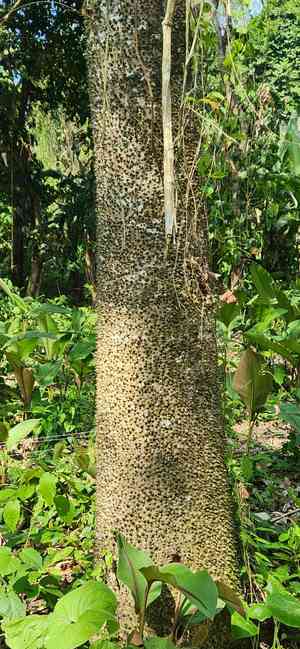
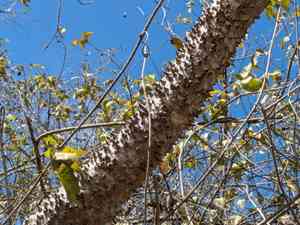
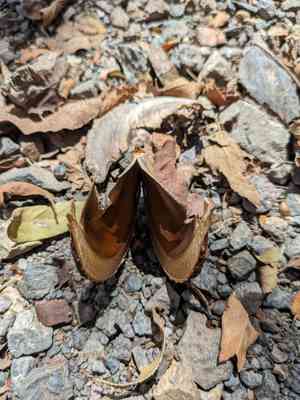
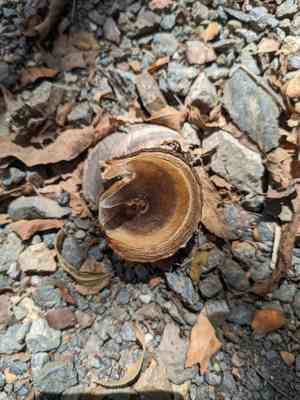
Quickly Identify Sandbox trees (Hura)
1
Identifying Hura can be done by looking out for its distinctive tall trunk covered in spiny bark, as well as its large, lobed leaves. Its fruit is round and woody, splitting explosively when mature.
Scientific Classification of Sandbox trees (Hura)
Phylum
Magnoliophyta
Class
Magnoliopsida
Order
Malpighiales
Family
Euphorbiaceae
Genus
Hura
Planting and Growing of Sandbox trees (Hura)
Care Difficulty
Hard
Watering Schedule
Every 2 days
Sunlight Requirements
Partial sun
Sunshine Duration
4-8 hours
Ideal Temperature
75-85℉
Soil Type
Potting Mix, Peat Mix
Soil pH
5.5-7.5
Fertilizer Type
Balanced
Pruning Season
Spring, Summer
Pruning Area
Branches, Leaves
Pruning Frequency
Once a year
Repotting Season
Spring
Pot Type
Plastic, Terracotta
 How to Water Sandbox trees (Hura)?
Hura plants appreciate a generous but not excessive watering schedule. Water around 500 ml until the soil is evenly moist but not soggy. Ensure the top inch of soil dries out before the next watering, as this promotes root health.
What are the symptoms of an underwatered Sandbox trees (Hura)?
›
What should I do if my Sandbox trees (Hura) is not getting enough water?
›
What are the symptoms of an overwatered Sandbox trees (Hura)?
›
How to save an overwatered Sandbox trees (Hura)?
›
 What Are the Sunlight Requirements for Sandbox trees (Hura)?
Partial sun ensures Hura receives enough light for vibrant growth without the risk of leaf scorching. Ideal lighting promotes robust health and enhances leaf coloration.
What is the best light intensity for Hura?
›
How can I provide ideal lighting for Hura indoors?
›
What is the effect of ideal lighting on Hura’s growth?
›
 What Is the Ideal Temperature Range for Sandbox trees (Hura)?
The ideal temperature range for Hura, 75-85°F, ensures optimal growth and health. Within this range, metabolic processes occur efficiently, and the plant can maximize nutrient uptake and photosynthesis. Deviations can lead to stress and inhibit growth.
 What Soil is Best for Sandbox trees (Hura)?
Hura requires well-drained soil to prevent root rot. The plant thrives in soils that allow water to pass through easily while retaining adequate moisture for its growth. Ensuring proper drainage improves oxygen availability to the roots, fostering healthy growth. The plant benefits greatly from a nutrient-rich substrate. Such a soil ensures Hura receives essential nutrients to support various physiological functions like photosynthesis and growth. Adequate nutrients also enhance the plant's resistance to pests and diseases. While Hura prefers well-drained soil, it also benefits from moderate moisture retention. This balance helps supply the plant with consistent water availability, critical for its metabolic processes and overall health.
 How to Fertilize Sandbox trees (Hura)?
Fertilizing a Hura plant requires a balanced approach. Use a balanced 10-10-10 NPK fertilizer, and apply approximately 1 gram per square meter per application for optimal growth. For liquid fertilizers, dilute them to half the recommended strength to avoid root burn.
 How to Prune Sandbox trees (Hura)?
Start by removing any dead or diseased branches. Cut close to the trunk or main branch, making clean cuts to promote healing and prevent the onset of rot. Carefully thin out crowded areas to allow light and air to circulate. This reduces the risk of fungal diseases and encourages a more appealing shape. Cut back branch tips to encourage a bushier growth pattern. This helps in maintaining a balanced canopy and prevents branches from becoming too leggy. For larger cuts or wounds, apply a suitable tree wound dressing to protect against pests and diseases. This helps the tree to heal more quickly and prevents infections.
 How to Propagate Sandbox trees (Hura) plant?
1
Clean the seeds thoroughly to remove any pulp residues to prevent fungal infections. This helps in improving the germination rate by providing a sterile environment.
2
Choose a healthy, disease-free stem from the parent plant. The selected cutting should be from recent growth and ideally include a few leaves to encourage better rooting.
3
Use a well-draining rooting medium such as a mix of sand and peat moss. This prevents waterlogging and provides aeration necessary for root development.
 How to Repot Sandbox trees (Hura) plant?
1
The Hura plant shows signs it needs repotting when its roots begin to circle the pot's edges or emerge from the drainage holes. Additionally, if the plant's growth has noticeably slowed or if you observe that it dries out quickly after watering, these are indicators suggesting it's time to consider repotting. These signals often appear during the warmer seasons, making spring and summer ideal repotting periods.
2
Select a pot that is one size larger than the current one, with adequate drainage holes to prevent waterlogging. The material can vary—ceramic, plastic, or clay—as long as it matches your aesthetic preference and growing conditions. A well-sized pot promotes healthy growth without overwhelming the plant with excessive space, while ensuring adequate room for root expansion.
3
Opt for a well-draining, loamy mix that holds moisture while allowing excess water to escape easily. This medium ensures that the plant's roots receive appropriate moisture levels without being submerged in water, reducing the risk of root rot. Adequate drainage supports plant health by maintaining a balance between oxygen availability and moisture retention.
Toxicity
Ingestion, Contact with sap
WARNING
The judgment on toxicity and danger is for reference only. We DO NOT GUARANTEE any accuracy of such judgment. Therefore, you SHALL NOT rely on such judgment. It is IMPORTANT TO SEEK PROFESSIONAL ADVICE in advance when necessary.
Learn More About Sandbox trees (Hura) Diseases
Anthracnose
Bacterial Leaf Spot
Bacterial Wilt
Crown Gall
Damping-off
Downy Mildew
Drought Stress
Fusarium Wilt
Gray Mold
Leaf Curl
Leaf Spot
Mosaic
Nutrient Deficiency
Nutrient Toxicity
Powdery Mildew
Root Rot
Root-knot Nematode
Rusts
Sooty Mold
Spider Mites
Temperature Stress
Thrips Damage
White Mold

