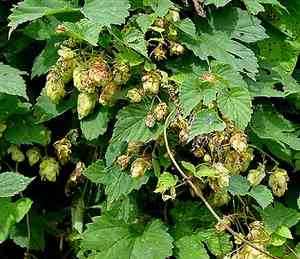
Hop (Humulus) (Humulus)
Also known as: Common hop, European hop
Hops are renowned for their flowers, which are crucial in brewing various beers. These perennial, climbing plants contribute a unique bitter flavor and aroma to the beer, making them essential in the brewing process.
In This Article
Attributes of Hop (Humulus)
Lifespan
Perennial
Plant Height
3 to 6 meters
Spread
NA (Climbing plant)
Leaf Color
Green
Flower Size
NA (Cones, not typical flowers)
Flower Color
Yellow-green (for female cones)
Images of Hop (Humulus)
Quickly Identify Hop (Humulus)
1
Humulus plants can be identified by their rough and climbing stems, often covered with tiny bristles. The leaves are opposite, usually deep lobed with 3-5 lobes and have a serrated margin. The female flowers form cone-like structures while the male flowers are in loose clusters.
Scientific Classification of Hop (Humulus)
Phylum
Magnoliophyta
Class
Magnoliopsida
Order
Rosales
Family
Cannabaceae
Genus
Humulus
Planting and Growing of Hop (Humulus)
Care Difficulty
Moderate
Watering Schedule
Every 4 days
Sunlight Requirements
Full sun
Sunshine Duration
4-6 hours
Ideal Temperature
60-70℉
Soil Type
Potting Mix, Peat Mix
Soil pH
6.5-7.5
Fertilizer Type
Balanced
Pruning Season
Spring, Summer
Pruning Area
Branches, Leaves
Pruning Frequency
2 times a year
Repotting Season
Spring
Pot Type
Plastic, Ceramic
 How to Water Hop (Humulus)?
When watering Humulus, ensure the soil is evenly moistened, without being waterlogged. The plant prefers a consistent level of moisture, much like the consistency of a well-squeezed sponge, allowing it to thrive without soggy roots.
What are the symptoms of an underwatered Hop (Humulus)?
›
What should I do if my Hop (Humulus) is not getting enough water?
›
What are the symptoms of an overwatered Hop (Humulus)?
›
How to save an overwatered Hop (Humulus)?
›
 What Are the Sunlight Requirements for Hop (Humulus)?
Humulus plants thrive best in a range of full to partial sun, receiving 6-8 hours of light. This ensures they develop strong stems, lush foliage, and ample flowers, enhancing both growth and appearance.
What is the ideal light for Humulus plants?
›
How can I achieve this ideal lighting condition?
›
What benefits does ideal lighting provide to Humulus?
›
 What Is the Ideal Temperature Range for Hop (Humulus)?
For optimal growth, Humulus plants thrive within a temperature range of 60°F to 70°F. This range allows the enzymes within the plant to function efficiently, supporting photosynthesis and cellular growth. Maintaining this temperature helps ensure high yield and quality of the plant's production.
 What Soil is Best for Hop (Humulus)?
Humulus thrives in nutrient-rich soils that enhance their growth and produce robust vines. Fertile soil provides essential minerals and nutrients that are vital for healthy development and foliage density. Good drainage prevents root rot and other water-related diseases. Well-drained soil ensures that water circulates efficiently, allowing roots to absorb nutrients effectively while minimizing the risk of waterlogging. Although well-drained, soil should retain adequate moisture to support constant hydration, especially during the growing season. Proper moisture helps sustain the plant through dry periods, ensuring steady growth and vibrant leaf color.
 How to Fertilize Hop (Humulus)?
For Humulus, it's important to use a balanced fertilizer with equal parts nitrogen, phosphorus, and potassium. Adjust the amount according to the plant size, generally applying 100 grams per mature plant during the growing season suffices.
 How to Prune Hop (Humulus)?
In early spring, inspect your Humulus to identify old and dead growth. Cut these parts back to promote new, healthy growth. Remove any branches that appear weak or discolored. To encourage dense, bushy growth, trim back the tips of branches during summer. This stimulates the plant to grow more lateral branches, making a fuller appearance. Throughout the growing season, regularly trim your Humulus to maintain its desired shape and size. Removing unruly or exceptionally long shoots keeps the plant looking neat.
 How to Propagate Hop (Humulus) plant?
1
Start by soaking the seeds in water for 24 hours to soften the shell and promote germination. Plant them in a seed tray filled with potting mix and keep the soil moist.
2
Select a healthy, non-flowering stem and cut a 4 to 6-inch section below a leaf node. Remove the leaves from the lower half of the cutting and dip the end in rooting hormone before planting.
3
In spring, divide a mature plant by carefully digging it up and splitting the root ball into sections. Replant each section in the prepared garden or container.
 How to Repot Hop (Humulus) plant?
1
Humulus plants need repotting when their roots start to outgrow the current pot and become visible on the surface, or when you notice slower growth and wilting. Be attentive to these signs in late March or early September, as these are ideal times for repotting.
2
Select a pot that is 2-3 inches larger in diameter than the current one. Ensure the pot has drainage holes, as this will prevent waterlogging and encourage better root health. A slightly heavy pot can help balance the weight of mature growth later on.
3
Opt for a soil mix that is both well-draining and rich in nutrients. This will nourish the Humulus while preventing root rot. Consider a mix containing equal parts of loamy soil, perlite, and organic compost to promote healthy growth and ensure proper drainage.
Toxicity
Ingestion
WARNING
The judgment on toxicity and danger is for reference only. We DO NOT GUARANTEE any accuracy of such judgment. Therefore, you SHALL NOT rely on such judgment. It is IMPORTANT TO SEEK PROFESSIONAL ADVICE in advance when necessary.
Learn More About Hop (Humulus) Diseases
Anthracnose
Bacterial Leaf Spot
Bacterial Soft Rot
Bacterial Wilt
Crown Gall
Cyst Nematode
Damping-off
Downy Mildew
Drought Stress
Fusarium Wilt
Gray Mold
Leaf Spot
Mosaic
Nutrient Deficiency
Nutrient Toxicity
Powdery Mildew
Root Rot
Root-knot Nematode
Rusts
Sooty Mold
Spider Mites
Temperature Stress
Thrips Damage
White Mold

