Huernia macrocarpa (Huernia macrocarpa)
Also known as: Large-fruited Huernia
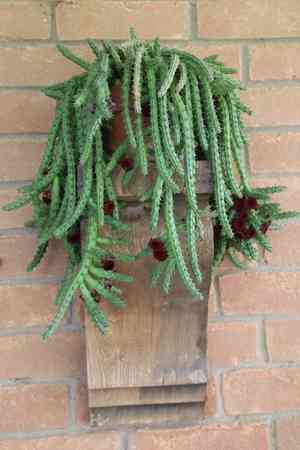
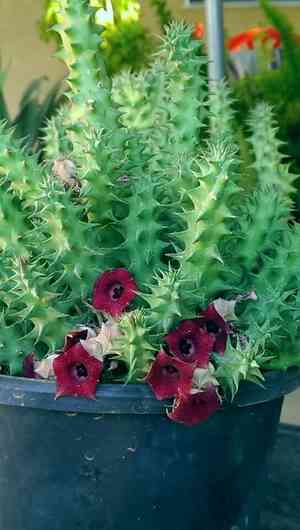
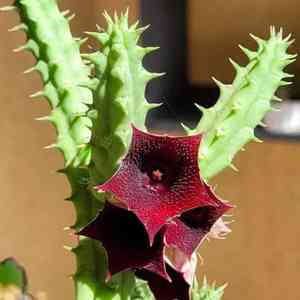
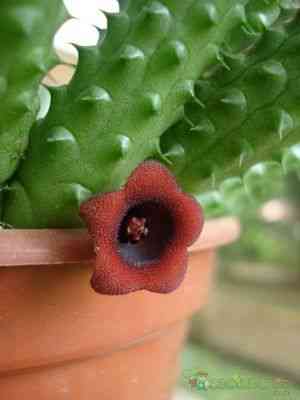
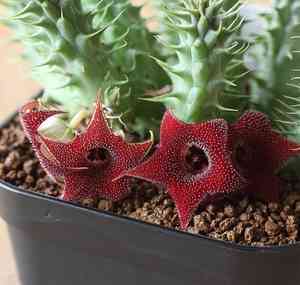
Huernia macrocarpa, a vibrant succulent plant, shares a familial bond with milkweeds. Adorned with dark pink star-like blooms, small eyes, and thick, toothed extensions, it achieves a stature of five to six meters. It is a familiar sight in indoor pots.
In This Article
Attributes of Huernia macrocarpa
Lifespan
Perennial
Images of Huernia macrocarpa
Quickly Identify Huernia macrocarpa
1
Look for small, star-shaped, often hairy flowers that vary in color from deep red to light colors. The plant has short, fleshy stems with prominent tubercles.
Scientific Classification of Huernia macrocarpa
Phylum
Tracheophyta
Class
Magnoliopsida
Order
Gentianales
Family
Apocynaceae
Genus
Huernia
Species
H. macrocarpa
Planting and Growing of Huernia macrocarpa
Care Difficulty
Easy
Watering Schedule
Every 2 days
Sunlight Requirements
Partial sun
Sunshine Duration
6-10 hours
Ideal Temperature
70-80℉
Soil Type
Potting Mix, Peat Mix
Soil pH
6.5-7.5
Fertilizer Type
Balanced
Pruning Season
Spring, Summer
Pruning Area
Branches, Leaves
Pruning Frequency
2 times a year
Repotting Season
Spring
Pot Type
Plastic, Ceramic
 How to Water Huernia macrocarpa?
Huernia macrocarpa requires careful watering. It's important to allow the soil to dry out completely between waterings. A moderate amount of about 75 milliliters should suffice each time, ensuring the water reaches the roots but doesn't saturate the soil.
What are the symptoms of an underwatered Huernia macrocarpa?
›
What should I do if my Huernia macrocarpa is not getting enough water?
›
What are the symptoms of an overwatered Huernia macrocarpa?
›
How to save an overwatered Huernia macrocarpa?
›
 What Are the Sunlight Requirements for Huernia macrocarpa?
Partial sun ensures typical growth and bloom health, helping retain robust structural integrity and vivid colorations. Optimal light levels foster a strong immune system against pests and diseases.
What type of sun exposure is best?
›
How can you ensure adequate lighting indoors?
›
What will ideal lighting achieve?
›
 What Is the Ideal Temperature Range for Huernia macrocarpa?
The ideal temperature range for Huernia macrocarpa is between 70 and 80°F. This range provides optimal conditions for growth and flowering, ensuring the plant receives enough warmth without risking heat stress. Maintaining consistent temperatures within this range supports the plant's metabolic processes, promoting healthy development.
 What Soil is Best for Huernia macrocarpa?
Huernia macrocarpa requires soil that drains quickly to prevent waterlogging, which can lead to root rot. Well-draining soil ensures that excess water is rapidly dispersed, providing the plant with the dry conditions it prefers. While not overly demanding, this plant benefits from soil that offers moderate nutrients, supporting healthy growth and flowering. Adding a balanced cactus mix or gentle fertilizers can promote vibrant blooms. Loose soil allows for better root penetration and aeration, vital for maintaining healthy root systems. This condition helps the plant to uptake nutrients effectively and fosters robust growth.
 How to Fertilize Huernia macrocarpa?
For Huernia macrocarpa, a light hand with fertilizer is the way to go. This succulent doesn't require much, so half-strength liquid fertilizer is more than sufficient. Ensure not to overdo it, as this could harm the plant's growth rather than help it. A small application goes a long way, especially during its growing season in the warmer months.
 How to Prune Huernia macrocarpa?
Start by inspecting the plant for any dead or damaged stems. Use sharp, sterilized scissors to carefully remove these sections at their base. Be sure to make clear cuts just above a healthy node. If the plant has grown excessively, trim back some of the longer stems to maintain a compact and balanced appearance. Always cut above a growth node to encourage branching and fuller growth.
 How to Propagate Huernia macrocarpa plant?
1
Choose a healthy stem and use a sterilized knife to remove a section close to a node. Allow the cutting to callous over for a few days to minimize moisture loss and prevent fungal infections.
2
Prepare a mix of cactus compost and sand for sowing seeds. Gently sprinkle the seeds on the surface, pressing them lightly into the substrate. Maintain humidity and warmth to facilitate germination.
3
Once the cutting has calloused, place it in a well-draining soil mix. Ensure that the cut end is buried about 1-2 inches deep. Water sparingly until roots establish.
 How to Repot Huernia macrocarpa plant?
1
Observe Huernia macrocarpa for signs it needs repotting, such as roots protruding from the drainage holes or soil becoming compacted and less absorbent. Additionally, if the plant seems to have outgrown its current container or growth has noticeably slowed, these are strong indicators it's time to repot this succulent.
2
Choose a pot that is 1-2 inches larger in diameter than the current one to allow for growth, but not too large, which could lead to root rot from excessive moisture. Ensure the new pot has adequate drainage holes to prevent water from pooling at the bottom, safeguarding the roots from fungal issues and promoting healthy root development.
3
Select a coarse, well-draining soil mix suitable for cacti and succulents, such as a commercial cactus potting mix. Adding extra perlite or coarse sand can enhance drainage and aeration, preventing water retention, which tends to be detrimental to the roots by increasing the risk of root rot.
Toxicity
None
WARNING
The judgment on toxicity and danger is for reference only. We DO NOT GUARANTEE any accuracy of such judgment. Therefore, you SHALL NOT rely on such judgment. It is IMPORTANT TO SEEK PROFESSIONAL ADVICE in advance when necessary.

