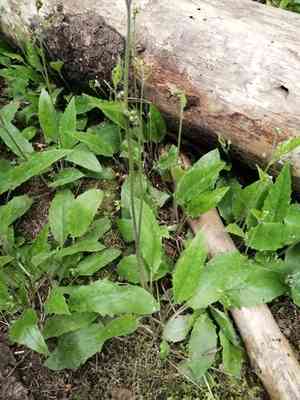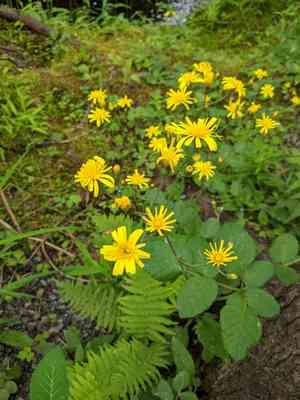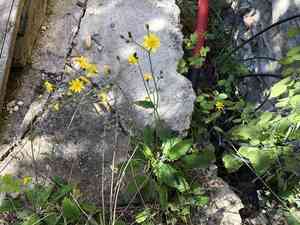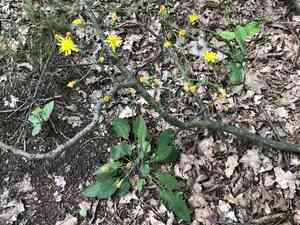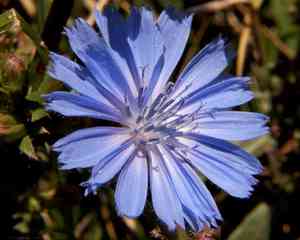
Wall hawkweed(Hieracium murorum)

Wall hawkweed (Hieracium murorum)

Also known as: French lungwort, Grand-toothed hawkweed

Wall hawkweed (Hieracium murorum), originally from Europe, is considered invasive in regions where it has been introduced. It generates a high number of seeds that are easily carried by the wind and readily germinate. Additionally, it spreads across the ground through stolons, forming dense mats that inhibit the growth of other plants and disrupt local ecosystems.

Attributes of Wall hawkweed

Lifespan
Perennial
Plant Type
Herb
Plant Height
25 cm to 60 cm
Spread
20-40 cm
Leaf Color
Green
Flower Size
1 cm to 2 cm
Flower Color
Yellow

ForwardPlant - Identify plants with a snap

Identify and diagnose plants, get toxicity alerts, and explore safety guides for all types of fungi.

Try for Free

Images of Wall hawkweed

Wall hawkweed(Hieracium murorum)

Quickly Identify Wall hawkweed

1
To identify Hieracium murorum, look for its basal rosette of oblong to lanceolate leaves with toothed margins. The plant produces yellow, dandelion-like flowers in loose corymbs, typically blooming from late spring to early summer.

Scientific Classification of Wall hawkweed

Phylum
Vascular plants
Class
Dicotyledons
Order
Asterales
Family
Daisy
Genus
Hawkweeds
Species
Wall hawkweed

Planting and Growing of Wall hawkweed

Care Difficulty
Easy
Watering Schedule
Every 4 days
Sunlight Requirements
Partial sun
Sunshine Duration
4-6 hours
Ideal Temperature
60-75℉
Soil Type
Potting Mix, Peat Mix
Soil pH
6.5-7.5
Fertilizer Type
Balanced
Pruning Season
Spring, Summer
Pruning Area
Branches, Leaves
Pruning Frequency
2 times a year
Repotting Season
Spring
Pot Type
Plastic, Terracotta

water icon How to Water Wall hawkweed?

When watering Hieracium murorum, aim to thoroughly soak the soil with about 200 ml of water each time. Ensure the water penetrates deeply to reach the roots, allowing the plant to uptake sufficient moisture. Water until you notice excess draining from the pot's bottom, which indicates the soil is evenly saturated.
What are the symptoms of an underwatered Wall hawkweed? ›
What should I do if my Wall hawkweed is not getting enough water? ›
What are the symptoms of an overwatered Wall hawkweed? ›
How to save an overwatered Wall hawkweed? ›

sunlight icon What Are the Sunlight Requirements for Wall hawkweed?

Sunlight Requirements: Partial sun, Full shade
Duration of light: 4-6 hours daily
Ideally, Hieracium murorum should be in partial sun to full shade conditions as it mimics its natural woodland habitat. Proper light conditions prevent stress, support robust growth, and ensure effective reproduction.
Question: What type of sunlight is best for Hieracium murorum? ›
Question: How can I ensure Hieracium murorum gets the right amount of light indoors? ›
Question: Why is monitoring light levels crucial for Hieracium murorum? ›
More About Sunlight Requirements Techniques→

temperature icon What Is the Ideal Temperature Range for Wall hawkweed?

Ideal Temperature: 60 ~ 75℉
The ideal temperature range for Hieracium murorum is between 60°F to 75°F. This range ensures optimal photosynthesis and growth rate, providing a conducive environment for cellular processes. When temperatures remain consistent within this range, the plant experiences less stress, therefore an ideal condition for proliferation. Such temperatures allow the plant to balance its water usage efficiently and to maintain strong structural growth.

soil icon What Soil is Best for Wall hawkweed?

Soil type: Loam, Sandy loam, Calcareous soil
Soil PH: 6.5 ~ 7.5
Hieracium murorum thrives in well-drained soil as it prevents root rot and promotes healthy root development. The ability of water to move freely ensures that the roots receive adequate oxygen, which is crucial for the plant's vitality. This plant prefers soil with moderate nutrient levels. Too much fertilizer can lead to excessive foliage with poor flowering, whereas too little can result in stunted growth. Balance is key for optimal growth and bloom. Hieracium murorum can tolerate a pH level of 6.5 to 7.5. This range ensures that essential nutrients are readily available for absorption, promoting healthy plant growth and vibrant leaf color.

fertilize icon How to Fertilize Wall hawkweed?

Fertilizer type: Balanced
Hieracium murorum typically requires a balanced amount of fertilizer. Use a quarter strength of the recommended liquid fertilizer dosage per application to prevent nutrient burn. Solid fertilizers should be applied sparingly, approximately at half the recommended concentration suitable for flowering plants.

prune icon How to Prune Wall hawkweed?

Pruning Time: Spring, Summer
Begin by examining the plant and identifying any dead, damaged, or diseased stems. Use a pair of clean, sharp scissors or pruning shears to remove these first. Next, trim back any overly long or excessively leafy stems to just above a leaf node. This will encourage new growth from the cut point. Try to maintain a balanced shape by trimming evenly around the plant, ensuring sunlight can penetrate through the foliage.

propagate icon How to Propagate Wall hawkweed plant?

Propagate Time: Spring, Early summer
1
Begin by filling a seed tray with a well-draining soil mix. Water the soil thoroughly, then scatter the seeds evenly across the surface. Lightly cover with soil to ensure good contact but avoid burying them too deep. Keep the tray in a warm, bright spot until germination occurs.
2
Choose healthy, non-flowering shoots and cut them just below a node. Remove the lower leaves and dip the cut end in rooting hormone. Plant the cutting in a pot with a mixture of sand and peat, and cover with a plastic bag to maintain humidity.
3
Carefully dig up the mature Hieracium murorum, ensuring the roots are intact. Gently separate the clumps, ensuring each contains roots and shoots. Replant the divisions immediately in prepared soil and water them thoroughly to help settle their roots.

repot icon How to Repot Wall hawkweed plant?

Repotting frequency: Every 1-2 years
1
Look for signs like roots emerging from drainage holes or a noticeably slower growth rate. If the plant becomes too compact in its current pot, it's a clear signal to switch it to a larger home.
2
Select a pot that is one size larger than the current one, with good drainage. A well-chosen pot provides stability, prevents waterlogging, and gives roots the room they crave for growth.
3
Opt for a well-draining organic mix with a balanced nutrient profile, promoting healthy root development and mimicking the plant's natural habitat. This ensures optimal growth and vigor.

ForwardPlant - Identify plants with a snap

Find the best spots for them to optimize their health, simply using your phone.

Try for Free

Toxicity of Wall hawkweed

Is Wall hawkweed toxic to humans?

Wall hawkweed presents a considerable danger to humans due to its high toxicity. Every part of this plant is poisonous, and ingestion can lead to serious poisoning. If consumed accidentally, wall hawkweed can induce severe health complications. The manifestations of poisoning are broad-ranging and may involve intense gastrointestinal upset, characterized by severe vomiting and diarrhea that could result in dehydration. Additionally, neurological symptoms may arise, including tremors, confusion, and in extreme situations, seizures. It is essential to remain alert and avoid accidental consumption of wall hawkweed, especially in regions where it proliferates.

Is Wall hawkweed toxic to cat?

Wall hawkweed is extremely toxic to cats. If cats ingest any portion of wall hawkweed, due to the toxic nature of all its parts, they may face severe poisoning risks. Accidental consumption could happen when cats are exploring or playing in gardens where the plant is present. Upon ingestion, a cat might endure significant physical discomfort, manifesting symptoms that usually require urgent veterinary intervention. Given these dangers, it is essential for cat owners to keep their pets away from wall hawkweed and to seek veterinary assistance immediately if poisoning is suspected, thereby ensuring timely and effective treatment.

Is Wall hawkweed toxic to dog?

The plant species under discussion presents a significant toxicity risk to dogs. Canines might inadvertently consume parts of wall hawkweed, which can lead to the risk of poisoning. Every part of the plant is toxic, signifying that ingestion of any portion can result in harmful effects. Dogs that come into contact with wall hawkweed may display a range of symptoms that signify poisoning; these symptoms can include vomiting, diarrhea, lethargy, abdominal discomfort, or more serious manifestations depending on the quantity ingested, as well as the dog's size and overall health condition. It is essential for dog owners to safeguard their pets from accessing locations where wall hawkweed is present, and to keep a close watch on their behavior during walks or outdoor excursions. If a dog consumes any part of wall hawkweed, seeking immediate veterinary assistance is vital to ensure the best possible outcome for the pet.

Identify toxic plants for your safety

Learn which plants are harmful to you and your pets, and make informed choices for a safer home!

Try for Free
WARNING
The judgment on toxicity and danger is for reference only. We DO NOT GUARANTEE any accuracy of such judgment. Therefore, you SHALL NOT rely on such judgment. It is IMPORTANT TO SEEK PROFESSIONAL ADVICE in advance when necessary.
More About Toxic Techniques→