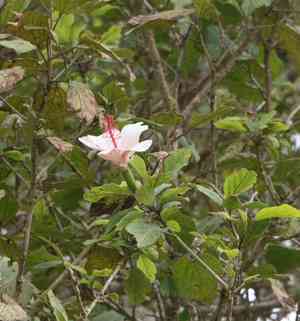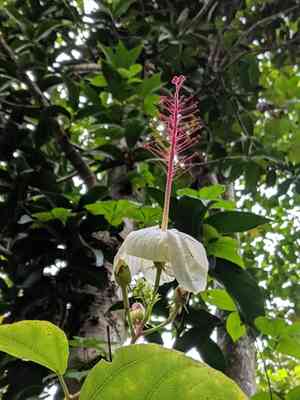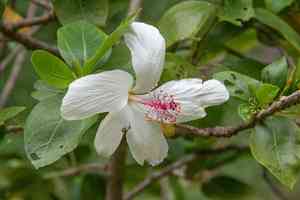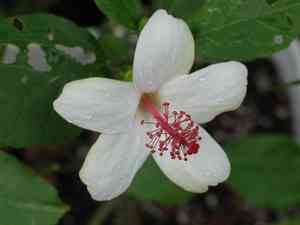
White kauai rosemallow(Hibiscus waimeae)

White kauai rosemallow (Hibiscus waimeae)

Also known as: Koki’o ke’oke’o, White Hibiscus

The white Kauai rosemallow (Hibiscus waimeae subsp. hannerae), known for its striking white flowers that gradually turn pink, blooms primarily from late evening to early morning. This endangered plant is vital for its role in supporting native Hawaiian honeycreepers and moths, offering them essential nectar. Its velvety leaves and unique floral transformation set it apart within the Hibiscus family. Found on forested slopes rather than beachside cliffs, it contributes to soil stabilization and erosion control, making it a critical component of its natural habitat. Conservation efforts are crucial to protect these ecological functions and the plant's unique beauty.

Attributes of White kauai rosemallow

Lifespan
Perennial
Plant Height
5 m
Spread
2.5 m
Leaf Color
Green
Flower Size
4 inches (10 cm)
Flower Color
White with a faint pink tinge

ForwardPlant - Identify plants with a snap

Identify and diagnose plants, get toxicity alerts, and explore safety guides for all types of fungi.

Try for Free

Images of White kauai rosemallow

White kauai rosemallow(Hibiscus waimeae)

Quickly Identify White kauai rosemallow

1
Identify Hibiscus waimeae by its large, showy white flowers with a faint pink tinge at the base, prominent yellow stamens, and lush, green foliage. The flowers bloom in the morning and often close by the afternoon.

Scientific Classification of White kauai rosemallow

Phylum
Vascular plants
Class
Dicotyledons
Order
Malvales
Family
Mallow
Genus
Hibiscus
Species
White kauai rosemallow

Planting and Growing of White kauai rosemallow

Care Difficulty
Hard
Watering Schedule
Every 4 days
Sunlight Requirements
Full sun
Sunshine Duration
6-10 hours
Ideal Temperature
65-85℉
Soil Type
Potting Mix, Peat Mix
Soil pH
6.5-7.5
Fertilizer Type
Balanced
Pruning Season
Spring, Summer
Pruning Area
Branches, Leaves
Pruning Frequency
2 times a year
Repotting Season
Spring
Pot Type
Plastic, Ceramic

water icon How to Water White kauai rosemallow?

For Hibiscus waimeae, it's essential to ensure the soil remains moist but not waterlogged. Generally, watering should ensure the soil is evenly damp to a depth of about 2-3 inches. This helps support the tropical nature of the plant, mimicking the natural rainfall it would receive in its native environment. Ensure the water drains well to prevent root rot.
What are the symptoms of an underwatered White kauai rosemallow?
What should I do if my White kauai rosemallow is not getting enough water?
What are the symptoms of an overwatered White kauai rosemallow?
How to save an overwatered White kauai rosemallow?

sunlight icon What Are the Sunlight Requirements for White kauai rosemallow?

Sunlight Requirements: Full sun, Partial sun
Duration of light: 6 to 8 hours
Hibiscus waimeae prospers in partial to full sun conditions, ideally relishing in bright light throughout the morning and milder afternoon sun. This lighting enhances flowering while mitigating heat stress impact, maintaining plant vigor.
How much sunlight does Hibiscus waimeae need daily?
What solutions can ensure ideal lighting for Hibiscus waimeae?
What benefits does Hibiscus waimeae gain from ideal sunlight conditions?

temperature icon What Is the Ideal Temperature Range for White kauai rosemallow?

Ideal Temperature: 65 ~ 85℉
The ideal temperature range for Hibiscus waimeae is between 65 to 85 degrees Fahrenheit. This range ensures optimal growth and blooming. Maintaining temperatures within this range helps the plant to thrive, producing vibrant flowers and lush foliage. Consistently warm conditions support healthy metabolism and natural resilience against pests and diseases.

soil icon What Soil is Best for White kauai rosemallow?

Soil type: Loam, Sandy loam
Soil PH: 6.5 ~ 7.5
Hibiscus waimeae thrives in well-draining soil to prevent waterlogging. Excess water can suffocate the roots, leading to root rot. Ensuring good drainage allows plant roots to breathe and access vital nutrients, promoting healthy growth. A nutrient-rich substrate provides essential nutrients for robust growth and flowering. Incorporating organic matter or a balanced fertilizer into the soil supports the plant's health and boosts its resilience against pests and diseases. While the soil should drain well, it must also retain enough moisture to sustain the plant. Adequate moisture retention helps Hibiscus waimeae withstand dry periods and reduces the frequency of watering, aiding busy gardeners.

fertilize icon How to Fertilize White kauai rosemallow?

Fertilizer type: Balanced
For Hibiscus waimeae, it's essential to maintain a balanced approach to fertilization. Generally, apply liquid fertilizer at half the recommended strength. Consistent, even distribution allows the roots to absorb nutrients effectively without overwhelming the plant. This precaution prevents salt buildup, which is crucial in keeping the lush foliage and prolific blooms for which this Hawaiian native is revered.

prune icon How to Prune White kauai rosemallow?

Pruning Time: Spring, Summer, Autumn
Start by removing any branches or stems that appear dead, diseased, or damaged. This will help prevent the spread of disease and encourage healthy growth. While shaping the plant, focus on opening up the center to improve airflow. This can help reduce the risk of fungal diseases and encourage a well-rounded appearance in the canopy. To encourage bushier growth, pinch back new shoot tips. This can stimulate the plant to produce more branching which will lead to more blooms. More About Pruning Techniques

propagate icon How to Propagate White kauai rosemallow plant?

Propagate Time: Spring,Early summer
1
To propagate Hibiscus waimeae from seeds, start by allowing the seed pods to mature and dry on the plant. Once they are ready, carefully harvest the pods without damaging the seeds inside.
2
Choose healthy, semi-hardwood stems and cut them just below a node. Remove excess leaves to reduce moisture loss and dip the cut end in rooting hormone to promote root development.
3
Sow seeds in a well-draining seed mix and place cuttings in a proper rooting medium. Maintain a warm and humid environment, ensuring proper watering without waterlogging to prevent root rot.
More About Propagating Techniques

repot icon How to Repot White kauai rosemallow plant?

Repotting frequency: Every 2-3 years
1
Repotting Hibiscus waimeae should be considered when you notice roots growing out of the drainage holes or the soil dries out too quickly after watering. These are signs that the plant has outgrown its current pot and needs more space to thrive.
2
Opt for a pot that is one size larger than the current one with drainage holes at the bottom. A pot that is too large can cause waterlogging, which could lead to root rot, so size up gradually for the best plant health.
3
A well-draining potting mix is crucial for Hibiscus waimeae as it prevents water from building up around the roots. Look for soil that retains moisture but doesn’t become soggy, promoting healthy root development and vigorous plant growth.

ForwardPlant - Identify plants with a snap

Find the best spots for them to optimize their health, simply using your phone.

Try for Free