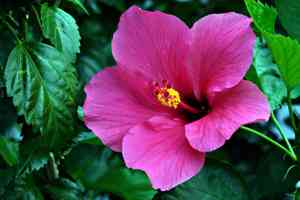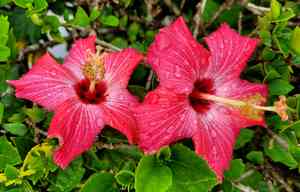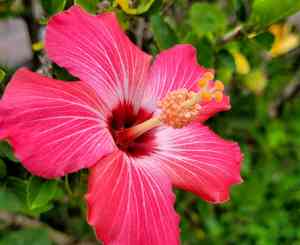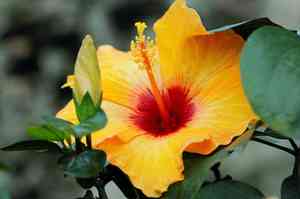
Hibiscus fragilis(Hibiscus fragilis)

Hibiscus fragilis (Hibiscus fragilis)

Also known as: Hibiscus fragilis

The mandrinette, or scientifically known as Hibiscus fragilis, is an extraordinarily scarce bush typically found in the rigorous slopes of Corps de Garde and Le Morne Brabant mountains in Mauritius, supplemented by two additional plants situated in Rodrigues. This evergreen plant exhibits flowers ranging from 7 to 10 cm in diameter, embellished by five vibrant pink to carmine red petals. An interesting similarity is observed when comparing mandrinette to the Chinese hibiscus (Hibiscus rosa-sinensis). Sadly, the widespread usage of the latter in Mauritian gardens has greatly endangered the mandrinette's existence. Out in the wild, there are only 46 fully-grown individuals which are unable to multiply due to the aggressive competition and cross-breeding from the invasive hibiscus. On a brighter note, around 200 plants now reside in nurseries. Thanks to Ex situ conservation efforts, the Royal Botanic Gardens, Kew is currently striving to germinate the species' seedlings for future reintroduction into their natural habitat, as the extraction of invasive hibiscus has been successful. Furthermore, in 1970, renowned artist Andy Warhol released an artwork series called "Flowers", featuring the mandrinette with uniquely colored petals. This piece was inspired by a photograph taken by the nature photographer Patricia Caulfield, which was originally published in the June 1964 edition of Modern Photography magazine.

Attributes of Hibiscus fragilis

Lifespan
Hibiscus fragilis has a perennial growth cycle.

ForwardPlant - Identify plants with a snap

Identify and diagnose plants, get toxicity alerts, and explore safety guides for all types of fungi.

Try for Free

Images of Hibiscus fragilis

Hibiscus fragilis(Hibiscus fragilis)

Scientific Classification of Hibiscus fragilis

Phylum
Tracheophyta
Class
Magnoliopsida
Order
Malvales
Family
Malvaceae
Genus
Hibiscus
Species
H. fragilis

Planting and Growing of Hibiscus fragilis

Care Difficulty
Easy
Watering Schedule
Every 4 days
Sunlight Requirements
Full sun
Sunshine Duration
4-8 hours
Ideal Temperature
68-77℉
Soil Type
Potting Mix, Peat Mix
Soil pH
6.5-7.5
Fertilizer Type
Balanced
Pruning Season
Spring, Summer
Pruning Area
Branches, Leaves
Pruning Frequency
2 times a year
Repotting Season
Spring
Pot Type
Plastic, Ceramic

water icon How to Water Hibiscus fragilis?

For Hibiscus fragilis, the watering amount should ensure the soil is moist but not waterlogged. Generally, providing 500 ml of water each session is suitable, ensuring it seeps uniformly through the soil. A principle to follow is to maintain consistently moist soil without letting it dry out completely or become overly saturated.
What are the symptoms of an underwatered Hibiscus fragilis?
What should I do if my Hibiscus fragilis is not getting enough water?
What are the symptoms of an overwatered Hibiscus fragilis?
How to save an overwatered Hibiscus fragilis?

sunlight icon What Are the Sunlight Requirements for Hibiscus fragilis?

Sunlight Requirements: Full sun, Partial sun
Duration of light: 6 to 8 hours
Hibiscus fragilis thrives in partial to full sun as it supports lush blooms and vibrant foliage. Proper light fosters strong growth and maximum flowering potential, highlighting its ornamental beauty.
What is the ideal lighting condition for Hibiscus fragilis?
How can I ensure my Hibiscus fragilis gets ideal lighting?
What are the benefits of ideal lighting for Hibiscus fragilis?

temperature icon What Is the Ideal Temperature Range for Hibiscus fragilis?

Ideal Temperature: 68 ~ 77℉
Hibiscus fragilis thrives best in environments where temperatures stay consistently between 68°F and 77°F. These conditions simulate its native habitat, promoting optimal growth and flowering. In this range, the plant can efficiently carry out photosynthesis and maintain healthy cellular processes. Deviation from these temperatures might stress the plant, impacting its vigor and flowering potential.

soil icon What Soil is Best for Hibiscus fragilis?

Soil type: Sandy loam, Loam
Soil PH: 6.5 ~ 7.5
Hibiscus fragilis thrives best in well-draining soil, which allows excess water to easily escape. This reduces the risk of root rot and ensures that the plant's roots receive adequate oxygen, essential for vigorous growth and health. A soil rich in organic matter enhances the plant's growth by providing essential nutrients. Incorporating compost or well-rotted manure can significantly boost soil fertility, ensuring Hibiscus fragilis has access to the nutrients it needs to produce vibrant flowers. A neutral pH of 6.5 to 7.5 is ideal as it prevents nutrient lock-up, where nutrients become inaccessible regardless of their presence in soil. Maintaining this pH helps Hibiscus fragilis absorb and utilize nutrients efficiently, promoting healthy development.

fertilize icon How to Fertilize Hibiscus fragilis?

Fertilizer type: Balanced
When fertilizing Hibiscus fragilis, it's essential to provide the right amount to ensure healthy growth and abundant flowering. Use a balanced fertilizer with equal parts of nitrogen, phosphorus, and potassium, at a concentration of one teaspoon per gallon of water for liquid fertilizers. If using slow-release fertilizers, follow the package instructions, usually around one tablespoon per plant.

prune icon How to Prune Hibiscus fragilis?

Pruning Time: Spring, Summer, Autumn
Begin by examining the Hibiscus fragilis for any dead or damaged branches. It's important to remove these to prevent any potential disease from spreading and to improve air circulation within the plant. Focus on shaping the plant by cutting back overgrown branches. Aim to achieve a balanced shape, promoting a more compact and aesthetically pleasing appearance. Maintain an open center to allow sunlight to penetrate to the inner branches. Prune to just above a node or leaf joint, which will encourage the plant to produce new shoots and potentially more flowers. This technique helps maintain the plant's vigor and enhances flowering.

propagate icon How to Propagate Hibiscus fragilis plant?

Propagate Time: Spring, Early Summer, Late Summer
1
Select a healthy Hibiscus fragilis branch without any signs of disease. Cut a 4-6 inch piece using sterile pruning shears. Strip the leaves from the lower third of the cutting to expose nodes, which are vital for root emergence.
2
Use seed starting trays to sow the seeds. Lightly press the seeds into a seed-starting mix without burying them too deeply. Maintain warmth and moisture, using a transparent cover to retain humidity, and place under indirect sunlight.
3
Start by taking a small tissue sample from a healthy plant, ensuring a sterile environment. Transfer the sample to a growing medium under laboratory conditions. Monitor the growth of new shoots and roots before transferring to pots.

repot icon How to Repot Hibiscus fragilis plant?

Repotting frequency: Every 1-2 years
1
Hibiscus fragilis signals for repotting when its roots start circling the bottom of the pot, indicating that space is cramped. Another telltale sign is when its growth slows significantly despite adequate care, suggesting that it needs more room to expand. It's best to repot during Spring or Summer, as these seasons coincide with its active growth phase, minimizing trauma.
2
Select a pot that's about 2 inches larger in diameter than the current one. This gives the roots room to grow without leaving too much unused space, which can lead to waterlogging and root rot. Ensure the pot has ample drainage holes to prevent water accumulation, maintaining ideal moisture levels for the plant.
3
Opt for a well-draining, loamy mix that's rich in organic matter. This type of soil supports root aeration and prevents waterlogging, both crucial for the plant's health. Incorporating some perlite or sand ensures excellent drainage, while organic components provide essential nutrients for robust growth.

ForwardPlant - Identify plants with a snap

Find the best spots for them to optimize their health, simply using your phone.

Try for Free