
White rosemallow (Hibiscus arnottianus)
Also known as: Koki‘o ke‘oke‘o, Hawaiian white hibiscus
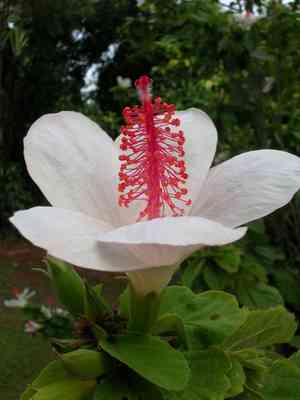
The **white rosemallow**, native to Hawaii, features impressive, large flowers that can grow up to 6 inches across. This plant holds an important place in traditional Hawaiian medicinal practices.
In This Article
Attributes of White rosemallow
Lifespan
Perennial
Plant Height
5 m
Spread
5 m
Leaf Color
Glossy green
Flower Size
8 to 12 centimeters (3 to 5 inches)
Flower Color
White with a red center
Images of White rosemallow



Quickly Identify White rosemallow
1
Identifiable by its white flowers, which have a prominent day-blooming habit. The five-petaled flowers typically have a red center and produce a strong fragrance. The leaves are large, ovate, and glossy green with serrated edges.
Scientific Classification of White rosemallow
Phylum
Vascular plants
Class
Dicotyledons
Order
Mallows, rock-roses, and allies
Family
Mallow
Genus
Hibiscus
Species
White rosemallow
Planting and Growing of White rosemallow
Care Difficulty
Moderate
Watering Schedule
Every 4 days
Sunlight Requirements
Full sun
Sunshine Duration
4-6 hours
Ideal Temperature
60-80℉
Soil Type
Potting Mix, Peat Mix
Soil pH
6.5-7.5
Fertilizer Type
Balanced
Pruning Season
Spring, Summer
Pruning Area
Branches, Leaves
Pruning Frequency
2 times a year
Repotting Season
Spring
Pot Type
Plastic, Ceramic
 How to Water White rosemallow?
Water Hibiscus arnottianus deeply, ensuring the soil is thoroughly moist but not waterlogged. Aim for about 500 ml of water per watering session, allowing excess to drain out to prevent root rot.
What are the symptoms of an underwatered White rosemallow?
›
What should I do if my White rosemallow is not getting enough water?
›
What are the symptoms of an overwatered White rosemallow?
›
How to save an overwatered White rosemallow?
›
 What Are the Sunlight Requirements for White rosemallow?
Hibiscus arnottianus thrives in full to partial sun, ideally benefiting from consistent daylight. Proper lighting promotes vibrant blooms, robust foliage, and resistance to diseases.
Optimal Sun Exposure
›
Monitoring Light Intensity
›
Using Reflective Surfaces
›
 What Is the Ideal Temperature Range for White rosemallow?
The ideal temperature range for Hibiscus arnottianus is between 60°F and 80°F. This range supports optimal growth by providing a stable environment that mimics their native tropical conditions. Temperatures within this range help maintain the plant's physiological processes, such as photosynthesis and respiration, without causing any stress.
 What Soil is Best for White rosemallow?
Hibiscus arnottianus thrives in well-drained soil, preventing root rot and ensuring proper nutrient absorption. This is particularly vital for maintaining its health and robust growth. A nutrient-rich substrate boosts Hibiscus arnottianus's flowering potential, providing the essential elements needed for vibrant blooms and sturdy foliage. While well-drained, the soil should retain sufficient moisture to sustain Hibiscus arnottianus, avoiding water stress and promoting consistent growth patterns.
 How to Fertilize White rosemallow?
For Hibiscus arnottianus, it is important to use a balanced fertilizer with an N-P-K ratio of around 10-10-10. Liquid fertilizers should be mixed according to label instructions, usually around 1 tablespoon per gallon of water, to avoid overfeeding.
 How to Prune White rosemallow?
Begin by removing any dead or damaged branches to promote healthier growth. Shape the hibiscus by trimming back lateral branches to your desired size. Make cuts at a 45-degree angle just above a leaf node to encourage optimal growth patterns. Regularly pruning keeps the plant dense and vibrant.
More About Pruning Techniques→
 How to Propagate White rosemallow plant?
1
Select healthy stems from the plant and cut them at a 45-degree angle. Each cutting should be 4-6 inches long and can be dipped in rooting hormone before planting.
2
Fill a pot with well-draining potting mix and plant the cuttings an inch deep. Keep the soil moist but not waterlogged, placing the pot in a warm, well-lit area.
3
Collect seeds from mature flowers and sow them in trays filled with seed-starting mix. Cover lightly and keep them moist. Germination typically occurs within a few weeks.
 How to Repot White rosemallow plant?
1
The Hawaiian White Hibiscus needs repotting when roots start to emerge from the drainage holes. Another signal is slowed growth or the plant becoming top-heavy, indicating the root system is too large for its current pot. Typically, this could be during the warm seasons when the plant is actively growing.
2
Select a new pot only 2-3 inches larger in diameter than the current one. A pot with good drainage holes is crucial to avoid waterlogging, which can harm the root system. Opt for terracotta or clay pots for better breathability, which helps prevent root rot.
3
For repotting, choose a well-draining potting mix that includes components like perlite or sand. This soil type ensures that excess water drains off quickly, preventing water retention around the roots, which is vital for the hibiscus to thrive.
Learn More About White rosemallow Diseases
Anthracnose
Bacterial Leaf Spot
Bacterial Wilt
Black Spot
Chemical Injury
Crown Gall
Damping-off
Downy Mildew
Drought Stress
Fusarium Wilt
Gray Mold
Leaf Curl
Leaf Spot
Mosaic
Nutrient Deficiency
Nutrient Toxicity
Powdery Mildew
Root Rot
Root-knot Nematode
Rusts
Sooty Mold
Spider Mites
Temperature Stress
Thrips Damage
White Mold



