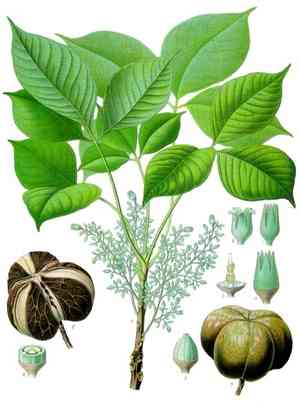
Rubber tree(Hevea brasiliensis)

Rubber tree (Hevea brasiliensis)

Also known as: Pará rubber tree, Para rubber

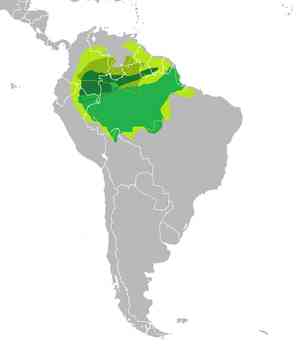
The Pará rubber tree (Hevea brasiliensis) is a tropical evergreen tree native to the Amazon rainforests. It can reach heights of up to 43 meters and produces a milky latex when its bark is cut, which is used to make rubber. This tree can live for up to 100 years and typically thrives in low-altitude, moist forests and wetlands. It also has a unique seed dispersal mechanism, with its fruit bursting open to send seeds up to 30 meters away.

Attributes of Rubber tree

Lifespan
Perennial
Plant Type
Tree
Plant Height
43 m
Spread
22 m
Leaf Color
Green
Flower Size
16 cm
Flower Color
White Yellow Green

ForwardPlant - Identify plants with a snap

Identify and diagnose plants, get toxicity alerts, and explore safety guides for all types of fungi.

Try for Free

Images of Rubber tree

Rubber tree(Hevea brasiliensis)

Quickly Identify Rubber tree

1
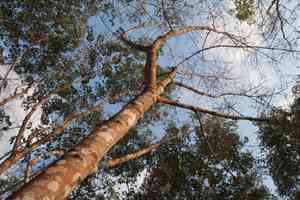
The rubber tree can be identified by its tall, straight trunk and smooth, light-colored bark. The leaves are trifoliate, with three leaflets on a single petiole. The tree produces small clusters of white-yellowish flowers and later, seed pods that split open explosively when mature.

Scientific Classification of Rubber tree

Phylum
Vascular plants
Class
Dicotyledons
Order
Nances, spurges, willows and allies
Family
Spurge
Genus
Hevea
Species
Rubber tree

Planting and Growing of Rubber tree

Care Difficulty
Easy
Watering Schedule
Every 2 days
Sunlight Requirements
Partial sun
Sunshine Duration
6-8 hours
Ideal Temperature
77-86℉
Soil Type
Potting Mix, Peat Mix
Soil pH
4.5-6.5
Fertilizer Type
Balanced
Pruning Season
Spring, Summer
Pruning Area
Branches, Leaves
Pruning Frequency
2 times a year
Repotting Season
Spring
Pot Type
Plastic, Ceramic

water icon How to Water Rubber tree?

Hevea brasiliensis, commonly known as the rubber tree, requires a thorough soaking with around 500ml of water each time. Ensure the water permeates deeply into the soil to mimic its natural, rain-drenched habitat.
What are the symptoms of an underwatered Rubber tree?
What should I do if my Rubber tree is not getting enough water?
What are the symptoms of an overwatered Rubber tree?
How to save an overwatered Rubber tree?

sunlight icon What Are the Sunlight Requirements for Rubber tree?

Sunlight Requirements: Partial sun, Full sun
Duration of light: 6 to 8 hours daily
Partial sun exposure is ideal, providing filtered sunlight, benefiting the plant by promoting healthy growth and maintaining high latex yield, crucial for its commercial cultivation.
Ideal Light Intensity
Solution to Achieve Ideal Lighting
Benefits of Optimal Lighting
More About Sunlight Requirements Techniques

temperature icon What Is the Ideal Temperature Range for Rubber tree?

Ideal Temperature: 77 ~ 86℉
The ideal temperature range for cultivating Hevea brasiliensis, also known as the rubber tree, is between 77°F to 86°F. This range supports optimal growth and latex production, ensuring the plant can photosynthesize effectively and maintain its health.

soil icon What Soil is Best for Rubber tree?

Soil type: Loam, Sandy loam
Soil PH: 4.5 ~ 6.5
Hevea brasiliensis thrives in soil that is rich in nutrients. The presence of essential nutrients aids in robust growth and enhances latex production, which is vital for maximizing yield. Regular addition of compost helps maintain soil fertility. This plant requires well-drained soil as it prevents root rot and other waterlogging issues. Ensuring proper drainage boosts the overall health of the plant, thus contributing to high-quality rubber production. While good drainage is crucial, the soil should also retain adequate moisture to support continuous growth. Adequate moisture balance facilitates nutrient uptake and enhances resilience in dry weather conditions.

fertilize icon How to Fertilize Rubber tree?

Fertilizer type: Balanced
Hevea brasiliensis requires careful attention to fertilizer amounts to ensure optimal growth. Typically, a liquid fertilizer should be applied at a concentration of 0.5% nitrogen solution per month. Additionally, for slow-release fertilizers, a balanced NPK ratio of 12-12-17 should be used, with an annual application amount of 300 grams per mature tree.

prune icon How to Prune Rubber tree?

Pruning Time: Spring, Summer
Begin by removing dead or diseased branches to maintain tree health. Then, focus on thinning out crowded areas to allow more light and air circulation. When pruning, aim to shape the tree so that branches grow outward and upward. This not only supports healthy growth but also maximizes sunlight absorption for photosynthesis. More About Pruning Techniques

propagate icon How to Propagate Rubber tree plant?

Propagate Time: Early summer, Late spring
1
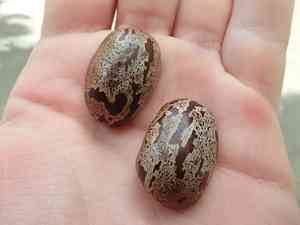
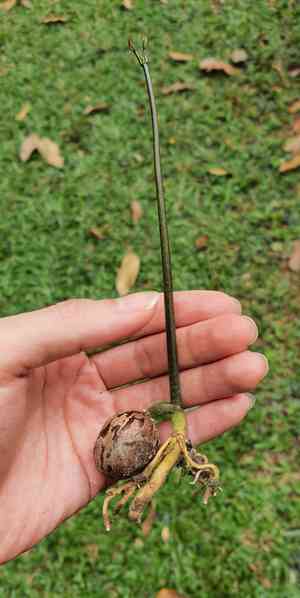
Collect seeds from matured Hevea brasiliensis pods. Clean them thoroughly and soak them in water for 24 hours to enhance germination rates. Keep the seeds moist but not overly saturated to prevent fungus buildup.
2
Select healthy, disease-free scion wood for grafting. Trim it to the desired size ensuring that it has several nodes. Use a grafting knife for clean cuts to improve the chances of successful grafting.
3
Plant seeds in trays or pots with well-draining soil. For grafted plants, ensure the graft is well-secured. Both methods require regular watering but avoid overwatering, and place them in a warm, humid environment for optimal growth.
More About Propagating Techniques

repot icon How to Repot Rubber tree plant?

Repotting frequency: Every 2-3 years
1
Repotting is needed when the Hevea brasiliensis shows signs such as roots growing out of the drainage holes, slower growth, or compacted soil that doesn't retain water well. Spring or early summer is the perfect time to repot, helping the plant access nutrients with its vigorous growth.
2
Select a pot that is about 1 or 2 inches larger in diameter than the current one. This ensures that the plant has adequate space to grow without overwatering issues. A pot too large can retain excess moisture, leading to root rot. Ensure there are drainage holes to prevent waterlogging.
3
Opt for a well-draining potting mix that combines loam, sand, and peat moss. This mix ensures good aeration and drainage, preventing water from sitting around the roots, which can lead to root rot. It also provides necessary nutrients for robust growth.

ForwardPlant - Identify plants with a snap

Find the best spots for them to optimize their health, simply using your phone.

Try for Free

Toxicity of Rubber tree

Is Rubber tree toxic to humans?

Although the rubber tree does not pose a poison risk to everyone, its sap encompasses the proteins hevein and hevein amine, which may trigger allergic reactions in certain individuals. Manifestations of this allergic response may include dermatitis, skin rashes, and blistering; in extreme cases, it can lead to anaphylaxis, resulting in throat swelling and potential suffocation. Generally, the risk for the majority is minimal, yet due to the widespread processing of latex into rubber—used globally in numerous applications—many people encounter latex regularly.

Identify toxic plants for your safety

Learn which plants are harmful to you and your pets, and make informed choices for a safer home!

Try for Free
WARNING
The judgment on toxicity and danger is for reference only. We DO NOT GUARANTEE any accuracy of such judgment. Therefore, you SHALL NOT rely on such judgment. It is IMPORTANT TO SEEK PROFESSIONAL ADVICE in advance when necessary.
More About Toxic Techniques