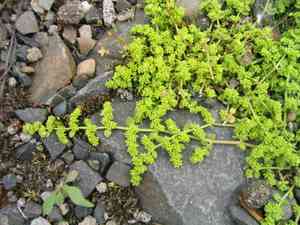
Herniaria (Herniaria) (Herniaria)
Also known as: Rupturewort, Smooth Rupturewort
*Scleranthus* is a genus in the pink family known for its flat, mat-forming annual herbs. Native to Eurasia and Africa, some species have also spread to other parts of the world.
In This Article
Attributes of Herniaria (Herniaria)
Lifespan
Annual
Plant Height
5-10 cm (2-4 inches)
Spread
Spreads to about 30 cm (12 inches)
Leaf Color
Green
Flower Size
1-2 mm
Flower Color
Greenish
Images of Herniaria (Herniaria)
Quickly Identify Herniaria (Herniaria)
1
Herniaria species can be identified by their tiny, green, star-shaped flowers and mat-forming growth. The leaves are small, opposite, and often sticky to the touch.
Scientific Classification of Herniaria (Herniaria)
Phylum
Angiosperms
Class
Magnoliopsida
Order
Caryophyllales
Family
Caryophyllaceae
Genus
Herniaria
Planting and Growing of Herniaria (Herniaria)
Care Difficulty
Moderate
Watering Schedule
Every 2 days
Sunlight Requirements
Full sun
Sunshine Duration
10-14 hours
Ideal Temperature
60-75℉
Soil Type
Potting Mix, Peat Mix
Soil pH
6.5-7.5
Fertilizer Type
Balanced
Pruning Season
Spring, Summer
Pruning Area
Branches, Leaves
Pruning Frequency
2 times a year
Repotting Season
Spring
Pot Type
Plastic, Ceramic
 How to Water Herniaria (Herniaria)?
For Herniaria, the watering amount should be conservative, adhering to the principle of keeping the soil just slightly moist without becoming soggy. Water should evenly penetrate but not be excessive, ensuring about 100 ml each time, allowing it to be absorbed steadily.
What are the symptoms of an underwatered Herniaria (Herniaria)?
›
What should I do if my Herniaria (Herniaria) is not getting enough water?
›
What are the symptoms of an overwatered Herniaria (Herniaria)?
›
How to save an overwatered Herniaria (Herniaria)?
›
 What Are the Sunlight Requirements for Herniaria (Herniaria)?
Herniaria ideally prefers full sun to partial sun conditions. Consistent light ensures vibrant color and robust growth, enhancing overall plant health.
How much sunlight does Herniaria need?
›
What are the solutions for achieving ideal lighting?
›
What are the benefits of ideal lighting?
›
 What Is the Ideal Temperature Range for Herniaria (Herniaria)?
The ideal temperature range for Herniaria, also known as rupturewort, is between 60°F and 75°F. These temperatures closely mimic the plant's native environment, ensuring optimal growth and development. Maintaining this range helps in sustaining healthy leaves and vibrant growth throughout the growing season.
 What Soil is Best for Herniaria (Herniaria)?
Herniaria thrives in well-drained soil, which prevents root rot and promotes healthy root development. A porous structure is crucial for ensuring that water does not stagnate, thus allowing the roots to breathe and absorb nutrients efficiently. This type of soil is perfect for maintaining the vitality of your Herniaria plant. Herniaria prefers soil with moderate levels of nutrients, as excessive fertilization can lead to leggy growth. Ensuring balanced nutrients in the soil supports robust plant growth and intensifies the vivid coloration of the foliage. By providing the right nutritional balance, you help the plant to maintain its compact form and hardiness. Herniaria grows best in soil with a pH ranging from neutral to slightly alkaline. This pH range facilitates the availability of essential nutrients and optimizes the biological activity within the soil. Maintaining an appropriate pH level helps to ensure that Herniaria has access to all necessary micronutrients for its growth.
 How to Fertilize Herniaria (Herniaria)?
For Herniaria, use a diluted solution of liquid fertilizer, applying 50 ml per plant each month during the growing season. This ensures the plant receives essential nutrients without the risk of over-fertilization.
 How to Prune Herniaria (Herniaria)?
To prune Herniaria, start by using sharp, clean shears to snip away any dead or misshapen branches. Focus on maintaining the plant's natural shape while encouraging densification by cutting back leggy or overly long stems. Aim to cut just above a leaf node to promote new growth. In addition, thin out overcrowded areas to allow sunlight and air to penetrate the foliage, reducing the risk of disease.
 How to Propagate Herniaria (Herniaria) plant?
1
For all propagation methods, prepare a well-draining soil mix. Incorporate sand or perlite to enhance drainage, as Herniaria prefers a gritty growing medium that simulates its natural environment.
2
Scatter Herniaria seeds over the prepared soil surface and cover them lightly with soil. Ensure they are spread evenly to prevent overcrowding and water the area gently to settle the seeds.
3
Select a healthy stem from the parent plant and make a clean cut using sterilized shears. Remove any lower leaves and dip the cutting end in a rooting hormone before placing it in a pre-moistened growing medium.
 How to Repot Herniaria (Herniaria) plant?
1
Herniaria should be repotted when you notice roots outgrowing their current pot, or water draining too quickly without soaking the soil. Spring is ideal, as it aligns with the active growth period, ensuring a smoother transition for the plant.
2
Choose a pot slightly larger than the current one, ensuring it has drainage holes. This permits space for root growth and proper water evacuation, preventing root rot while allowing the plant to establish solid roots.
3
Opt for a well-draining sandy soil mix. This mimics the natural habitat and prevents waterlogging, crucial for Herniaria's healthy growth. The right soil ensures good air circulation and root expansion.
Learn More About Herniaria (Herniaria) Diseases
Anthracnose
Bacterial Leaf Spot
Bacterial Soft Rot
Chemical Injury
Damping-off
Downy Mildew
Drought Stress
Fusarium Wilt
Gray Mold
Leaf Spot
Mosaic
Nutrient Deficiency
Nutrient Toxicity
Powdery Mildew
Root Rot
Root-knot Nematode
Rusts
Sooty Mold
Spider Mites
Temperature Stress
Thrips Damage
White Mold

