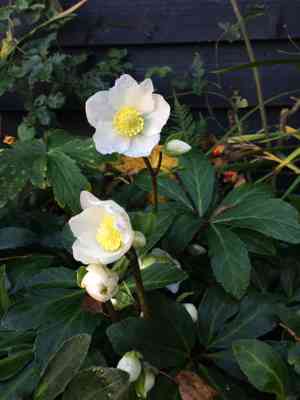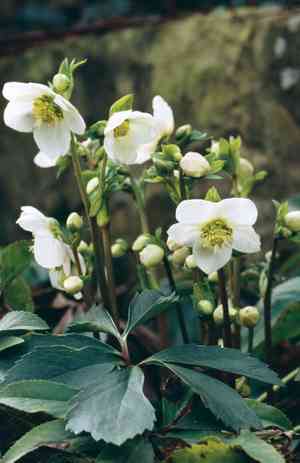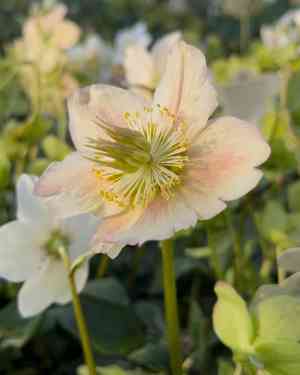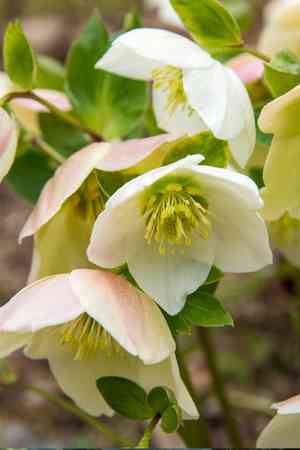
Christmas rose(Helleborus niger)

Christmas rose (Helleborus niger)

Also known as: Melampode

The Christmas rose (Helleborus niger) is an evergreen perennial known for its winter blooms, making it a popular choice for ornamental gardens, especially in cottage garden settings. In its natural habitat, the Christmas rose is found in the wild in regions such as Germany, Austria, Switzerland, Italy, and Croatia. This plant thrives in moist, alkaline-rich soil but can be somewhat challenging to cultivate.

Attributes of Christmas rose

Lifespan
Perennial
Plant Type
Herb
Plant Height
10 cm to 30 cm
Spread
30 cm to 45 cm
Leaf Color
Green
Flower Size
5 cm to 10 cm
Flower Color
White Pink Green Cream

PlantJoy - Identify plants with a snap

Identify and diagnose plants, get toxicity alerts, and explore safety guides for all types of fungi.

Try for Free

Images of Christmas rose

Christmas rose(Helleborus niger)

Quickly Identify Christmas rose

1
Solitary cup-shaped flowers, 3 inches (7.5 cm) wide, with white to rose sepals and yellow stamens.
2
Stiff leaves with deep palmate divisions and creamy-white to pink blossoms.
3
Clustered green capsules with long beaked structures, surrounded by persistent sepals.
4
Robust, slightly exposed stem, up to 1 inch (2.5 cm) in diameter, with light green to pale brown color.
5
Dark green palmately compound leaves with 7-9 leaflets, irregularly toothed or serrated.

Scientific Classification of Christmas rose

Phylum
Vascular plants
Class
Dicotyledons
Order
Buttercups, poppies and allies
Family
Buttercup
Genus
Hellebores
Species
Christmas rose

Planting and Growing of Christmas rose

Care Difficulty
Moderate
Watering Schedule
Every 2 days
Sunlight Requirements
Partial sun
Sunshine Duration
6-10 hours
Ideal Temperature
50-60℉
Soil Type
Potting Mix, Peat Mix
Soil pH
6.5-7.5
Fertilizer Type
Balanced
Pruning Season
Spring, Summer
Pruning Area
Branches, Leaves
Pruning Frequency
2 times a year
Repotting Season
Spring
Pot Type
Plastic, Ceramic

water icon How to Water Christmas rose?

Helleborus niger prefers to be watered moderately, ensuring the soil stays consistently moist but never waterlogged. The ideal amount is around 250ml per session. It's crucial to check the top layer of the soil and water when it's dry to the touch to prevent both over and under-watering.
What are the symptoms of an underwatered Christmas rose?
What should I do if my Christmas rose is not getting enough water?
What are the symptoms of an overwatered Christmas rose?
How to save an overwatered Christmas rose?
More About Watering Techniques

sunlight icon What Are the Sunlight Requirements for Christmas rose?

Sunlight Requirements: Partial sun, Full shade
Duration of light: 3 to 6 hours
Helleborus niger thrives in partial sun to full shade, where it benefits from moderate light conditions that mimic its native woodland environment, promoting optimal growth and blooming performance.
What is the best location for Helleborus niger?
How can I optimize light conditions indoors?
What benefits does ideal lighting offer?
More About Sunlight Requirements Techniques

temperature icon What Is the Ideal Temperature Range for Christmas rose?

Ideal Temperature: 50 ~ 60℉
The ideal temperature range for growing Helleborus niger is between 50°F to 60°F. This range provides the optimal environment for its growth and flowering, ensuring the plant feels comfortable throughout its lifecycle. In these conditions, it is more likely to thrive, producing healthy foliage and blossoms.

soil icon What Soil is Best for Christmas rose?

Soil type: Loam, Sandy loam
Soil PH: 6.5 ~ 7.5
Helleborus niger thrives in well-drained soil, which prevents root rot and ensures the plant receives the optimal balance of moisture. This drainage capacity is especially beneficial in preventing waterlogging, allowing the roots to breathe and facilitating robust growth. This plant benefits from rich, organic soil that provides a consistent and nourishing source of nutrients. Composting and natural mulches outperform synthetic fertilizers, enhancing soil texture and nutritive content beneficial for sustained blooming. Providing soil that retains consistent moisture without remaining soggy is crucial. Proper moisture levels help in maintaining lush foliage and healthy bloom production, which are essential for the ornamental appeal of Helleborus niger. More About Soil

fertilize icon How to Fertilize Christmas rose?

Fertilizer type: Balanced
For Helleborus niger, it's crucial not to over-fertilize. Use a balanced, water-soluble fertilizer at 1/2 strength for liquid feeds. For slow-release fertilizers, apply according to the manufacturer's instructions, usually around 5 to 10 grams per plant. More About Fertilizing Techniques

prune icon How to Prune Christmas rose?

Pruning Time: Spring, Summer
Begin by examining the plant closely for any dead or damaged leaves. Use your sharp shears to cut these away at the base, being careful not to damage any new shoots. Work around the plant, making sure to remove any leaves showing signs of disease or mould. Finally, prune the plant to a tidy shape, encouraging air flow. The best time to prune Helleborus niger is just before the start of its growing season in late winter or early spring. This timing allows you to clean up the plant without hindering new growth. Pruning too late into the growing season can stress the plant and reduce its ability to flourish. More About Pruning Techniques

propagate icon How to Propagate Christmas rose plant?

Propagate Time: Spring, Early spring, Late spring
1
Fill seed trays with well-draining soil and place the seeds on the surface. Lightly cover them with a thin layer of soil. Keep the trays in a cool, shady spot and maintain soil moisture for germination.
2
In spring, dig up the plant and gently separate the roots into sections, each with a growing point. Replant the divisions in a location with partial shade and well-draining soil.
3
After planting, water thoroughly to settle the soil around the new roots. Keep the soil consistently moist but not waterlogged during the initial weeks.
More About Propagating Techniques

repot icon How to Repot Christmas rose plant?

Repotting frequency: Every 2-3 years
1
Helleborus niger should be repotted when its growth seems stunted or roots are visibly growing out of the pot's drainage holes. These signs indicate the plant has outgrown its current container and is in need of more space for healthy development. Repotting during early spring or autumn provides optimal recovery time.
2
Choose a pot that is one size larger than the current one, ensuring it has sufficient drainage holes to prevent waterlogging, which can lead to root rot. A slightly larger pot provides ample space for root expansion and aids proper water regulation, promoting healthier plant growth.
3
Opt for well-draining potting soil that includes organic matter like compost or peat moss mixed with sand or perlite. This composition ensures that the soil retains necessary moisture without becoming waterlogged, providing the right balance of nutrients and aeration to support the hellebore's growth.
More About Repotting Techniques

PlantJoy - Identify plants with a snap

Find the best spots for them to optimize their health, simply using your phone.

Try for Free

Toxicity of Christmas rose

Is Christmas rose toxic to humans?

The Christmas rose is extremely poisonous when consumed. Each part of the plant harbors toxic compounds such as protoanemonin and ranunculin. Ingesting these can lead to various severe symptoms, which may include a burning sensation in the mouth and throat, intense gastrointestinal distress, and the expulsion of blood through vomiting. In exceptional circumstances, particularly if the roots are ingested in large amounts, consuming this plant could prove fatal for humans. Christmas roses are popular ornamental plants, meaning that many individuals are frequently in proximity to them. Nevertheless, due to their distinctive appearance, which makes them easily distinguishable from edible plants, instances of Christmas rose consumption and subsequent poisoning are quite rare.

Is Christmas rose toxic to cat?

If your cat has been exposed to Christmas rose (Helleborus niger) and may have chewed or consumed any part of the plant, it is crucial to seek veterinary assistance immediately. Every part of this plant harbors a range of toxins that can seriously harm your cat and could be fatal if a significant amount is ingested. Common symptoms indicative of Christmas rose poisoning include vomiting, diarrhea, excessive drooling, seizures, trouble breathing, disorientation, paralysis, and even collapse.

Is Christmas rose toxic to dog?

Christmas roses exhibit a toxicity level that can range from mild to severe for dogs; due to their intensely bitter taste, dogs typically do not consume sufficient quantities to result in anything more than a mild reaction. Every component of the Christmas rose plant harbors a compound that can instigate pain and swelling in the mouth area, excessive salivation, and various gastrointestinal issues. In rare instances, if consumed in large amounts, the resulting poisoning may lead to seizures, loss of consciousness, or even death.

Identify toxic plants for your safety

Learn which plants are harmful to you and your pets, and make informed choices for a safer home!

Try for Free
WARNING
The judgment on toxicity and danger is for reference only. We DO NOT GUARANTEE any accuracy of such judgment. Therefore, you SHALL NOT rely on such judgment. It is IMPORTANT TO SEEK PROFESSIONAL ADVICE in advance when necessary.
More About Toxic Techniques