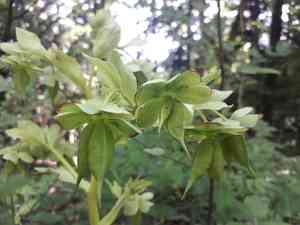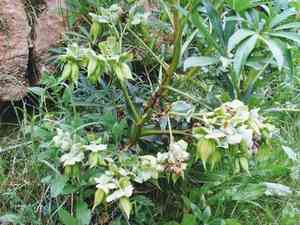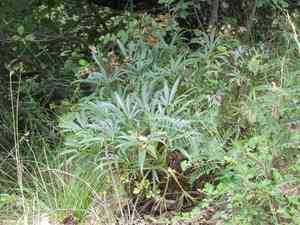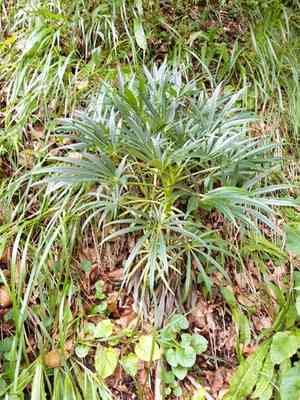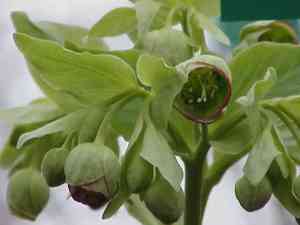
Stinking hellebore(Helleborus foetidus)

Stinking hellebore (Helleborus foetidus)

Also known as: Stinking Hellebore, Bear's Foot

The stinking hellebore (Helleborus foetidus) is an evergreen perennial that typically reaches a height of about 60 cm. It produces clusters of yellowish-green, cup-shaped flowers from late winter to early spring. The plant features attractive light green foliage that droops gracefully. When the leaves are crushed, they emit an unpleasant odor, which is how the plant got its name. Stinking hellebore grows best in rich, well-drained soil and prefers a semi-shady environment.

Attributes of Stinking hellebore

Lifespan
Perennial, Annual, Biennial
Plant Type
Herb
Plant Height
80 cm
Spread
1 m
Leaf Color
Green Yellow
Flower Size
2 cm
Flower Color
Green Purple Yellow Cream

PlantJoy - Identify plants with a snap

Identify and diagnose plants, get toxicity alerts, and explore safety guides for all types of fungi.

Try for Free

Images of Stinking hellebore

Stinking hellebore(Helleborus foetidus)

Quickly Identify Stinking hellebore

1
Bell-shaped, nodding flowers with yellow-green hue and maroon edging.
2
Palmate leaves with 7-10 lanceolate leaflets emitting distinct odor when crushed.
3
Stout stem emerging as a rhizome, 0.2-0.6 inches (5-15 mm) thick, occasionally reddish.
4
Distinct fleshy fruit capsules with long, beaked protrusions, encased by persistent sepals.
5
5-parted, green flowers flushed with purple, measuring 3-4 inches (7-10 cm) in diameter.

Scientific Classification of Stinking hellebore

Phylum
Vascular plants
Class
Dicotyledons
Order
Ranunculales
Family
Buttercup
Genus
Hellebores
Species
Stinking hellebore

Planting and Growing of Stinking hellebore

Care Difficulty
Easy
Watering Schedule
Every 2 days
Sunlight Requirements
Partial sun
Sunshine Duration
4-8 hours
Ideal Temperature
60-70℉
Soil Type
Potting Mix, Peat Mix
Soil pH
6.5-7.5
Fertilizer Type
Balanced
Pruning Season
Spring, Summer
Pruning Area
Branches, Leaves
Pruning Frequency
2 times a year
Repotting Season
Spring
Pot Type
Plastic, Ceramic

water icon How to Water Stinking hellebore?

When watering Helleborus foetidus, aim to thoroughly soak the soil until water drains out of the bottom of the pot. This ensures that the moisture reaches the root zone effectively, preventing superficial wetting which can cause root issues.
What are the symptoms of an underwatered Stinking hellebore?
What should I do if my Stinking hellebore is not getting enough water?
What are the symptoms of an overwatered Stinking hellebore?
How to save an overwatered Stinking hellebore?

sunlight icon What Are the Sunlight Requirements for Stinking hellebore?

Sunlight Requirements: Partial sun
Duration of light: 4-6 hours daily
Helleborus foetidus thrives best in partial sun, ideally achieving a balance of around 4-6 hours of filtered sunlight each day. This range supports robust flowering and strong, healthy foliage, mimicking the dappled sun of their natural habitat, ideal for continuously vibrant growth.
Optimal Sunlight Exposure
Seasonal Light Adjustments
Monitoring Plant Health
More About Sunlight Requirements Techniques

temperature icon What Is the Ideal Temperature Range for Stinking hellebore?

Ideal Temperature: 60 ~ 70℉
The ideal temperature range for Helleborus foetidus is between 60 to 70°F. This temperature ensures optimal growth conditions, balancing warmth and light, which help the plant produce lush foliage and bloom effectively. It thrives best in these moderate temperatures, emulating its natural woodland habitat.

soil icon What Soil is Best for Stinking hellebore?

Soil type: Loam, Sandy loam
Soil PH: 6.5 ~ 7.5
Helleborus foetidus thrives best in well-draining soil, which helps prevent waterlogging that can cause root rot. A well-aerated environment ensures the roots receive enough oxygen and nutrients, vital for the lush growth of this plant. This plant favors soils with moderate nutrient availability. Too rich soil leads to overly lush growth, while nutrient-poor conditions stunt development. Balanced soil ensures steady growth and abundant flowering throughout the season. Maintaining consistent moisture without saturation is key. Regular watering keeps the soil just moist enough without being drenched, preventing stress and fostering healthful blooms.

fertilize icon How to Fertilize Stinking hellebore?

Fertilizer type: Balanced
For Helleborus foetidus, apply a balanced liquid fertilizer at half strength. Use approximately 10-15 ml per liter of water to ensure the plant receives enough nutrients without risk of overload.

prune icon How to Prune Stinking hellebore?

Pruning Time: Spring, Summer
Ensure your pruning tools are clean and sharp before use. This minimizes damage to the plant and reduces the risk of transmitting diseases. Sterilize tools with alcohol or a mild bleach solution between cuts. During pruning, take the opportunity to inspect your Helleborus foetidus for signs of pests or diseases. Early detection will help you manage any issues before they become serious, ensuring your plant remains healthy and thriving. More About Pruning Techniques

propagate icon How to Propagate Stinking hellebore plant?

Propagate Time: Spring, Early spring
1
Collect seeds from healthy, mature Helleborus foetidus plants after the flowering period. Ensure seeds are fully ripe before collection, as immature seeds may not germinate effectively. Once collected, clean and dry them properly to prevent fungal growth during storage.
2
Sow seeds in seed starting trays filled with compost-rich soil. Cover seeds lightly with soil and water gently to avoid displacing them. Place the trays in a shaded area that receives indirect sunlight and maintains humidity for optimal germination.
3
For division propagation, dig up the parent plant in early spring when active growth begins. Use a garden spade to carefully separate the plant into divisions, ensuring each has sufficient roots and shoots. Plant divisions at the same depth they were growing previously, water thoroughly, and mulch to conserve moisture.
More About Propagating Techniques

repot icon How to Repot Stinking hellebore plant?

Repotting frequency: Every 2-3 years
1
Helleborus foetidus needs repotting when you notice roots circling the bottom of the pot or if growth has slowed down markedly. Spring or early autumn are ideal seasons, as the plant can easily recuperate during these less stressful growth stages.
2
Select a pot that is only slightly larger than the current one. This ensures the roots do not remain waterlogged, preventing root rot. A pot with drainage holes is crucial, as Helleborus appreciates excellent drainage to thrive.
3
Opt for a well-draining loamy mix enriched with organic matter. This kind of soil provides the necessary nutrients while allowing water to flow freely, mimicking the plant's natural soil conditions, thus promoting healthier growth.
More About Repotting Techniques

PlantJoy - Identify plants with a snap

Find the best spots for them to optimize their health, simply using your phone.

Try for Free

Toxicity of Stinking hellebore

Is Stinking hellebore toxic to humans?

All components of stinking hellebore are moderately poisonous to humans if ingested, with the likelihood of poisoning increasing when consuming significant amounts of the plant. Symptoms may consist of a burning sensation in the mouth and throat, excessive salivation, vomiting, abdominal cramps, diarrhea, neurological symptoms, and depression. The toxins present in stinking hellebore can also interact negatively with prescription medications such as beta-blockers, steroids, and chemotherapy drugs.

Is Stinking hellebore toxic to cat?

Stinking hellebore, widely referred to as Stinking hellebore, exhibits a moderate toxicity level for cats. Every part of the plant is toxic if ingested, thereby endangering feline health. When cats encounter stinking hellebore, they might suffer from physical discomfort or exhibit symptoms of illness that could necessitate veterinary care. If you fear that your cat has consumed stinking hellebore, it is imperative to pursue prompt veterinary assistance to guarantee appropriate treatment and reduce potential hazards to your cat's health.

Is Stinking hellebore toxic to dog?

Stinking hellebore presents a moderate toxicity hazard for dogs. Ingesting any part of this plant can result in poisoning for canines, as all its components are deemed toxic. Symptoms of poisoning in dogs may include vomiting, diarrhea, stomach discomfort, and lethargy. Should you suspect that your dog has consumed stinking hellebore, it is crucial to obtain prompt veterinary assistance to secure the best outcome for your pet.

Identify toxic plants for your safety

Learn which plants are harmful to you and your pets, and make informed choices for a safer home!

Try for Free
WARNING
The judgment on toxicity and danger is for reference only. We DO NOT GUARANTEE any accuracy of such judgment. Therefore, you SHALL NOT rely on such judgment. It is IMPORTANT TO SEEK PROFESSIONAL ADVICE in advance when necessary.
More About Toxic Techniques