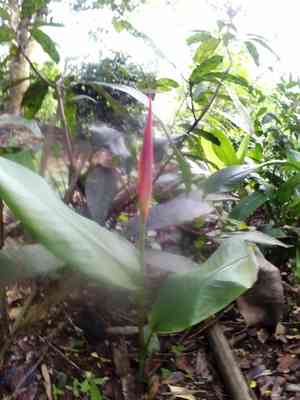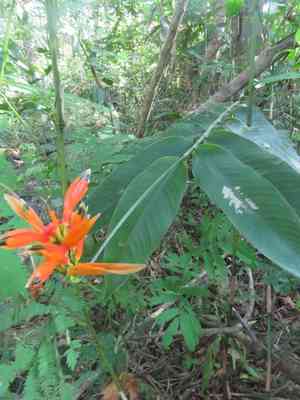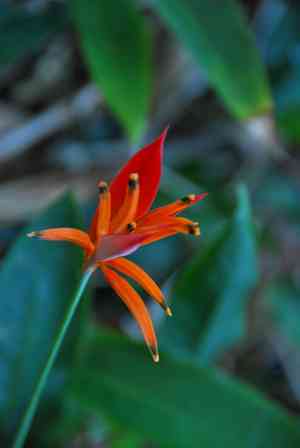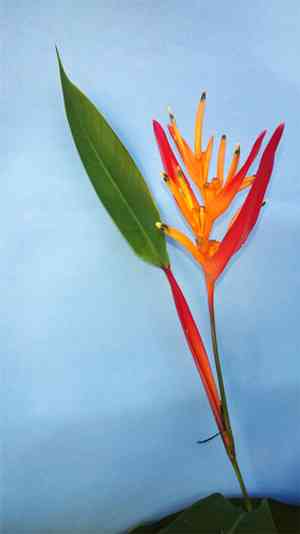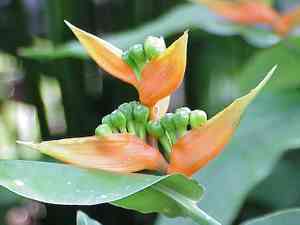
Parrot's beak(Heliconia psittacorum)

Parrot's beak (Heliconia psittacorum)

Also known as: Parrot's flower, False bird-of-paradise

**Jamaican Sorrel** (Hibiscus sabdariffa) is a perennial herb indigenous to the Caribbean and South America. It has the unique ability to self-pollinate without the aid of insect pollinators. This attractive plant is frequently cultivated in tropical gardens for its vibrant calyces and lush foliage.

Attributes of Parrot's beak

Lifespan
Perennial, Annual
Plant Type
Herb
Plant Height
80 cm to 1.5 m
Spread
60 cm to 90 cm
Leaf Color
Green
Flower Size
4.5 cm
Flower Color
Orange Yellow Red

ForwardPlant - Identify plants with a snap

Identify and diagnose plants, get toxicity alerts, and explore safety guides for all types of fungi.

Try for Free

Images of Parrot's beak

Parrot's beak(Heliconia psittacorum)

Quickly Identify Parrot's beak

1
Identify Heliconia psittacorum by its unique inflorescences that resemble a bird\'s beak, bright orange or red bracts with yellow or greenish flowers, and long, paddle-shaped leaves.

Scientific Classification of Parrot's beak

Phylum
Vascular plants
Class
Monocotyledons
Order
Zingiberales
Family
Heliconia
Genus
Lobster-claws
Species
Parrot's beak

Planting and Growing of Parrot's beak

Care Difficulty
Easy
Watering Schedule
Every 8 days
Sunlight Requirements
Full sun
Sunshine Duration
6-8 hours
Ideal Temperature
68-86℉
Soil Type
Potting Mix, Peat Mix
Soil pH
6.5-7.5
Fertilizer Type
Balanced
Pruning Season
Spring, Summer
Pruning Area
Branches, Leaves
Pruning Frequency
2 times a year
Repotting Season
Spring
Pot Type
Plastic, Ceramic

water icon How to Water Parrot's beak?

The Heliconia psittacorum thrives when its soil is kept consistently moist, but not waterlogged. Aim to water until the soil feels damp 2-3 inches beneath the surface, without letting the water puddle or accumulate excessively.
What are the symptoms of an underwatered Parrot's beak?
What should I do if my Parrot's beak is not getting enough water?
What are the symptoms of an overwatered Parrot's beak?
How to save an overwatered Parrot's beak?
More About Watering Techniques

sunlight icon What Are the Sunlight Requirements for Parrot's beak?

Sunlight Requirements: Full sun, Partial sun
Duration of light: 6 to 8 hours
Heliconia psittacorum ideally receives full sun or partial sun exposure, fostering vibrant blooms and strong, healthy growth. Regular exposure to bright light encourages its ornamental features, supporting lush, dense foliage and striking floral displays.
How much sun does Heliconia psittacorum need?
What happens if it doesn’t get enough light?
What are ways to achieve ideal lighting?
More About Sunlight Requirements Techniques

temperature icon What Is the Ideal Temperature Range for Parrot's beak?

Ideal Temperature: 68 ~ 86℉
Heliconia psittacorum thrives in warmth, with an ideal temperature range between 68°F and 86°F. This range supports healthy leaf growth, vibrant flowers, and optimal photosynthesis.

soil icon What Soil is Best for Parrot's beak?

Soil type: Loam, Sandy loam
Soil PH: 6.5 ~ 7.5
Heliconia psittacorum thrives in well-draining soil to prevent root rot. Such soil helps the plant's roots access oxygen, promoting healthier growth and vibrant blooms. Rich soil full of organic matter provides essential nutrients, fostering lush foliage and strong stem development. Using compost enriches the soil and helps Heliconia psittacorum flourish. Moderate moisture retention ensures that Heliconia psittacorum receives consistent hydration without waterlogging. This balance aids in maintaining proper cellular functions and enhances growth. More About Soil

fertilize icon How to Fertilize Parrot's beak?

Fertilizer type: Balanced
Heliconia psittacorum thrives when given the right amount of nutrients. A balanced fertilizer with an N-P-K ratio of 10-10-10 applied at half strength is usually sufficient. For liquid fertilizers, use approximately 1 tablespoon per gallon of water and apply evenly to the soil. More About Fertilizing Techniques

prune icon How to Prune Parrot's beak?

Pruning Time: Spring, Summer, Autumn
Begin by assessing the heliconia for any brown, wilting, or diseased stems. These should be removed both for aesthetic reasons and to promote the plant's overall health. Trim away older foliage that is starting to show signs of yellowing. This encourages the plant to focus its energy on new growth, which keeps it vibrant and lush. When pruning, aim to maintain the desired shape and size of the heliconia. This not only keeps the plant neat but also enhances its flower production by allowing better sunlight and airflow. More About Pruning Techniques

propagate icon How to Propagate Parrot's beak plant?

Propagate Time: Spring, Early summer
1
Start by sowing the seeds in a well-draining potting mix. Keep the soil moist and maintain a temperature around 25°C (77°F) to ensure proper germination.
2
Carefully dig up the plant and clean the rhizomes. Use a sharp knife to divide the rhizomes into sections with at least one growing point each, then plant them in separate pots.
3
Select healthy shoots and make a cut just below a leaf node. Remove the lower leaves and plant the cutting in a pot with a moist potting mix.
More About Propagating Techniques

repot icon How to Repot Parrot's beak plant?

Repotting frequency: Every 1-2 years
1
Heliconia psittacorum should be repotted when its roots start crowding the pot, hindering growth. Signs like roots poking out of drainage holes and reduced water absorption indicate it's time. Ideally, repot in spring or summer, the plant's growing seasons.
2
Select a pot that is 2 inches wider than the current one. This size allows roots to expand without overwhelming the plant with too much soil, which retains water and can cause rot. A pot with ample drainage holes is essential to prevent water stagnation.
3
Use a rich, well-draining soil mix. Heliconias thrive in a medium that retains nutrients but allows excess water to drain away, preventing root rot. Incorporate organic matter like compost or coco coir to enhance soil structure and fertility.
More About Repotting Techniques

ForwardPlant - Identify plants with a snap

Find the best spots for them to optimize their health, simply using your phone.

Try for Free

Toxicity of Parrot's beak

Is Parrot's beak toxic to humans?

The parrot's beak plant exhibits a mild toxicity level to humans, posing risks of adverse reactions if ingested. Every part of the plant is deemed toxic, and inadvertent consumption can result in poisoning. Symptoms associated with parrot's beak poisoning may encompass gastrointestinal issues such as nausea, vomiting, and diarrhea. Moreover, some individuals might experience skin irritation or allergic responses upon contact with the plant's sap. Therefore, it is crucial for people, particularly those with inquisitive children or pets, to recognize the potentially toxic characteristics of this plant and to take measures to prevent accidental ingestion in order to avoid these distressing symptoms.

Is Parrot's beak toxic to cat?

Parrot's beak presents a minor toxicity hazard for cats. The risk of toxicity typically arises when cats inadvertently consume sections of the plant. Since the entire plant is toxic, it is crucial for pet owners to keep cats away from it completely. Following ingestion, a cat may display several symptoms linked to physical distress, necessitating urgent care from a veterinary expert. Swift treatment at a veterinary facility is essential to safeguard the health and welfare of the affected cat.

Is Parrot's beak toxic to dog?

The parrot's beak plant has been recognized as possessing a mild toxicity level for dogs. Canines may unintentionally consume segments of this plant, leading to risks associated with its entire structure being toxic. If ingested, dogs could display symptoms that are typical of poisoning, which may include gastrointestinal distress, vomiting, and diarrhea. It is essential for dog owners to vigilantly supervise their pets and prevent their access to the parrot's beak plant, particularly if the pet is known to chew on flora. If a dog happens to ingest any part of the parrot's beak, it is vital to seek prompt veterinary attention to safeguard the pet's health and well-being.

Identify toxic plants for your safety

Learn which plants are harmful to you and your pets, and make informed choices for a safer home!

Try for Free
WARNING
The judgment on toxicity and danger is for reference only. We DO NOT GUARANTEE any accuracy of such judgment. Therefore, you SHALL NOT rely on such judgment. It is IMPORTANT TO SEEK PROFESSIONAL ADVICE in advance when necessary.
More About Toxic Techniques