Sneezeweeds (Helenium) (Helenium)
Also known as: Sneezeweed, Helen's flower
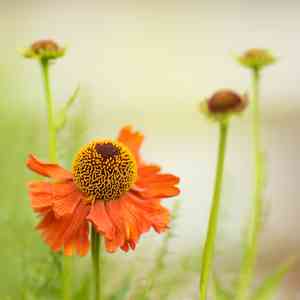
Sneezeweeds are wildflowers with daisy-like blooms that attract pollinators. They are commonly found in various habitats within their range. The name "Sneezeweeds" originates from the traditional practice of using their dried, crushed flowers to create a snuff that induces sneezing for ritualistic purposes. Despite their name, the flowers themselves rarely trigger pollen allergies.
In This Article
Attributes of Sneezeweeds (Helenium)
Lifespan
Perennial
Plant Height
30 cm to 91 cm
Spread
30 cm to 60 cm
Leaf Color
Green
Flower Size
2.5 cm to 8 cm
Flower Color
Yellow, orange, red
Images of Sneezeweeds (Helenium)
Quickly Identify Sneezeweeds (Helenium)
1
Helenium can be identified by its daisy-like flowers with distinctive yellow, orange, or red hues. The flowers have a prominent central disk and are typically found on tall, branched stems with lance-shaped leaves.
Scientific Classification of Sneezeweeds (Helenium)
Phylum
Tracheophyta
Class
Magnoliopsida
Order
Asterales
Family
Asteraceae
Genus
Helenium
Planting and Growing of Sneezeweeds (Helenium)
Care Difficulty
Moderate
Watering Schedule
Every 4 days
Sunlight Requirements
Full sun
Sunshine Duration
4-6 hours
Ideal Temperature
65-75℉
Soil Type
Potting Mix, Peat Mix
Soil pH
6-7.5
Fertilizer Type
Balanced
Pruning Season
Spring, Summer
Pruning Area
Branches, Leaves
Pruning Frequency
Once a year
Repotting Season
Spring
Pot Type
Plastic, Ceramic
 How to Water Sneezeweeds (Helenium)?
Helenium plants require a careful balance with their watering; around 500 ml is perfect for each session. The key is to soak the soil thoroughly without leaving water to pool on the surface. Ensure the water penetrates deep to reach the roots while allowing for air circulation in the soil.
What are the symptoms of an underwatered Sneezeweeds (Helenium)?
›
What should I do if my Sneezeweeds (Helenium) is not getting enough water?
›
What are the symptoms of an overwatered Sneezeweeds (Helenium)?
›
How to save an overwatered Sneezeweeds (Helenium)?
›
 What Are the Sunlight Requirements for Sneezeweeds (Helenium)?
Helenium benefits most from full daylight exposure. Full sun enhances bloom production and plant vitality, encouraging strong, healthy growth that withstands various environmental conditions.
What is the best lighting condition for Helenium?
›
How can I ensure my Helenium receives ideal sunlight?
›
What happens when Helenium receives ideal sunlight?
›
 What Is the Ideal Temperature Range for Sneezeweeds (Helenium)?
The ideal temperature range for Helenium growth is between 65°F and 75°F. This range supports optimal photosynthesis, ensuring the plant thrives by promoting active enzymatic activities and metabolic processes. Maintaining your garden within this temperature window will yield the most vibrant blooms and robust foliage. Consistency in these temperatures will help avoid stress on the plant, ensuring a longer flowering period and overall healthier growth.
 What Soil is Best for Sneezeweeds (Helenium)?
Helenium thrives in well-drained soil. It ensures that the roots do not sit in water, which prevents root rot. Proper drainage allows the plant to absorb necessary nutrients efficiently, promoting vibrant growth and prolific blooming. Helenium prefers soil that retains some moisture but is not waterlogged. This balance helps in sustaining the plant during dry periods while preventing overwatering, which can damage root systems and stifle growth. A nutrient-rich soil is vital for Helenium, supplying essential elements like nitrogen, phosphorus, and potassium. These nutrients boost its health, enhance its resistance against pests, and lead to richer, more abundant flowers.
 How to Fertilize Sneezeweeds (Helenium)?
For Helenium, it's important to apply a balanced amount of fertilizer to support its vibrant blooms. Typically, you should use about half a teaspoon of liquid fertilizer per gallon of water, ensuring even distribution across the soil for optimal nutrient uptake.
 How to Prune Sneezeweeds (Helenium)?
Begin by inspecting the plant for any dead or damaged stems, which should be removed first. Next, using clean pruning shears, trim the stems of your Helenium by one-third to promote branching. Be sure to cut just above a leaf node to encourage new growth. For a more extended blooming period, deadhead the flowers regularly, cutting the flower stalk down to the next set of leaves. This will prevent the plant from going to seed and stimulate new blooms throughout the growing season.
 How to Propagate Sneezeweeds (Helenium) plant?
1
Begin by sowing seeds in pots or trays filled with well-draining soil mix. Lightly cover with soil and keep the medium moist. Germination may take a couple of weeks.
2
When dividing, carefully dig up the plant and gently separate the root clumps by hand or using a knife. Replant divided sections immediately to prevent drying out.
3
Transplant seedlings when they have at least two sets of true leaves. Harden them off by gradually introducing them to outdoor conditions before planting in the garden.
 How to Repot Sneezeweeds (Helenium) plant?
1
Helenium needs repotting when roots outgrow the pot, emerging through drainage holes or circling the pot's bottom. Other signs include reduced growth, rapid soil drying, or lack of flowering. Spring or autumn are ideal, leveraging moderate conditions for minimal stress during root reestablishment.
2
Choose a pot one size larger than the current one with ample drainage holes to prevent water accumulation. Clay pots are an excellent choice for Helenium, offering breathability and aiding in moisture regulation, essential for keeping roots healthy and preventing root rot.
3
Opt for a well-draining loamy soil mix for repotting. This soil type balances nutrients and drainage, preventing waterlogging. Ample drainage is crucial for Helenium as it thrives in moderately moist yet well-aerated conditions, helping to prevent root rot and ensuring robust blooms.
Toxicity
Ingestion
WARNING
The judgment on toxicity and danger is for reference only. We DO NOT GUARANTEE any accuracy of such judgment. Therefore, you SHALL NOT rely on such judgment. It is IMPORTANT TO SEEK PROFESSIONAL ADVICE in advance when necessary.
Learn More About Sneezeweeds (Helenium) Diseases
Anthracnose
Bacterial Leaf Spot
Chemical Injury
Crown Gall
Cyst Nematode
Damping-off
Downy Mildew
Drought Stress
Fusarium Wilt
Gray Mold
Leaf Spot
Mosaic
Nutrient Deficiency
Nutrient Toxicity
Powdery Mildew
Root Rot
Root-knot Nematode
Rusts
Sooty Mold
Spider Mites
Temperature Stress
Thrips Damage
White Mold

