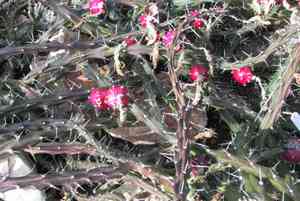
Martin applecactus (Harrisia martinii)
Also known as: Harrisia cactus, Snake cactus
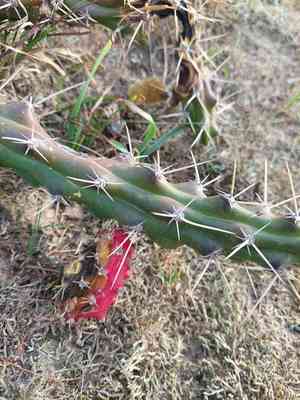
Originating from South America, the Peruvian apple cactus (Cereus repandus) is recognized as an environmental weed in certain regions of Australia. This cactus stands out with its striking bright red fruits set against its green stems. Notably, each fruit can hold between 400 and 1000 seeds.
In This Article
Attributes of Martin applecactus
Lifespan
Perennial
Plant Type
Succulent
Plant Height
Up to 2 meters
Spread
Up to 1 meter
Leaf Color
Green (Note: Cacti typically have modified leaves in the form of spines)
Flower Size
Up to 10 cm
Flower Color
White
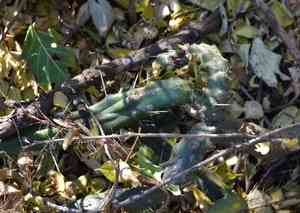
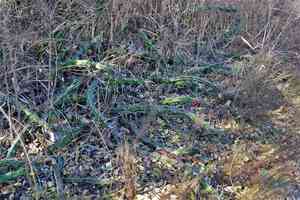
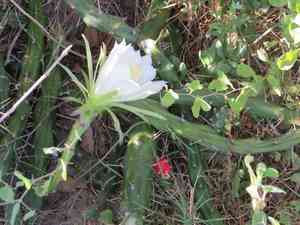
Images of Martin applecactus
Quickly Identify Martin applecactus
1
Recognize Harrisia martinii by its distinctive ribbed stems that are dotted with clusters of long, sharp spines, and its large, fragrant white flowers that open at night.
Scientific Classification of Martin applecactus
Phylum
Vascular plants
Class
Dicotyledons
Order
Caryophyllales
Family
Cactuses
Genus
Applecactus
Species
Martin applecactus
Planting and Growing of Martin applecactus
Care Difficulty
Easy
Watering Schedule
Every 2 days
Sunlight Requirements
Full sun
Sunshine Duration
4-8 hours
Ideal Temperature
65-75℉
Soil Type
Potting Mix, Peat Mix
Soil pH
6.5-7.5
Fertilizer Type
Balanced
Pruning Season
Spring, Summer
Pruning Area
Branches, Leaves
Pruning Frequency
2 times a year
Repotting Season
Spring
Pot Type
Plastic, Ceramic
 How to Water Martin applecactus?
For Harrisia martinii, ensure that when you water, the top one inch of soil dries out completely. This cactus needs deep watering — about 250 milliliters each time, allowing water to reach the root zone but the soil should dry out between watering to avoid root rot.
What are the symptoms of an underwatered Martin applecactus?
›
What should I do if my Martin applecactus is not getting enough water?
›
What are the symptoms of an overwatered Martin applecactus?
›
How to save an overwatered Martin applecactus?
›
 What Are the Sunlight Requirements for Martin applecactus?
Harrisia martinii flourishes in full sun to partial sun, which means getting around 8 to 10 hours of sunlight. Adequate sun exposure ensures full development and flowering vigor.
What is the best location for Harrisia martinii?
›
How to adjust lighting for proper growth?
›
What benefits does proper lighting provide?
›
 What Is the Ideal Temperature Range for Martin applecactus?
For optimal growth, Harrisia martinii thrives in temperatures between 65°F and 75°F. This range ensures that the plant's metabolic processes are functioning efficiently, promoting healthy growth and development.
 What Soil is Best for Martin applecactus?
Harrisia martinii thrives in well-draining soil to prevent root rot. Ensuring adequate drainage allows the roots to absorb nutrients efficiently, enhancing plant health. This plant prefers slightly acidic to neutral pH levels, between 6.5 and 7.5. These pH conditions provide optimal nutrient uptake and ensure robust growth. While not overly demanding, a nutrient-rich substrate can boost growth and flowering. This ensures the plant receives essential trace elements for vigorous development.
 How to Fertilize Martin applecactus?
For Harrisia martinii, it's crucial to provide a balanced approach with its fertilizers. During the growing season, use a liquid fertilizer diluted to half the strength. Ensure that each application is approximately 250ml to keep the nutrients consistent and effective without overwhelming the plant.
 How to Prune Martin applecactus?
Carefully inspect the plant for dead or damaged segments. These are often discolored or dry. Removing these sections will promote healthy growth. Decide on the desired shape of the plant and trim as necessary, cutting back any long, unruly stems. This not only helps the plant look tidy but also encourages strong structural growth. Be cautious not to remove more than one-third of the plant at a time to prevent unnecessary stress, which can be detrimental to its health and vitality.
 How to Propagate Martin applecactus plant?
1
Begin by sourcing high-quality Harrisia martinii seeds. Soak them in warm water for a few hours to accelerate germination. This step ensures that the seeds are fully hydrated, setting the stage for successful sprouting.
2
Fill the seedling tray with a well-draining cactus mix. Place the seeds on top and lightly cover them with a thin layer of soil. Keep the soil consistently moist but not waterlogged to aid in germination.
3
Select a healthy stem for cutting propagation. Using a sharp knife, make a clean cut at a node. Allow the cutting to dry out and callous for a few days in a dry area to prevent rot when planted.
 How to Repot Martin applecactus plant?
1
Harrisia martinii should be repotted when its roots become crowded or begin to protrude from the drainage holes. This typically indicates a lack of space for further growth. Optimal repotting occurs during the active growing season in spring or early summer when the plant can quickly adapt to the new soil.
2
Select a pot slightly larger than the current one, ensuring it has adequate drainage holes. Terracotta pots are excellent choices as they allow for better breathability, minimizing root rot risks. A heavier pot, like terracotta, also provides a counterbalance for the plant's top growth, preventing tipping.
3
Use a commercial cactus mix boosted with extra sand or perlite for increased drainage. Fast-draining soil is crucial as it reduces standing water, preventing root rot, which is detrimental to desert-native plants like Harrisia martinii. A well-draining substrate mimics its natural habitat.
Learn More About Martin applecactus Diseases
Anthracnose
Bacterial Leaf Spot
Bacterial Soft Rot
Crown Gall
Cyst Nematode
Damping-off
Downy Mildew
Drought Stress
Fusarium Wilt
Gray Mold
Leaf Spot
Mosaic
Nutrient Deficiency
Nutrient Toxicity
Powdery Mildew
Root Rot
Root-knot Nematode
Rusts
Sooty Mold
Spider Mites
Temperature Stress
Thrips Damage
White Mold



