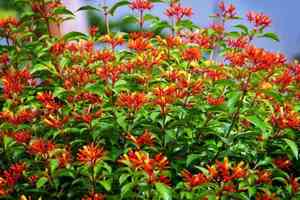
Firebush (Hamelia patens)
Also known as: Hummingbird bush, Guardian of the forest
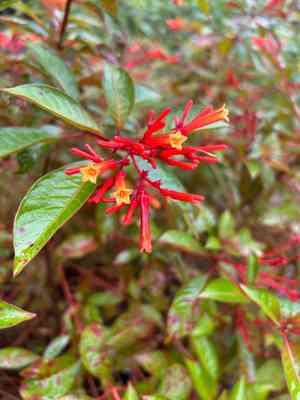
The firebush (Hamelia patens) features vibrant orangish-red tubular flowers that are highly appealing to hummingbirds and butterflies due to their sweet nectar. Additionally, various birds are drawn to the firebush to feed on its fruits or to prey on the insects it attracts.
In This Article
Attributes of Firebush
Lifespan
Perennial
Plant Type
Shrub
Plant Height
7 m
Spread
30 cm to 60 cm
Leaf Color
Green
Flower Size
2.5 cm
Flower Color
Orange Red Yellow Burgundy Gold
Images of Firebush
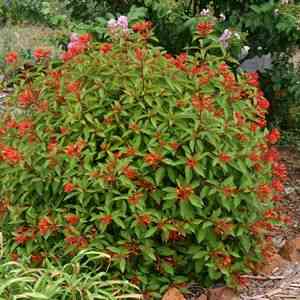
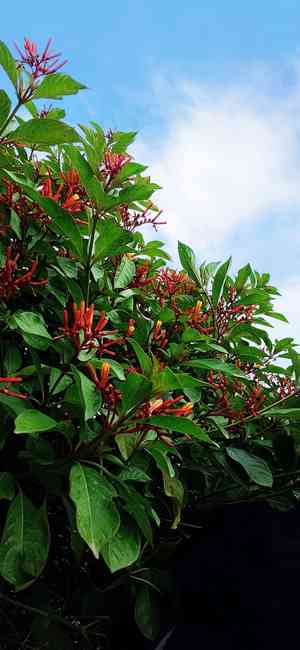
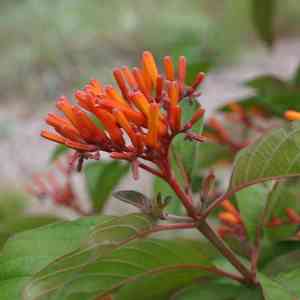
Quickly Identify Firebush
1
Clusters of three pointed leaves, 7.5-20 cm long, with green and purple-bronze hues.
2
Vivid orange-red tubular flowers in dense clusters, 1.9 cm long, attracting hummingbirds.
3
Edible dark fruit, oval to globular, yellowish to dark blue-black when ripe, 0.5 inches long.
4
Oval gray-green leaves with pinkish veins, turning striking red in autumn, up to 4 inches long.
5
Free-flowering plant with terminal clusters of red flowers, 1-1.5 inches long tube.
Scientific Classification of Firebush
Phylum
Vascular plants
Class
Dicotyledons
Order
Gentianales
Family
Madder
Genus
Hamelia
Species
Firebush
Planting and Growing of Firebush
Care Difficulty
Easy
Watering Schedule
Every 5 days
Sunlight Requirements
Full sun
Sunshine Duration
6-10 hours
Ideal Temperature
65-85℉
Soil Type
Potting Mix
Soil pH
6.5-7.5
Fertilizer Type
Balanced
Pruning Season
Spring, Summer
Pruning Area
Branches, Leaves
Pruning Frequency
2 times a year
Repotting Season
Spring
Pot Type
Plastic, Ceramic
 How to Water Firebush?
Hamelia patens prefers deep watering that allows the water to reach the root depths. Ensure the soil is moist but not waterlogged. This can be achieved by maintaining a consistent 500ml water application per session, verifying that drainage is adequate to prevent root rot.
More About Watering Techniques→
What are the symptoms of an underwatered Firebush?
›
What should I do if my Firebush is not getting enough water?
›
What are the symptoms of an overwatered Firebush?
›
How to save an overwatered Firebush?
›
 What Are the Sunlight Requirements for Firebush?
Hamelia patens thrives best in locations receiving full to partial sun, ideally 5 to 8 hours daily. Adequate sunlight ensures abundant flowering and robust health.
More About Sunlight Requirements Techniques→
What type of sunlight does Hamelia patens prefer?
›
How can I ensure Hamelia patens gets the ideal light?
›
What are the benefits of providing Hamelia patens with ideal light?
›
 What Is the Ideal Temperature Range for Firebush?
The ideal temperature range for Hamelia patens, commonly known as firebush, is between 65°F and 85°F. This range allows the plant to thrive, ensuring optimal growth and flowering. When grown within this temperature range, the plant has vibrant blooms and remains healthy, being able to resist diseases and pests more effectively. Ensuring consistent temperatures within this range is crucial for its development and long-term health.
 What Soil is Best for Firebush?
Hamelia patens thrives in nutrient-rich soils. This facilitates robust growth and vibrant flowering, ensuring the plant has the essential elements needed for its health and beauty. Ensure that the soil allows water to pass through easily. Adequate drainage prevents root rot and other water-related issues that could affect the plant’s vitality. This plant prefers slightly acidic to neutral pH levels, which optimize nutrient absorption and promote healthy leaf and flower development.
More About Soil→
 How to Fertilize Firebush?
Hamelia patens thrives with moderate fertilization. Liquid fertilizers should be diluted to half their strength to avoid root burn. Use about 1 tablespoon per gallon of water when applying liquid fertilizers. For solid slow-release fertilizers, use approximately 1/4 cup per plant, depending on the packaging instructions and plant size.
More About Fertilizing Techniques→
 How to Prune Firebush?
Always wear gloves and long sleeves when pruning to protect yourself from potential irritants or thorns. While Hamelia patens does not have significant thorns, some people may have skin sensitivities to plant sap. Ensure that your pruning tools are clean and sharp before beginning. Disinfecting your tools between cuts, especially when dealing with diseased branches, can prevent the spread of disease to healthy parts of your plant. Avoid heavy pruning unless absolutely necessary. Pruning more than a third of the plant at once can stress it and may result in fewer flowers. Gradually prune your plant over time for the best results.
More About Pruning Techniques→
 How to Propagate Firebush plant?
1
Harvest ripe seeds from the plant by collecting fruit that has developed fully and naturally fallen. Remove the pulp from around the seeds, wash them, and let them dry in a cool, dry place.
2
Select healthy stems and cut them into sections of about 4-6 inches. Ensure each cutting has at least one node, as this is where roots will form. Remove any leaves from the lower part of the cuttings.
3
Sow the prepared seeds or plant the cuttings in seed trays or pots with a well-draining growing medium. Water them lightly and cover with a plastic dome or bag to maintain humidity.
 How to Repot Firebush plant?
1
Hamelia patens should be repotted when you notice the roots circling the bottom of the pot or poking through drainage holes. Additionally, it may be time to repot if the plant's growth has slowed despite proper care, indicating it's running out of space or nutrients.
2
Choose a pot that's one size larger than the current one with good drainage. A pot too large can hold excessive moisture, leading to root rot, while a suitable size ensures the roots can expand, promoting healthy growth. Opt for a material like terracotta that allows breathability.
3
Select a rich, well-drained soil mix to enhance nutrient uptake and drainage. A mix specifically formulated for tropical plants or a regular potting mix enriched with perlite can be ideal, ensuring roots don't remain waterlogged and eliminating the risk of root diseases.
Learn More About Firebush Diseases
Anthracnose
Bacterial Leaf Spot
Bacterial Wilt
Chemical Injury
Crown Gall
Damping-off
Downy Mildew
Drought Stress
Fusarium Wilt
Gray Mold
Leaf Curl
Leaf Spot
Mosaic
Nutrient Deficiency
Nutrient Toxicity
Powdery Mildew
Root Rot
Root-knot Nematode
Rusts
Sooty Mold
Spider Mites
Temperature Stress
Thrips Damage
White Mold



