
Engelmann's seagrass (Halophila engelmannii)
Also known as: Engelmann's seagrass, Stargrass
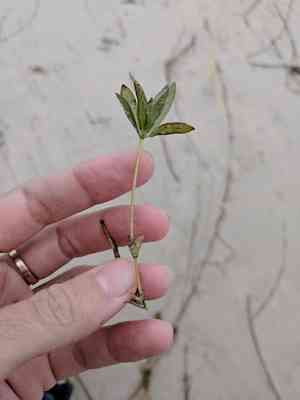
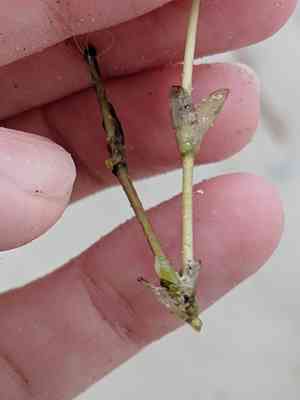
The genus **Halophila** is unique among seagrasses as it does not have basal sheaths on its leaf stems. Similar to other seagrasses, **Halophila engelmannii** has rhizomes that spread close to the surface of sand or mud, with roots emerging at the nodes to secure the plant. Each leaf stem arises from a node and is characterized by a pair of scales halfway up and another pair at the base of the leaf blades.
In This Article
Attributes of Engelmann's seagrass
Lifespan
Perennial
Plant Type
Herb
Plant Height
5-15 cm
Spread
N/A
Leaf Color
Green
Flower Size
Approximately 1 mm
Flower Color
White or Yellowish
Images of Engelmann's seagrass


Quickly Identify Engelmann's seagrass
1
Halophila engelmannii can be identified by its small, delicate, star-shaped leaves that grow in pairs, and its rhizomatous growth form. The leaves are usually between 2-4 cm long and have a distinct midrib.
Scientific Classification of Engelmann's seagrass
Phylum
Vascular plants
Class
Monocotyledons
Order
Alismatales
Family
Tape-grass
Genus
Seagrass
Species
Engelmann's seagrass
Planting and Growing of Engelmann's seagrass
Care Difficulty
Moderate
Watering Schedule
Every 10 days
Sunlight Requirements
Full sun
Sunshine Duration
6-10 hours
Ideal Temperature
75-85℉
Soil Type
Potting Mix, Peat Mix
Soil pH
6.5-7.5
Fertilizer Type
Balanced
Pruning Season
Spring, Summer
Pruning Area
Branches, Leaves
Pruning Frequency
2 times a year
Repotting Season
Spring
Pot Type
Plastic, Ceramic
 How to Water Engelmann's seagrass?
Halophila engelmannii thrives in moist environments, so aim for about 300 milliliters per watering. Ensure the soil is consistently damp but not fully saturated. Proper drainage is crucial to prevent waterlogging, simulating its natural habitat in aquatic or semi-aquatic environments.
What are the symptoms of an underwatered Engelmann's seagrass?
›
What should I do if my Engelmann's seagrass is not getting enough water?
›
What are the symptoms of an overwatered Engelmann's seagrass?
›
How to save an overwatered Engelmann's seagrass?
›
 What Are the Sunlight Requirements for Engelmann's seagrass?
Halophila engelmannii requires full sun to partial sun exposure. Optimal lighting supports its metabolic processes and fosters a thriving aquatic habitat, promoting overall ecosystem health.
What are Halophila engelmannii's ideal lighting conditions?
›
How can I ensure my Halophila engelmannii receives ideal lighting?
›
What benefits does ideal lighting provide for Halophila engelmannii?
›
 What Is the Ideal Temperature Range for Engelmann's seagrass?
To cultivate Halophila engelmannii successfully, maintaining an ideal temperature range of 75°F to 85°F is crucial. This range supports optimal photosynthesis, ensuring healthy growth and vigor. Consistently keeping temperatures within this boundary minimizes stress and allows the plant to thrive.
 What Soil is Best for Engelmann's seagrass?
Halophila engelmannii is adapted to saline environments, making it suitable for sandy coastal areas. The ability to thrive in high salinity facilitates its growth in unique niches and ensures less competition from freshwater-loving plants. Sandy soils provide excellent drainage crucial for Halophila engelmannii. Poor drainage can lead to root rot, while well-drained sand soils keep the roots aerated and healthy. This plant is adapted to survive in nutrient-poor sandy soils. Its efficient nutrient absorption techniques mean it can thrive where other plants might struggle.
 How to Fertilize Engelmann's seagrass?
When fertilizing Halophila engelmannii, it is crucial to use a balanced fertilizer with a nitrogen, phosphorus, and potassium ratio of roughly 10-10-10. Liquid fertilizers should be diluted to half strength to avoid damaging the delicate underwater leaves.
 How to Prune Engelmann's seagrass?
Begin by identifying the longest and densest areas of your Halophila engelmannii. Using your prepared scissors or shears, carefully trim back the shoots to manage the plant’s spread. Focus on removing any damaged or decaying leaves, which can sometimes be identified by discoloration or softness. Make clean cuts to promote healthy regrowth. Always try to mimic the natural shape of the plant in your aquatic setup for aesthetic balance. To foster quick recovery and new growth after pruning, ensure your Halophila engelmannii is receiving adequate sunlight and nutrients. Check the quality of the water, keeping it clean and sufficiently oxygenated, as this will support the plant's health following trimming.
 How to Propagate Engelmann's seagrass plant?
1
Fill a seed tray with a light, sandy substrate and sprinkle Halophila engelmannii seeds evenly across the surface. Lightly cover the seeds with a thin layer of sand and water gently. Maintain consistent soil moisture by misting daily.
2
Identify healthy, mature plants for division in early summer. Using a garden spade, dig around the plant to expose the rhizomes. Carefully separate the rhizomes with at least a few leaves attached.
3
After dividing, immediately plant the rhizome sections into their new location. Ensure they are planted at the same depth as they were previously. Water thoroughly to remove air pockets.
 How to Repot Engelmann's seagrass plant?
1
Halophila engelmannii, often known as Engelmann's seagrass, requires repotting when its roots outgrow the pot, becoming visible over the soil or through drainage holes. Another signal is when growth seems stunted—if the seagrass isn't spreading or is developing yellowing leaves, it might be constrained. Repotting in spring or summer when the plant is naturally more vigorous will help it recover faster after the move.
2
Select a pot that is shallow yet wide. Halophila engelmannii expands more horizontally than vertically, so a broader pot encourages natural growth patterns while preventing the confinement of roots. Ensure that the pot has ample drainage holes to prevent water stagnation, mimicking its natural aquatic environment, beneficial for its health.
3
For soil, Halophila engelmannii thrives in a low-salinity sandy mix. This type of soil resembles its natural ocean floor habitat and ensures proper root aeration and drainage. The sandy texture prevents compaction while providing enough stability for the roots, crucial for maintaining the plant's structural and nutrient intake balance.



