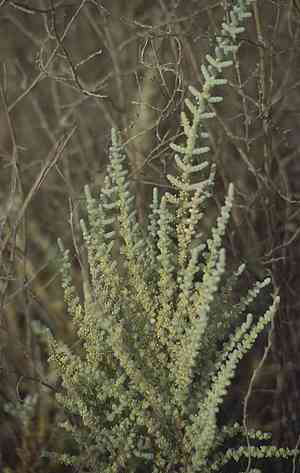
Halocnemum (Halocnemum) (Halocnemum)
Also known as: Saltwort
Halocnemum is a genus of halophytic (salt-tolerant) plants in the Amaranthaceae family. These plants are typically found in saline environments such as salt pans, salt marshes, and coastal areas.
In This Article
Attributes of Halocnemum (Halocnemum)
Lifespan
Perennial
Plant Height
Up to 1 meter
Spread
Varies, typically up to 0.5 meters
Leaf Color
Greenish, but can turn reddish
Flower Size
Very small (1-2 mm)
Flower Color
Greenish or yellowish
Images of Halocnemum (Halocnemum)
Quickly Identify Halocnemum (Halocnemum)
1
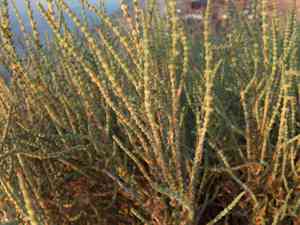
Halocnemum can be identified by its succulent, jointed stems which are often leafless or have very small, scale-like leaves. The stems are often green but can turn reddish under high salinity or stress conditions.
Scientific Classification of Halocnemum (Halocnemum)
Phylum
Tracheophyta
Class
Magnoliopsida
Order
Caryophyllales
Family
Amaranthaceae
Genus
Halocnemum
Planting and Growing of Halocnemum (Halocnemum)
Care Difficulty
Hard
Watering Schedule
Every day
Sunlight Requirements
Full sun
Sunshine Duration
4-6 hours
Ideal Temperature
68-77℉
Soil Type
Potting Mix, Peat Mix
Soil pH
6.5-7.5
Fertilizer Type
Balanced
Pruning Season
Spring, Summer
Pruning Area
Branches, Leaves
Pruning Frequency
2 times a year
Repotting Season
Spring
Pot Type
Plastic, Terracotta
 How to Water Halocnemum (Halocnemum)?
Halocnemum is a halophyte, adapted to extremely saline environments. When watering, aim for about 200 ml per session to mimic its natural moisture intake without overwhelming its roots. Ensure the water reaches the root zone but is not excessive enough to create standing water.
What are the symptoms of an underwatered Halocnemum (Halocnemum)?
›
What should I do if my Halocnemum (Halocnemum) is not getting enough water?
›
What are the symptoms of an overwatered Halocnemum (Halocnemum)?
›
How to save an overwatered Halocnemum (Halocnemum)?
›
 What Are the Sunlight Requirements for Halocnemum (Halocnemum)?
Ideal light for Halocnemum is partial to full sun, fostering vigorous growth and vibrant foliage. Sufficient sunlight aids in photosynthesis, ensuring healthy and robust plant development.
Optimal Sunlight Exposure
›
Maximizing Light Benefits
›
Balance the Light Schedule
›
 What Is the Ideal Temperature Range for Halocnemum (Halocnemum)?
Halocnemum thrives well in mildly warm conditions, typically between 68°F and 77°F. This temperature range allows for optimal metabolic activities and growth, as the plant is adapted to warmer climates typical of its native coastal habitats. Maintaining these conditions helps ensure healthy development and resilience against stressors.
 What Soil is Best for Halocnemum (Halocnemum)?
Halocnemum requires well-drained soil to thrive. This prevents waterlogging, which can be detrimental to the plant's roots. Providing well-drained soil helps in mimicking its natural habitat, promoting robust growth and health. Thriving in nutrient-poor conditions reflects Halocnemum's adaptation to harsh environments. Minimal nutrients discourage the growth of competing vegetation, allowing Halocnemum to maintain its ecological niche. Halocnemum is adapted to saline soils, which can be challenging for many other plants. This tolerance allows it to survive in coastal or arid regions where high salt content would damage other species.
 How to Fertilize Halocnemum (Halocnemum)?
Halocnemum is a salt-tolerant plant that does not require heavy fertilization. Ideally, use a balanced, low-nitrogen fertilizer. For liquid fertilizers, dilute them to half-strength to avoid over-fertilization stress.
 How to Prune Halocnemum (Halocnemum)?
Start by removing any dead or dying branches, cutting them back to the base or a healthy portion of the branch. Trim back any overgrown sections to maintain the plant’s natural form, leaving neat and clean cuts to avoid injury to the plant. Shape the plant by gently trimming it into your desired form, whether it be compact or slightly more spread out. Remove excess growth from the tips of the branches and try to follow the natural contour of the plant to achieve an aesthetically pleasing shape.
 How to Propagate Halocnemum (Halocnemum) plant?
1
Seeds should be collected from mature Halocnemum plants. Wait until they are fully developed and dry, ensuring maximum viability. Store them in a cool, dry place until ready to plant.
2
When preparing cuttings, select healthy stems about 10 cm long. Make clean cuts just below a node, and remove any leaves from the lower half to promote root growth.
3
Plant seeds at a shallow depth in seed trays, ensuring even spacing. For cuttings, insert the cut end into a moist potting medium, keeping it stable and upright to encourage rooting.
 How to Repot Halocnemum (Halocnemum) plant?
1
Repotting Halocnemum should be considered when you notice stunted growth, yellowing leaves, or roots emerging from the pot’s drainage holes. Ideally, these symptoms are noticeable during the start of Spring or Summer, when the plant is actively growing, allowing it to recover faster from the repotting process.
2
Choose a pot that is slightly larger than the current one but ensures proper drainage; a porous material like terracotta is ideal. This choice helps in preventing waterlogging, crucial for Halocnemum as it thrives in well-draining conditions. The slight increase in size offers room for new root growth without overwhelming the plant roots.
3
Select a sandy, well-draining soil mix to replicate the plant’s natural habitat and prevent root rot. This kind of soil ensures that water does not stay stagnant, which is harmful to Halocnemum. A well-draining soil is not only beneficial for preventing overwatering issues but also encourages the plant's root system to grow strong and healthy.

