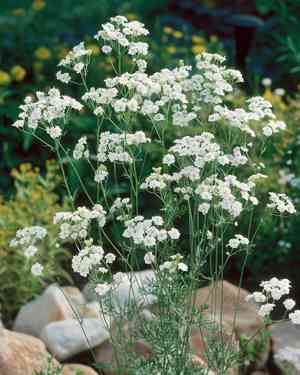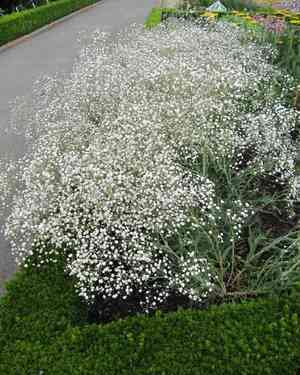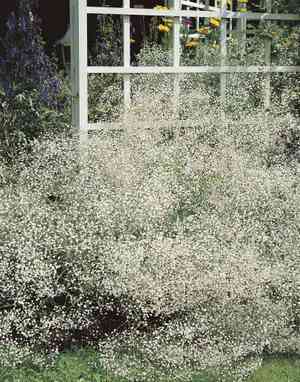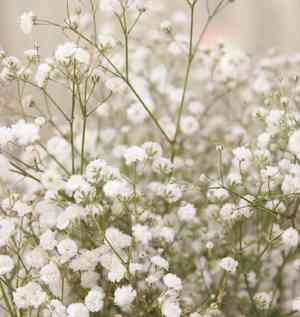
Baby's breath(Gypsophila paniculata)

Baby's breath (Gypsophila paniculata)

Also known as: Common gypsophila

Baby's Breath (Gypsophila paniculata) is a favorite among florists for adding a delicate touch to bouquets and complementing larger flowers like roses. This hardy perennial, which thrives in dry and salty conditions, is also known for attracting butterflies. However, it has become invasive in North American grasslands and open ecosystems, threatening native plant species.

Attributes of Baby's breath

Lifespan
Perennial, Annual
Plant Type
Herb
Plant Height
30 cm to 80 cm
Spread
60 cm to 90 cm
Leaf Color
Green Blue Gray Silver
Flower Size
1 mm
Flower Color
White Pink

PlantJoy - Identify plants with a snap

Identify and diagnose plants, get toxicity alerts, and explore safety guides for all types of fungi.

Try for Free

Images of Baby's breath

Baby's breath(Gypsophila paniculata)

Quickly Identify Baby's breath

1
Small, delicate white to pale pink flowers in cloud-like clusters
2
Slender, smooth stem with branching pattern, reaching 2-4 feet (60-120 cm)
3
Narrow, light green leaves contributing to airy texture

Scientific Classification of Baby's breath

Phylum
Vascular plants
Class
Dicotyledons
Order
Pinks, cacti, and allies
Family
Pink
Genus
Baby's-breath
Species
Baby's breath

Planting and Growing of Baby's breath

Care Difficulty
Easy
Watering Schedule
Every 3 days
Sunlight Requirements
Full sun
Sunshine Duration
4-6 hours
Ideal Temperature
60-75℉
Soil Type
Potting Mix, Peat Mix
Soil pH
6.5-7.5
Fertilizer Type
Balanced
Pruning Season
Spring, Summer
Pruning Area
Branches, Leaves
Pruning Frequency
2 times a year
Repotting Season
Spring
Pot Type
Plastic, Ceramic

water icon How to Water Baby's breath?

When watering Gypsophila paniculata, it is essential to ensure that the soil is thoroughly moistened without becoming waterlogged. This plant thrives when the soil is kept slightly dry between waterings, which prevents root rot and encourages healthy growth. You can achieve this by applying about 200 ml of water each time, ensuring it penetrates the root zone but is not excessive to pool on the soil surface.
What are the symptoms of an underwatered Baby's breath?
What should I do if my Baby's breath is not getting enough water?
What are the symptoms of an overwatered Baby's breath?
How to save an overwatered Baby's breath?
More About Watering Techniques

sunlight icon What Are the Sunlight Requirements for Baby's breath?

Sunlight Requirements: Full sun
Duration of light: 6 to 8 hours
Gypsophila paniculata ideally enjoys full sun, which supports vigorous growth and optimal flowering. Full sunlight encourages robust photosynthesis, aiding in nutrient absorption and preventing disease.
What is the best lighting for Gypsophila paniculata?
How can I ensure Gypsophila paniculata gets ideal lighting?
What are the benefits of ideal lighting for Gypsophila paniculata?
More About Sunlight Requirements Techniques

temperature icon What Is the Ideal Temperature Range for Baby's breath?

Ideal Temperature: 60 ~ 75℉
The ideal temperature range for growing Gypsophila paniculata is between 60 to 75°F. This range is beneficial for optimal growth as it provides the necessary warmth for metabolic processes without causing heat stress. Maintaining this temperature range ensures the plant can photosynthesize efficiently, leading to healthy blooms.

soil icon What Soil is Best for Baby's breath?

Soil type: Sandy soil, Loam, Calcareous soil
Soil PH: 6.5 ~ 7.5
Gypsophila paniculata thrives in well-drained soil, preventing waterlogging that can lead to root rot. Ensuring good drainage is crucial for maintaining healthy roots and promoting lush growth. This plant requires soil of moderate fertility to avoid excessive foliage growth that can overshadow its delicate blooms. Balanced nutrient levels support steady growth and prolific flowering. Preferring slightly alkaline soil, this plant benefits from calcareous environments that ensure optimal nutrient uptake, particularly in capturing calcium necessary for strong stem and flower development. More About Soil

fertilize icon How to Fertilize Baby's breath?

Fertilizer type: Balanced
Gypsophila paniculata appreciates a balanced approach to feeding. Typically, a diluted liquid fertilizer should be used, ensuring the concentration is no more than half the manufacturer's recommendation. For slow-release fertilizers, apply about 1-2 tablespoons evenly around the base of the plant. More About Fertilizing Techniques

prune icon How to Prune Baby's breath?

Pruning Time: Spring, Summer, Autumn
Before starting, ensure you have sharp, clean pruning shears. Using the right tools is crucial to make clean cuts and avoid damaging the plant. Sterilize tools before beginning to prevent disease spread. Begin by analyzing the plant's structure. Focus on removing any dead, damaged, or diseased stems first. Identify weak or crossing stems and cut them back to the base or a main branch to improve air circulation. For a fuller look, prune back to a point just above a node or leaf pair, about 1/4 inch above. This technique encourages branches to grow outward for a bushier plant. Ensure cuts are at a 45-degree angle to promote healthy healing. More About Pruning Techniques

propagate icon How to Propagate Baby's breath plant?

Propagate Time: Spring, Early spring, Late spring
1
Begin by sowing the seeds in seed trays filled with a well-drained seed starting mix. Cover lightly with soil, maintain humidity, and ensure adequate light. Germination can take 10-15 days at optimal temperatures.
2
Select healthy, non-flowering stems and cut them at a 45-degree angle. Remove the lowermost leaves and dip the cut ends in rooting hormone to encourage root development. Place the cuttings in moist medium like perlite or vermiculite.
3
In early spring, dig up mature plants and gently separate them into smaller clusters, ensuring each has roots attached. Replant them in prepared garden beds, ensuring adequate spacing for growth and promoting root establishment with consistent watering.
More About Propagating Techniques

repot icon How to Repot Baby's breath plant?

Repotting frequency: Every 2-3 years
1
It's time to repot Gypsophila paniculata when you notice that its roots are beginning to outgrow the pot or the soil dries out too quickly. This usually happens every 2-3 years. Spring is ideal as the plant is entering its growth phase, making it easier to recover from the stress of repotting.
2
Select a pot that is one size larger than the current one to allow room for growth. It's best to choose a pot with drainage holes to prevent waterlogging, ensuring the roots stay healthy and promoting robust plant growth. A ceramic or terracotta pot can also help in maintaining moisture balance.
3
A well-draining potting mix is essential for Gypsophila paniculata. This promotes healthy root development and prevents root rot by ensuring excess water is drained effectively. Incorporating some perlite or sand can enhance the drainage property of the soil.
More About Repotting Techniques

PlantJoy - Identify plants with a snap

Find the best spots for them to optimize their health, simply using your phone.

Try for Free

Toxicity of Baby's breath

Is Baby's breath toxic to cat?

Baby's breath poses a slight risk of toxicity to felines. Cats may become ill if they ingest the plant in significant quantities. Every part of the baby's breath plant has the potential to cause toxic reactions. Following consumption, cats could exhibit symptoms of physical distress or sickness. It is vital for cat owners to observe their pets for any behavioral or health changes and to quickly seek veterinary care if poisoning indications emerge. Timely intervention is critical to address and mitigate any health concerns resulting from exposure to baby's breath.

Is Baby's breath toxic to dog?

Baby's breath is recognized for possessing a mild degree of toxicity in dogs. Although the plant is not classified as highly toxic, consuming it in large quantities can result in poisoning. Any part of baby's breath can be harmful to dogs since all sections of this plant contain toxic compounds. If a dog consumes a considerable amount of baby's breath, it may show symptoms such as gastrointestinal distress, vomiting, or diarrhea. It is essential for dog owners to keep an eye on their pets and prevent them from ingesting excessive amounts of this plant. Should a dog ingest baby's breath and begin to display signs of poisoning, it is crucial to seek prompt veterinary assistance to guarantee appropriate treatment and recovery.

Identify toxic plants for your safety

Learn which plants are harmful to you and your pets, and make informed choices for a safer home!

Try for Free
WARNING
The judgment on toxicity and danger is for reference only. We DO NOT GUARANTEE any accuracy of such judgment. Therefore, you SHALL NOT rely on such judgment. It is IMPORTANT TO SEEK PROFESSIONAL ADVICE in advance when necessary.
More About Toxic Techniques