Gundelia (Gundelia) (Gundelia)
Also known as: Tumble Thistle
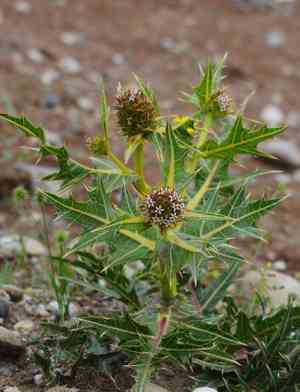
Gundelia is a low to high (20 to 100 cm) thistle-like perennial herbaceous plant with latex, spiny compound inflorescences, reminiscent of teasles and eryngos, that contain cream, yellow, greenish, pink, purple or redish-purple disk florets. This plant is native to the eastern Mediterranean and the Middle-East.
In This Article
Attributes of Gundelia (Gundelia)
Lifespan
Annual
Plant Height
20-60 cm
Spread
Not typically measured, as it has a more vertical growth habit.
Leaf Color
Green to grey-green
Flower Size
1-2 cm
Flower Color
Yellow
Images of Gundelia (Gundelia)
Quickly Identify Gundelia (Gundelia)
1
Gundelia can be identified by its spiny and robust appearance, with thistle-like flowers and deeply lobed leaves. The flowers typically appear in early spring.
Scientific Classification of Gundelia (Gundelia)
Phylum
Tracheophyta
Class
Magnoliopsida
Order
Asterales
Family
Asteraceae
Genus
Gundelia
Planting and Growing of Gundelia (Gundelia)
Care Difficulty
Moderate
Watering Schedule
Every 2 days
Sunlight Requirements
Full sun
Sunshine Duration
4-6 hours
Ideal Temperature
60-77℉
Soil Type
Potting Mix, Peat Mix
Soil pH
6.5-7.5
Fertilizer Type
Balanced
Pruning Season
Spring, Summer
Pruning Area
Branches, Leaves
Pruning Frequency
2 times a year
Repotting Season
Spring
Pot Type
Plastic, Ceramic
 How to Water Gundelia (Gundelia)?
Gundelia, a resilient plant native to arid regions, requires moderate watering. The soil should be moistened evenly up to 250 ml per session, ensuring it absorbs well without flooding. This amount helps maintain soil moisture, avoiding both desiccation and waterlogging, crucial for its unique adaptive traits.
What are the symptoms of an underwatered Gundelia (Gundelia)?
›
What should I do if my Gundelia (Gundelia) is not getting enough water?
›
What are the symptoms of an overwatered Gundelia (Gundelia)?
›
How to save an overwatered Gundelia (Gundelia)?
›
 What Are the Sunlight Requirements for Gundelia (Gundelia)?
Full sun or partial sun exposure, ensuring Gundelia gets 6 to 8 hours, allows maximum growth potential. This light range fosters blooming, leaf vibrancy, and plant resilience.
What type of sunlight does Gundelia prefer?
›
How can you ensure steady sunlight for Gundelia?
›
What benefits come from ideal sunlight exposure for Gundelia?
›
 What Is the Ideal Temperature Range for Gundelia (Gundelia)?
For Gundelia, the ideal temperature range is between 60°F and 77°F. This range provides optimal conditions for growth and photosynthesis, ensuring that the plant receives the necessary warmth without excessive heat stress. Maintaining this range helps promote lush foliage and robust plant health.
 What Soil is Best for Gundelia (Gundelia)?
Gundelia thrives in well-drained soil that prevents waterlogging, which can lead to root rot. Ensuring good drainage keeps the roots healthy and helps the plant establish a robust growth pattern, maximizing its floral potential. A soil that is rich in organic matter provides Gundelia with essential nutrients necessary for growth. This ensures the plant experiences vigorous development, leading to lush foliage and abundant flowering. The soil should retain enough moisture to sustain plant growth but not excessive amounts that may harm the roots. Proper moisture balance aids in optimal nutrient absorption and facilitates consistent plant health.
 How to Fertilize Gundelia (Gundelia)?
For Gundelia, it's essential to use a balanced approach to fertilization. When applying liquid fertilizers, utilize a solution diluted to half-strength, at approximately 1 tablespoon per gallon of water. This prevents nutrient overload which Gundelia is particularly sensitive to.
 How to Prune Gundelia (Gundelia)?
Focus on removing dead, damaged, or crossing branches first. This helps the plant redirect energy to healthier sections and promotes overall vitality. Make your cuts at a 45-degree angle just above a node or bud. This encourages new growth to sprout in the desired direction. Start by shaping the plant to your desired look. Thin out dense areas to improve light penetration and air circulation within the plant canopy.
 How to Propagate Gundelia (Gundelia) plant?
1
Begin by collecting mature Gundelia seeds and soaking them in water for 24 hours to improve germination rates. Ensure the seeds are fully submerged and maintain a consistent temperature.
2
Place the soaked seeds into seedling trays filled with a well-draining potting mix. Make sure the seeds are spaced out adequately and cover them lightly with soil.
3
For division propagation, dig up the Gundelia plant carefully. Use a sharp spade or knife to divide the root mass into smaller sections, ensuring each section has enough roots and shoots.
 How to Repot Gundelia (Gundelia) plant?
1
Gundelia shows signs that indicate it's time to repot when its roots start circling the pot or emerging from drainage holes. Additionally, if the plant's foliage appears stunted or the soil has become compacted, these are clear signals for repotting. It’s best to undertake this task during spring or autumn, when the plant is in a state of active growth, ensuring it has the energy to recover quickly.
2
Select a pot marginally larger than the current one, ideally with ample drainage holes. A terracotta pot is highly recommended as it provides excellent aeration — allowing moisture to evaporate efficiently, thus preventing root rot. Ensure the chosen pot isn’t too large; a snug fit encourages healthy root development and supports stability.
3
Gundelia thrives in well-aerated soil with excellent drainage. An ideal mix includes equal parts of good quality cactus mix and pumice or perlite. This composition prevents waterlogging, provides moisture retention, and supports robust root growth—all crucial for the plant’s overall health and longevity.
Learn More About Gundelia (Gundelia) Diseases
Anthracnose
Bacterial Leaf Spot
Bacterial Soft Rot
Bacterial Wilt
Black Spot
Chemical Injury
Crown Gall
Cyst Nematode
Damping-off
Downy Mildew
Drought Stress
Fusarium Wilt
Gray Mold
Leaf Curl
Leaf Spot
Mosaic
Nutrient Deficiency
Nutrient Toxicity
Powdery Mildew
Root Rot
Root-knot Nematode
Rusts
Sooty Mold
Spider Mites
Temperature Stress
Thrips Damage
White Mold

