Velvetseed (Guettarda) (Guettarda)
Also known as: Velvetseed
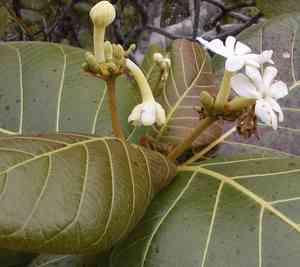
Velvetseed are evergreen trees or shrubs native to tropical and subtropical South and Central America, Australia, and the Pacific Islands. They produce white or pink flowers with characteristically elongated, tubular sepals. As the season progresses, these flowers turn into rounded, relatively large multi-seeded fruit.
In This Article
Attributes of Velvetseed (Guettarda)
Lifespan
Perennial
Plant Height
1-10 meters
Spread
1-4 meters
Leaf Color
Green
Flower Size
1-2 cm
Flower Color
White or Cream
Images of Velvetseed (Guettarda)
Quickly Identify Velvetseed (Guettarda)
1
Guettarda can be recognized by its opposite leaves, often with a velvety texture, and small tubular flowers which are usually white or cream-colored. The fruit is typically a drupe.
Scientific Classification of Velvetseed (Guettarda)
Phylum
Magnoliophyta
Class
Magnoliopsida
Order
Gentianales
Family
Rubiaceae
Genus
Guettarda
Planting and Growing of Velvetseed (Guettarda)
Care Difficulty
Moderate
Watering Schedule
Every 3 days
Sunlight Requirements
Full sun
Sunshine Duration
4-8 hours
Ideal Temperature
68-86℉
Soil Type
Potting Mix, Peat Mix
Soil pH
6.5-7.5
Fertilizer Type
Balanced
Pruning Season
Spring, Summer
Pruning Area
Branches, Leaves
Pruning Frequency
2 times a year
Repotting Season
Spring
Pot Type
Plastic, Ceramic
 How to Water Velvetseed (Guettarda)?
Guettarda plants require watering until the soil is evenly moist but not soggy. Use approximately 500 milliliters of water per session, ensuring the entire root zone receives moisture. This quantity helps maintain the necessary hydration without waterlogging the roots, which is crucial for their health and growth.
What are the symptoms of an underwatered Velvetseed (Guettarda)?
›
What should I do if my Velvetseed (Guettarda) is not getting enough water?
›
What are the symptoms of an overwatered Velvetseed (Guettarda)?
›
How to save an overwatered Velvetseed (Guettarda)?
›
 What Are the Sunlight Requirements for Velvetseed (Guettarda)?
Guettarda thrives best under partial to full sun, absorbing as much light as possible for robust growth. The optimal sunlight leads to full, vibrant foliage and increased flowering, supporting overall plant health.
How does Guettarda thrive in its ideal light conditions?
›
What are the best strategies to provide Guettarda with optimal light?
›
What benefits do Guettarda gain from achieving ideal light exposure?
›
 What Is the Ideal Temperature Range for Velvetseed (Guettarda)?
The ideal temperature range for Guettarda species is between 68°F and 86°F. Within this range, the plant is able to grow and thrive, photosynthesizing efficiently and maintaining healthy physiological functions. Maintaining temperatures within this range will encourage robust growth and help the plant to resist diseases and infestations.
 What Soil is Best for Velvetseed (Guettarda)?
Guettarda thrives in well-drained soil conditions which prevent waterlogging. This ensures the roots are aerated and reduce the risk of root rot. Such soil keeps the plant healthy and promotes steady growth, enhancing its overall robustness. This plant prefers soil enriched with organic matter, which provides essential nutrients. Nutrient-rich soil supports vibrant growth and encourages abundant flowering, making Guettarda a visually striking addition to any garden. While drainage is important, Guettarda also benefits from the soil that retains enough moisture to keep it hydrated. The balance between drainage and moisture retention ensures the plant remains lush and vigorous throughout the growing season.
 How to Fertilize Velvetseed (Guettarda)?
For the Guettarda plant, fertilization should be approached with care to avoid overfeeding. Use a balanced fertilizer diluted to half strength for liquid applications, and apply approximately 1/4 pound of granular fertilizer per plant annually.
 How to Prune Velvetseed (Guettarda)?
Always use clean, sharp pruning shears to ensure a clean cut and prevent damage or disease spread. Disinfect tools between cuts when dealing with infected branches. Trim evenly around the plant to maintain its natural shape. Avoid cutting too much at once, as drastic pruning can stress the plant and diminish flowering in the following season.
 How to Propagate Velvetseed (Guettarda) plant?
1
For seed propagation, collect mature seeds from the plant. For cuttings, select a healthy stem and cut at an angle to promote better rooting.
2
Use a well-drained potting mix for both seeds and cuttings. The medium should be slightly moist to facilitate root development and growth.
3
Place seeds or cuttings in a location that receives indirect sunlight and maintains a warm temperature, ideally between 20-25°C, which supports germination and root growth.
 How to Repot Velvetseed (Guettarda) plant?
1
Guettarda plants indicate they need repotting when you notice roots poking through the drainage holes, or if the plant seems to be growing less vigorously. Spring and early summer are the ideal times to repot, as these seasons coincide with the plant's growth phase, allowing it to recover quickly from transplant shock.
2
Select a pot that is only slightly larger than the current one to avoid overpotting, which can lead to excessive soil moisture. The pot should have ample drainage holes to ensure good water flow. Using a pot that is too large can result in waterlogged soil, which may cause root rot.
3
Opt for a well-draining loamy soil that retains enough moisture to sustain the plant but drains excess water efficiently. This type of soil allows roots to access both air and water, promoting healthy plant growth. A mix containing perlite or sand can enhance drainage and prevent compaction.
Learn More About Velvetseed (Guettarda) Diseases
Anthracnose
Bacterial Leaf Spot
Bacterial Wilt
Black Spot
Chemical Injury
Crown Gall
Damping-off
Downy Mildew
Drought Stress
Fusarium Wilt
Gray Mold
Leaf Curl
Leaf Spot
Mosaic
Nutrient Deficiency
Nutrient Toxicity
Powdery Mildew
Root Rot
Root-knot Nematode
Rusts
Sooty Mold
Spider Mites
Temperature Stress
Thrips Damage
White Mold

